ISO Certificate in UAE: Types, Validity and How to Get Certified
If you run a business in the UAE, you have probably been asked for an ISO certificate by a customer, a tender portal or a supplier audit. An ISO certificate in UAE is proof that an independent certification body has audited your management system and found it compliant with an international standard. This guide explains what the certificate covers, how it is issued, what to check before choosing a provider, and how long the process usually takes.
What Is an ISO Certificate?
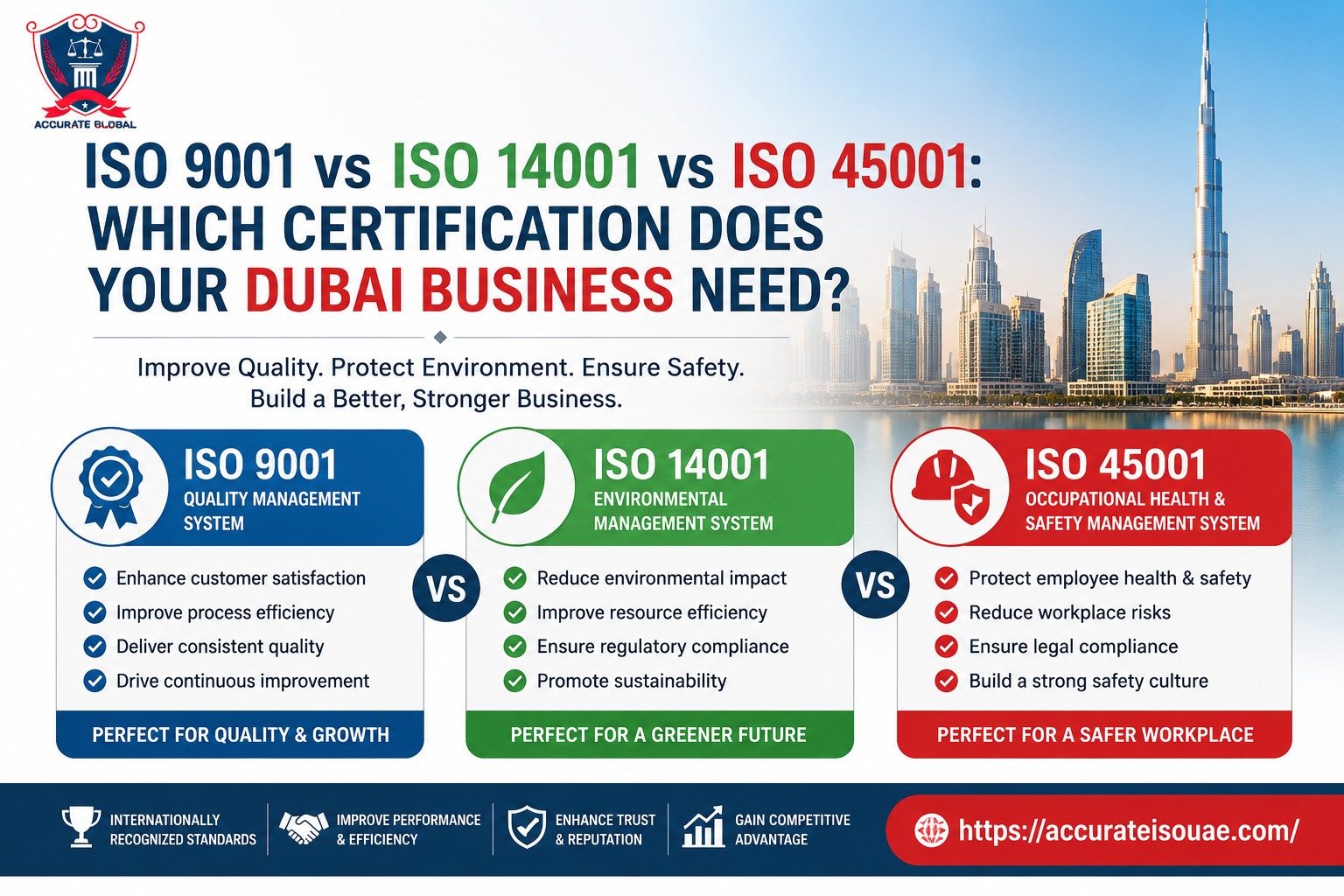
ISO standards are published by the International Organization for Standardization. A company does not receive a certificate from ISO itself. Instead, an independent certification body audits your processes against the requirements of a standard such as ISO 9001 (quality), ISO 14001 (environment), ISO 45001 (occupational health and safety) or ISO/IEC 27001 (information security). When your system meets the requirements, the certification body issues the ISO certificate.
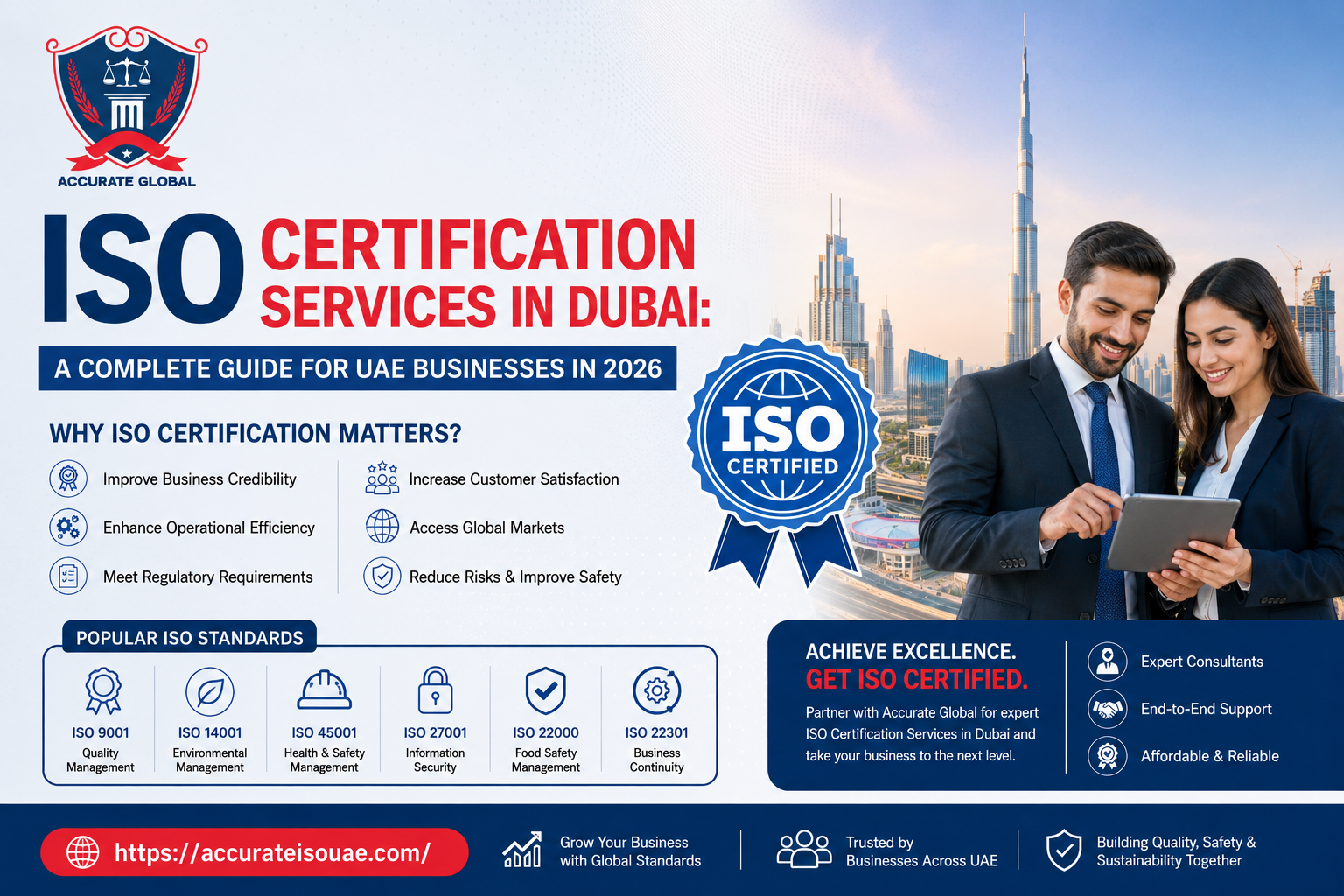
Most Common ISO Certifications in the UAE
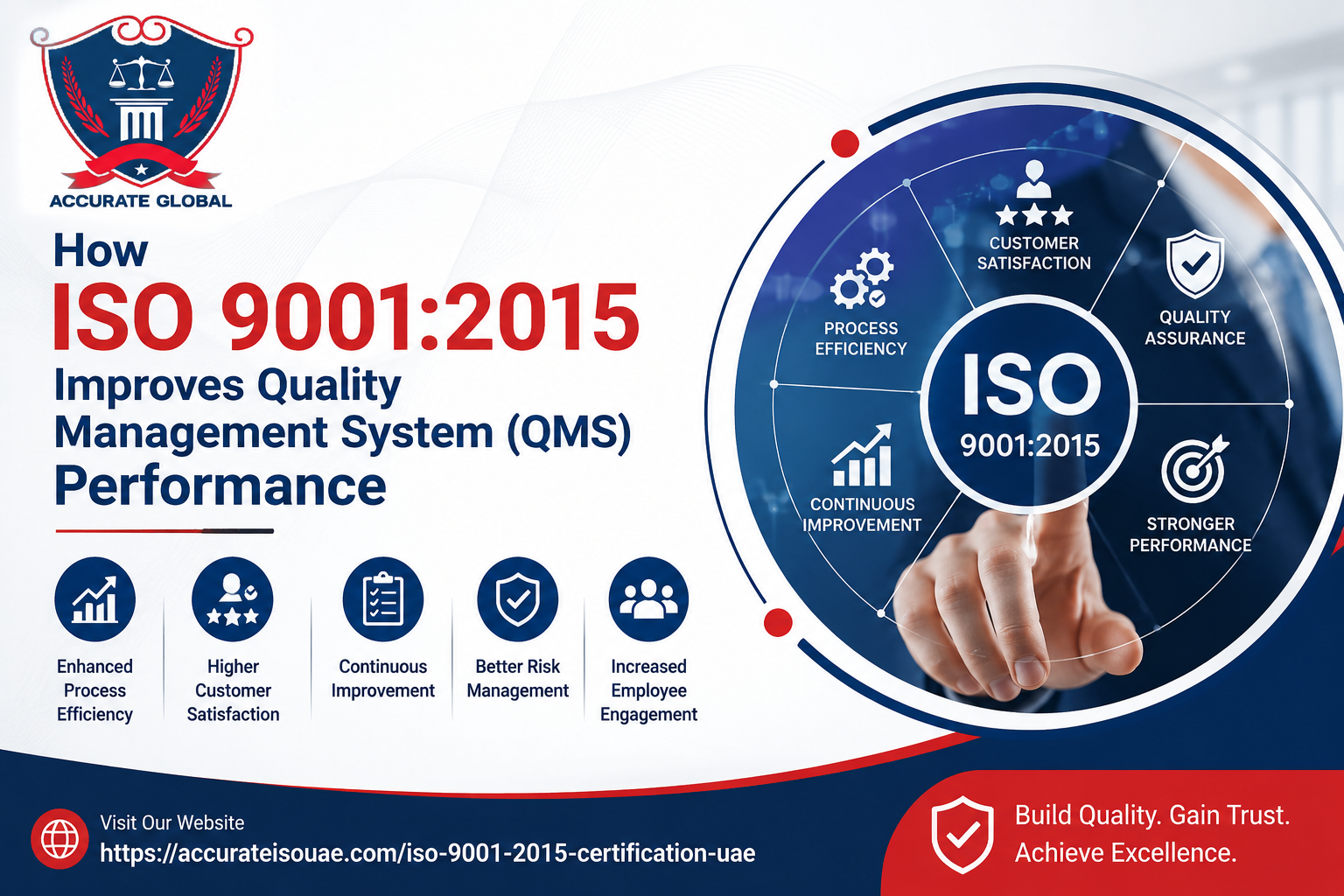
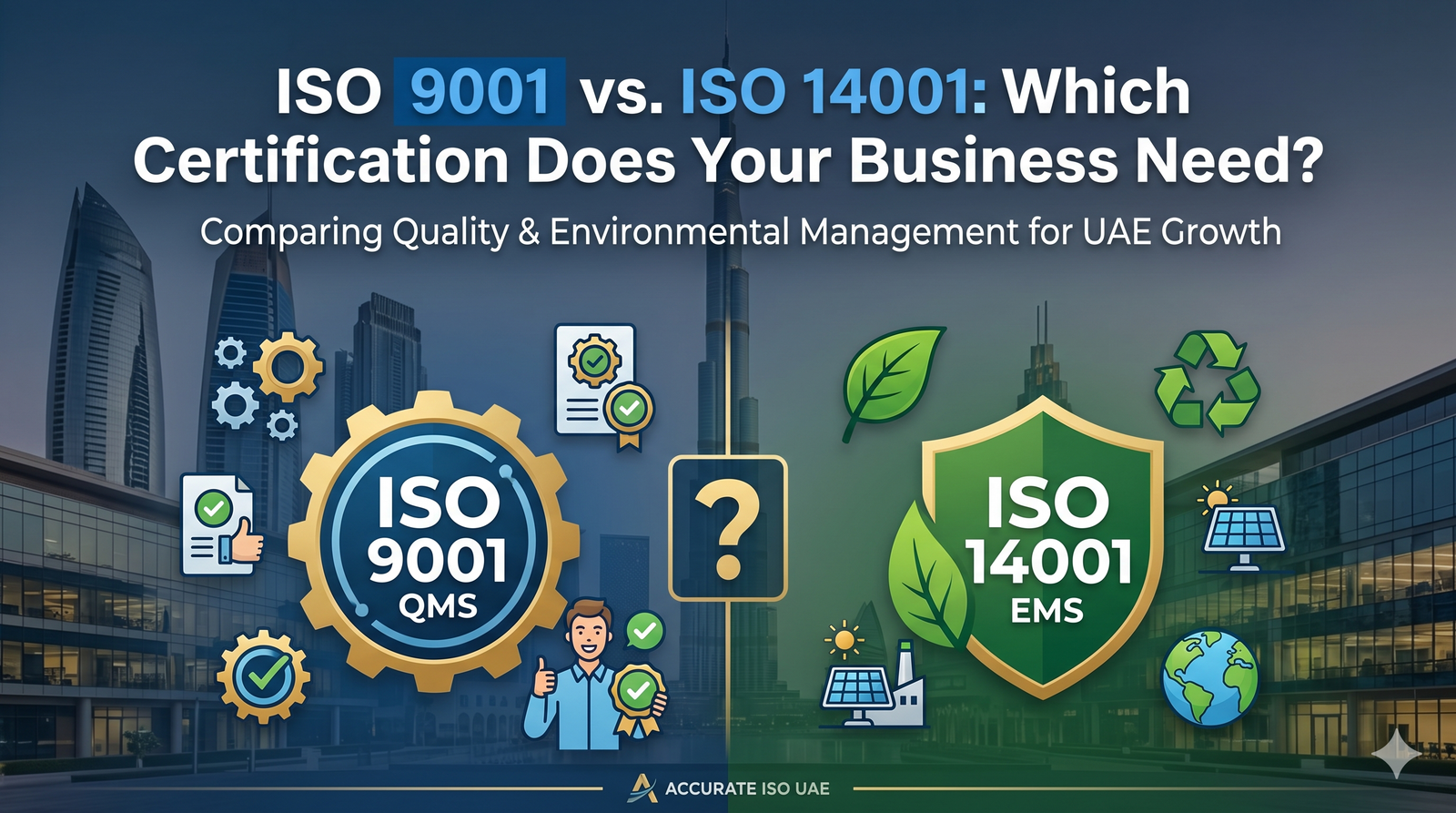
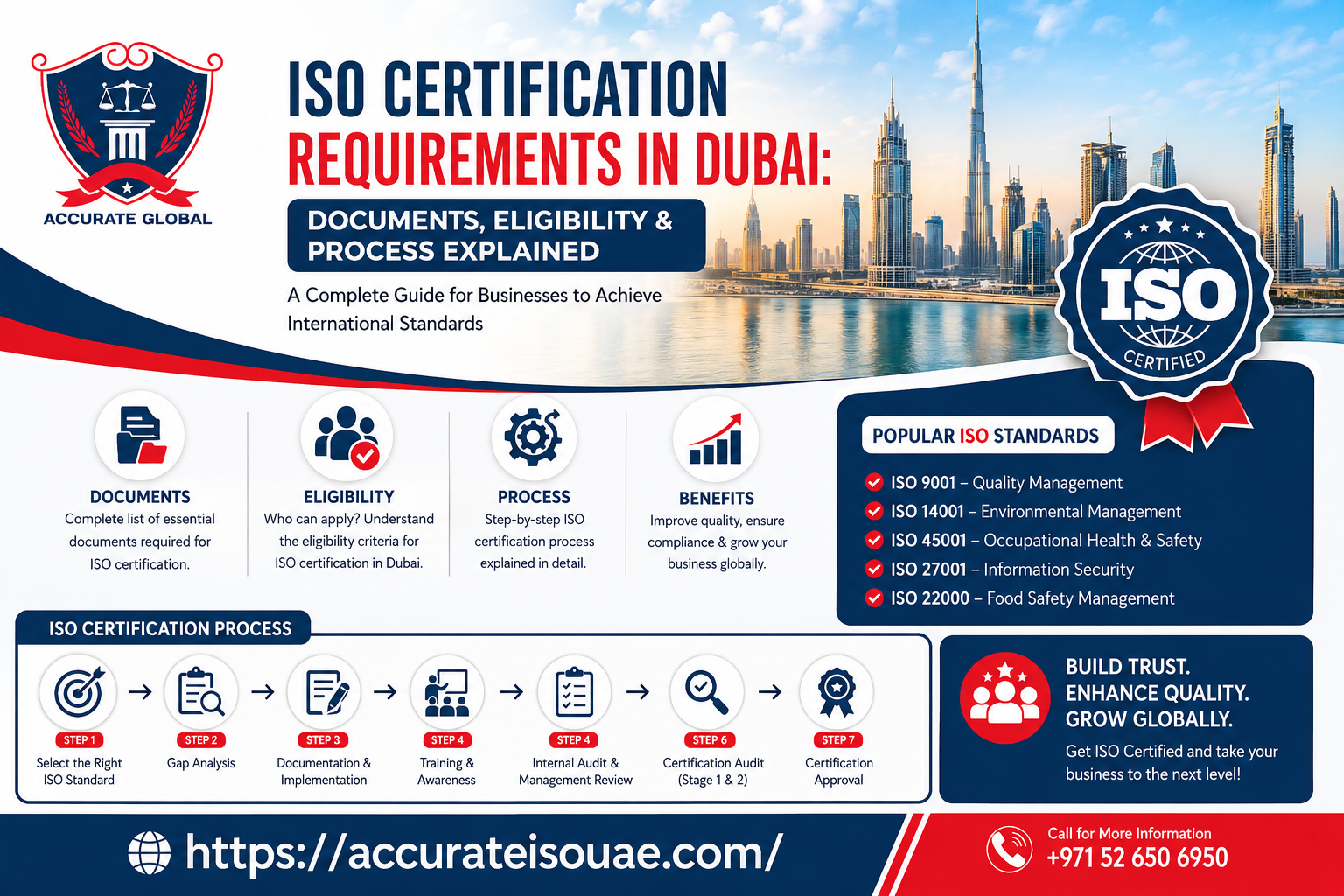
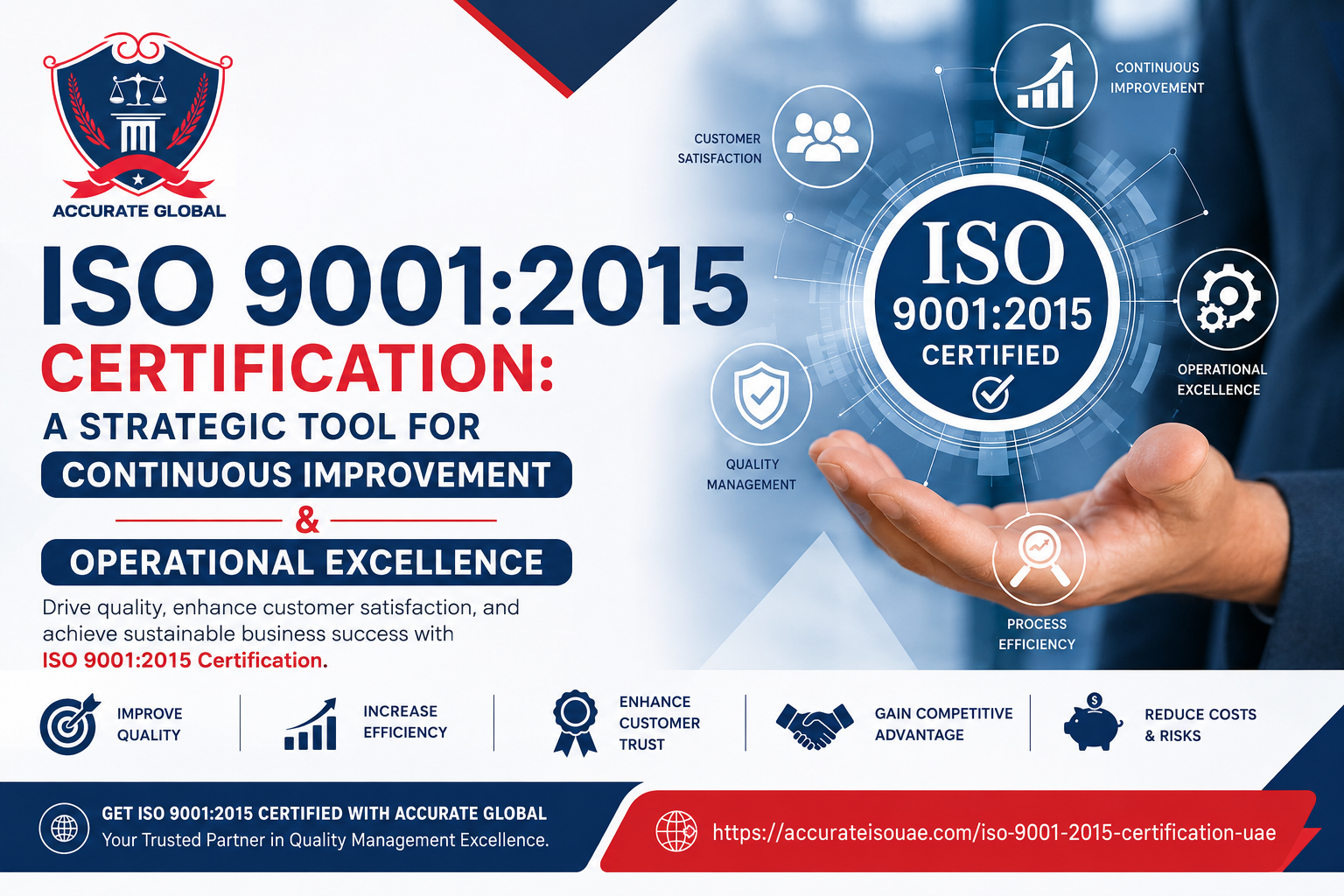
- ISO 9001:2015 – quality management for any industry.
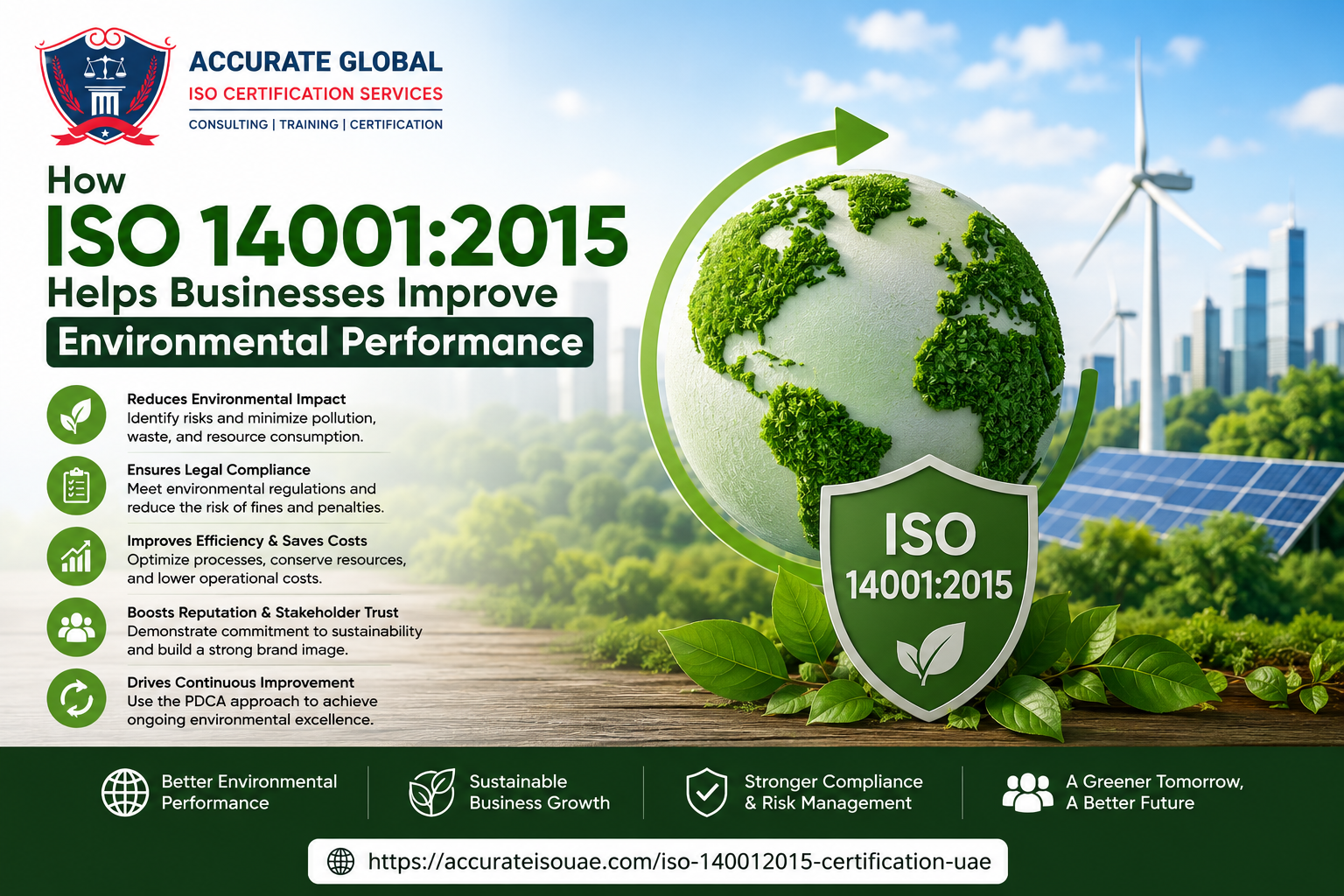
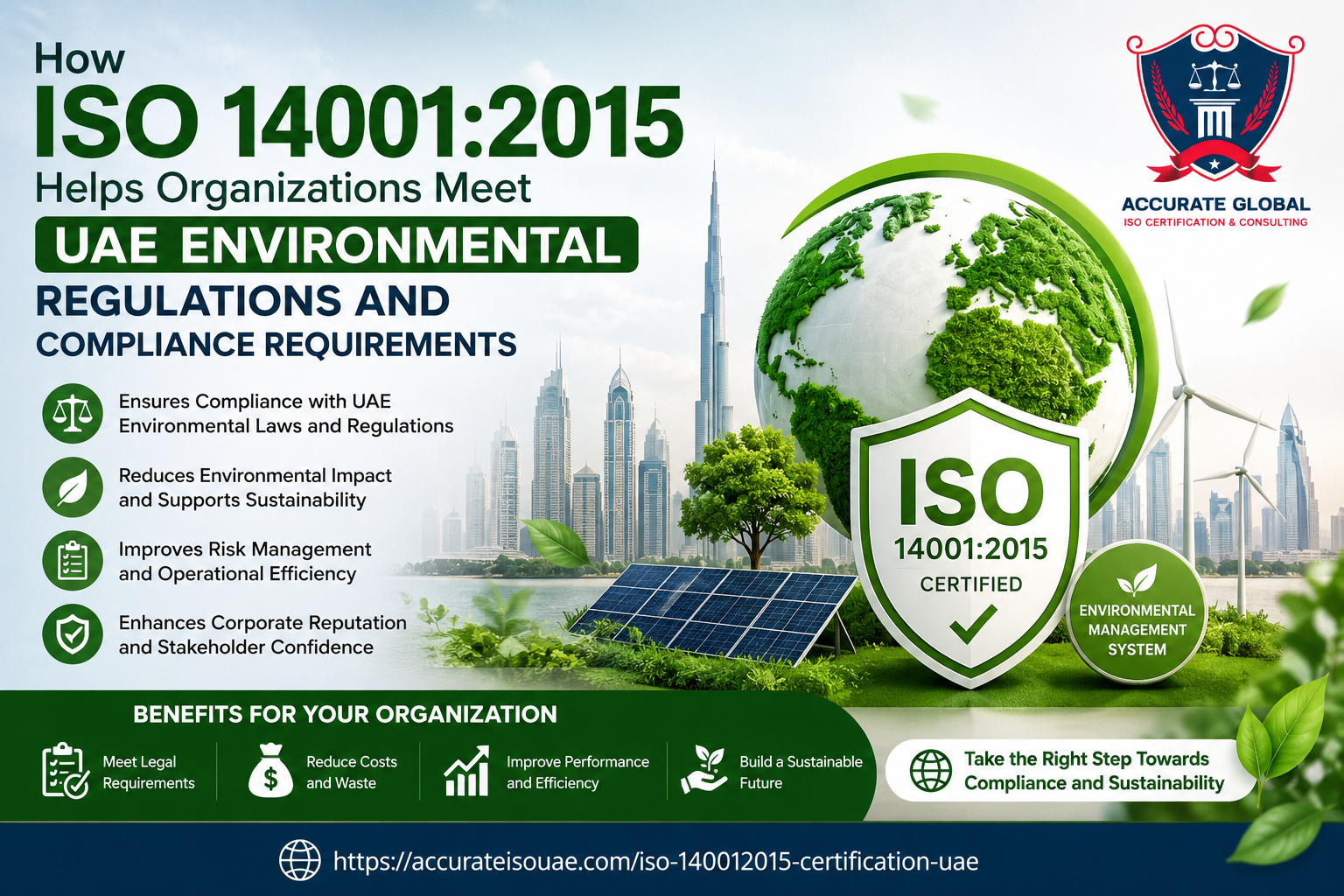
- ISO 14001:2015 – environmental management and regulatory compliance.
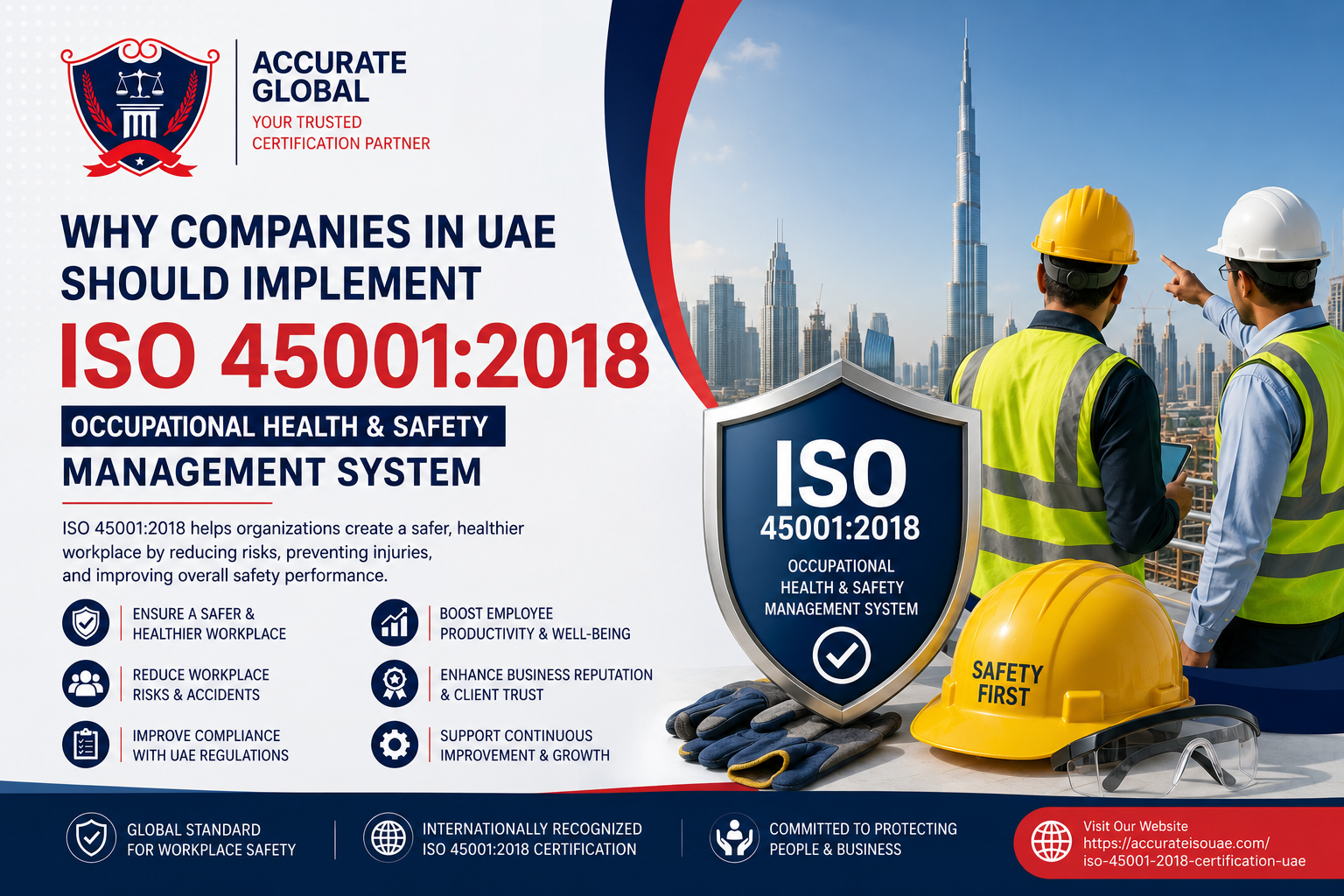
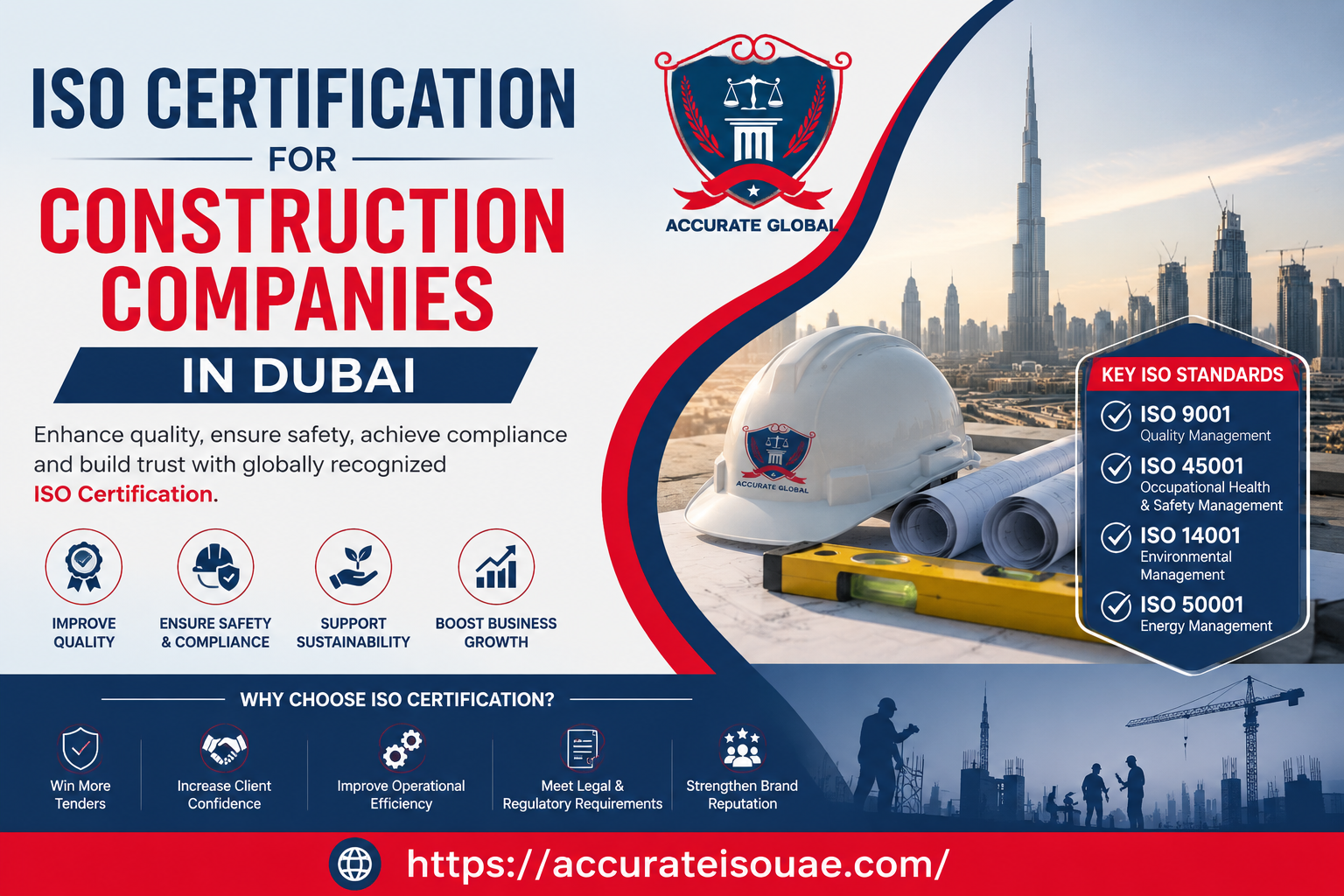
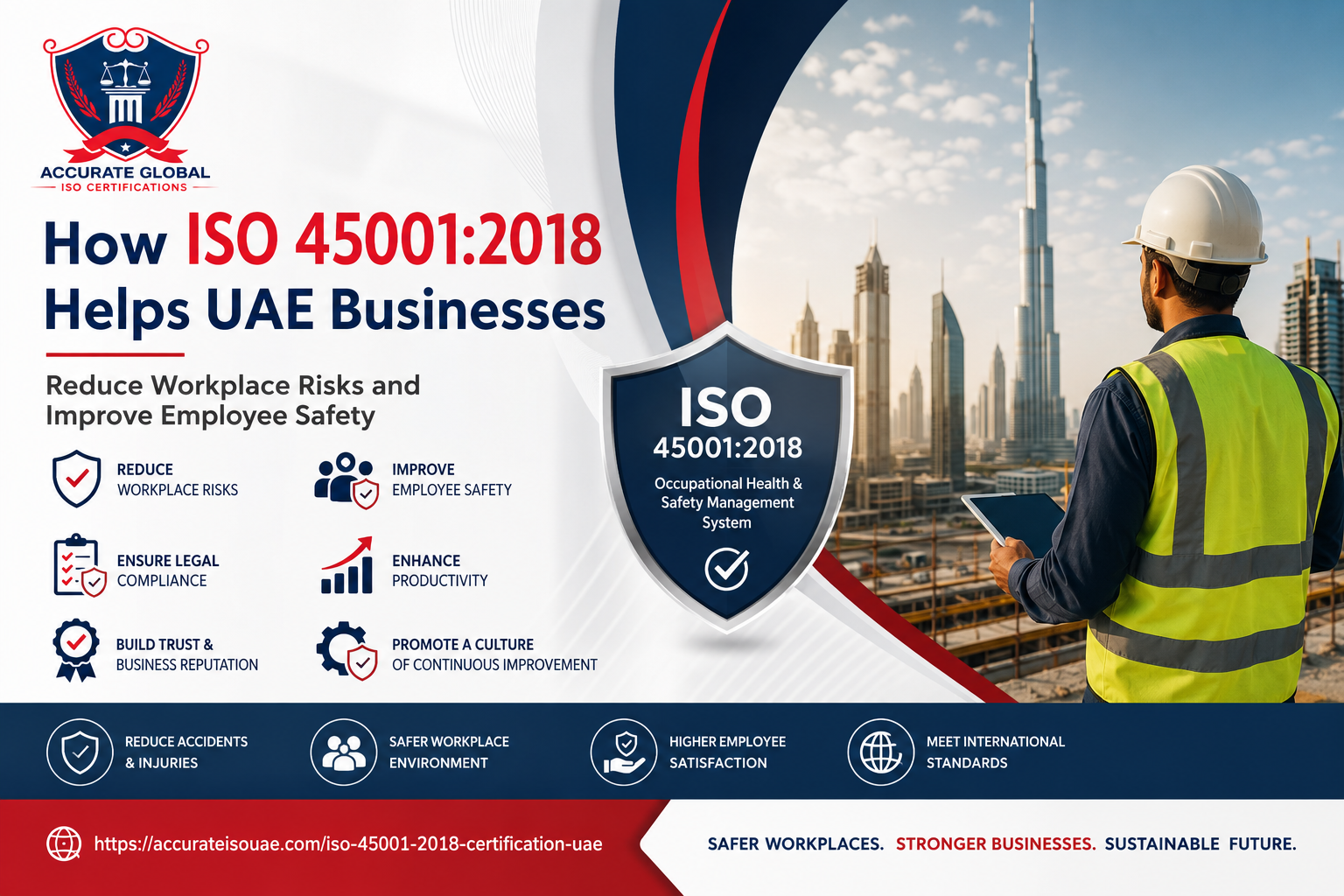
- ISO 45001:2018 – workplace health and safety, common in construction and manufacturing.
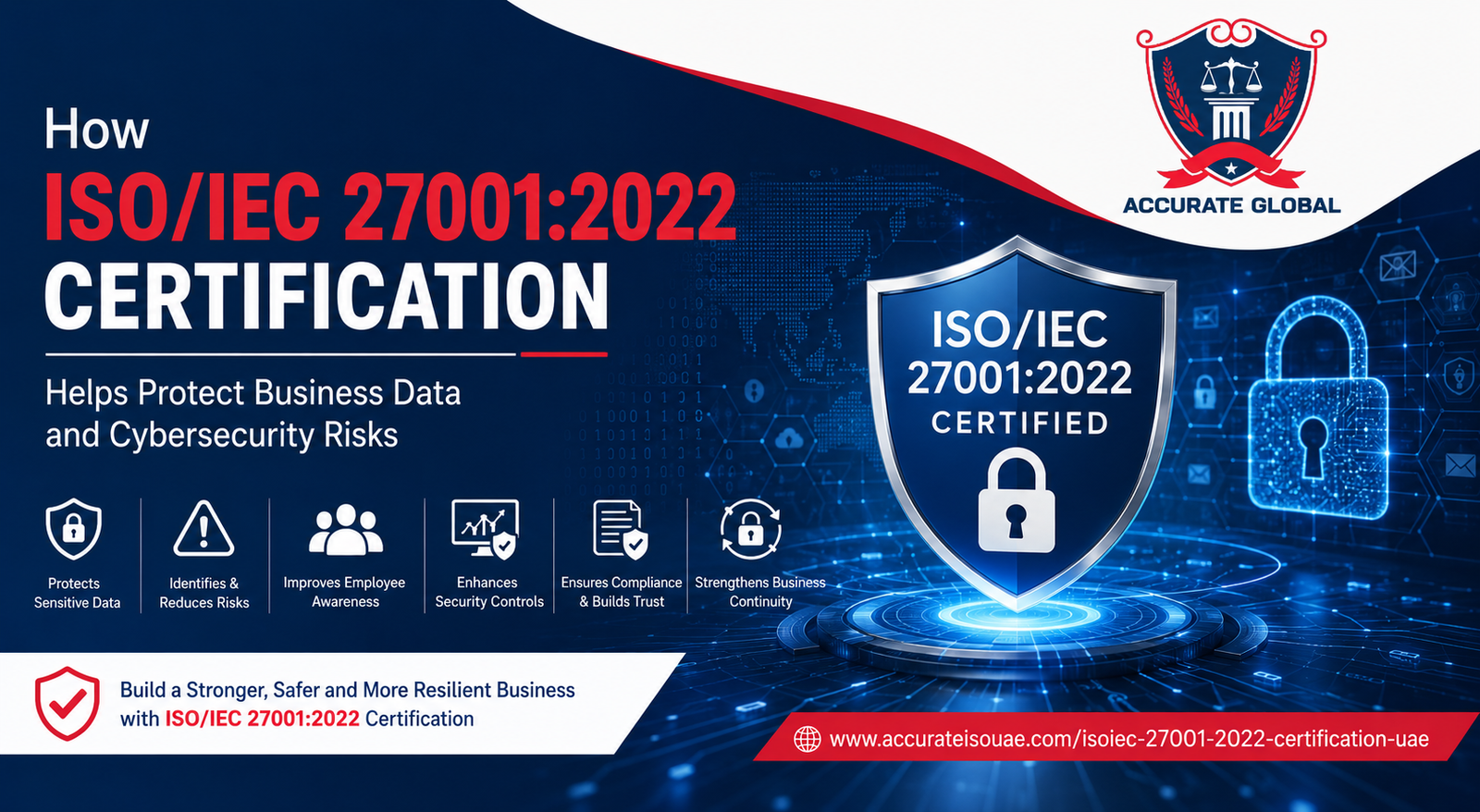
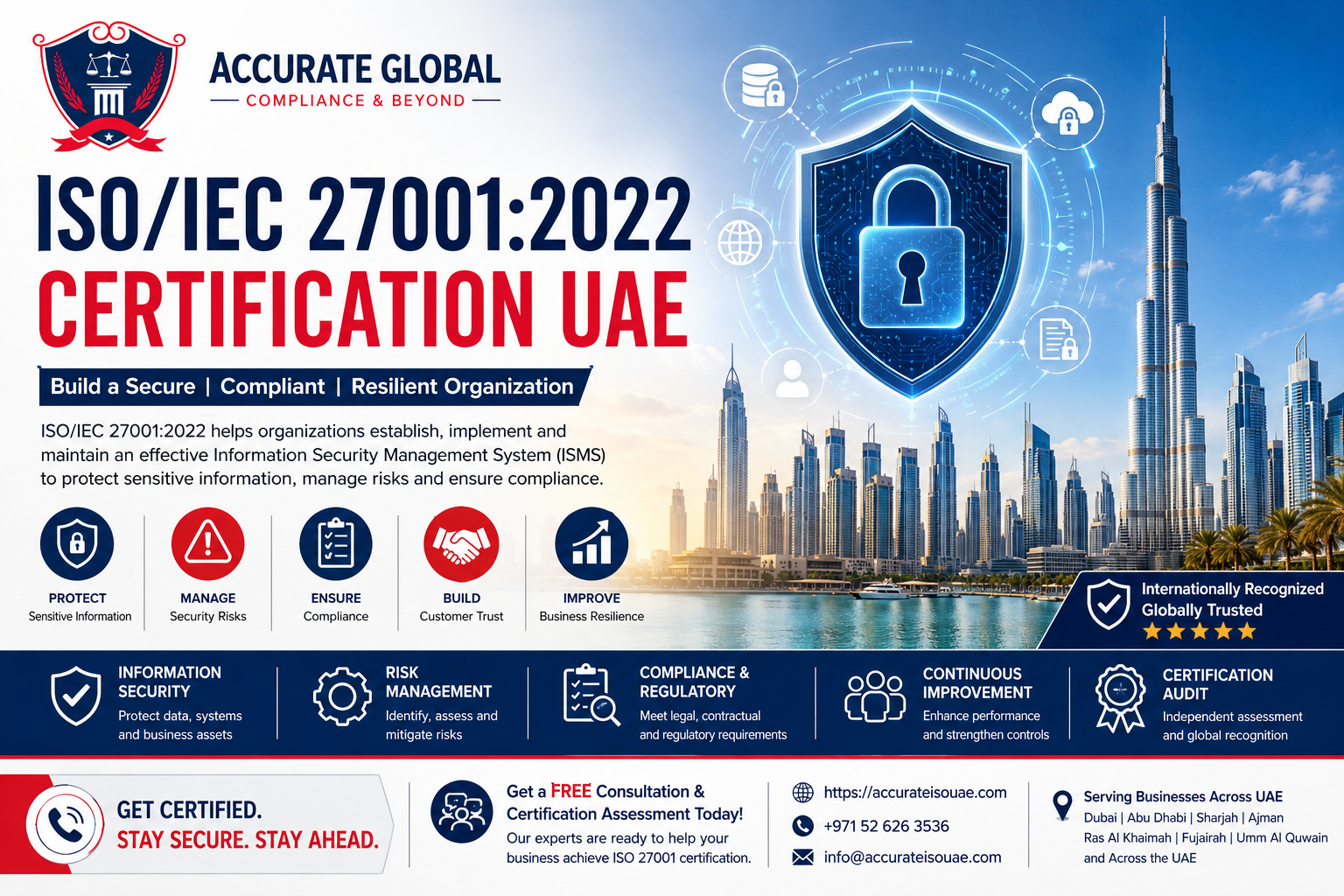
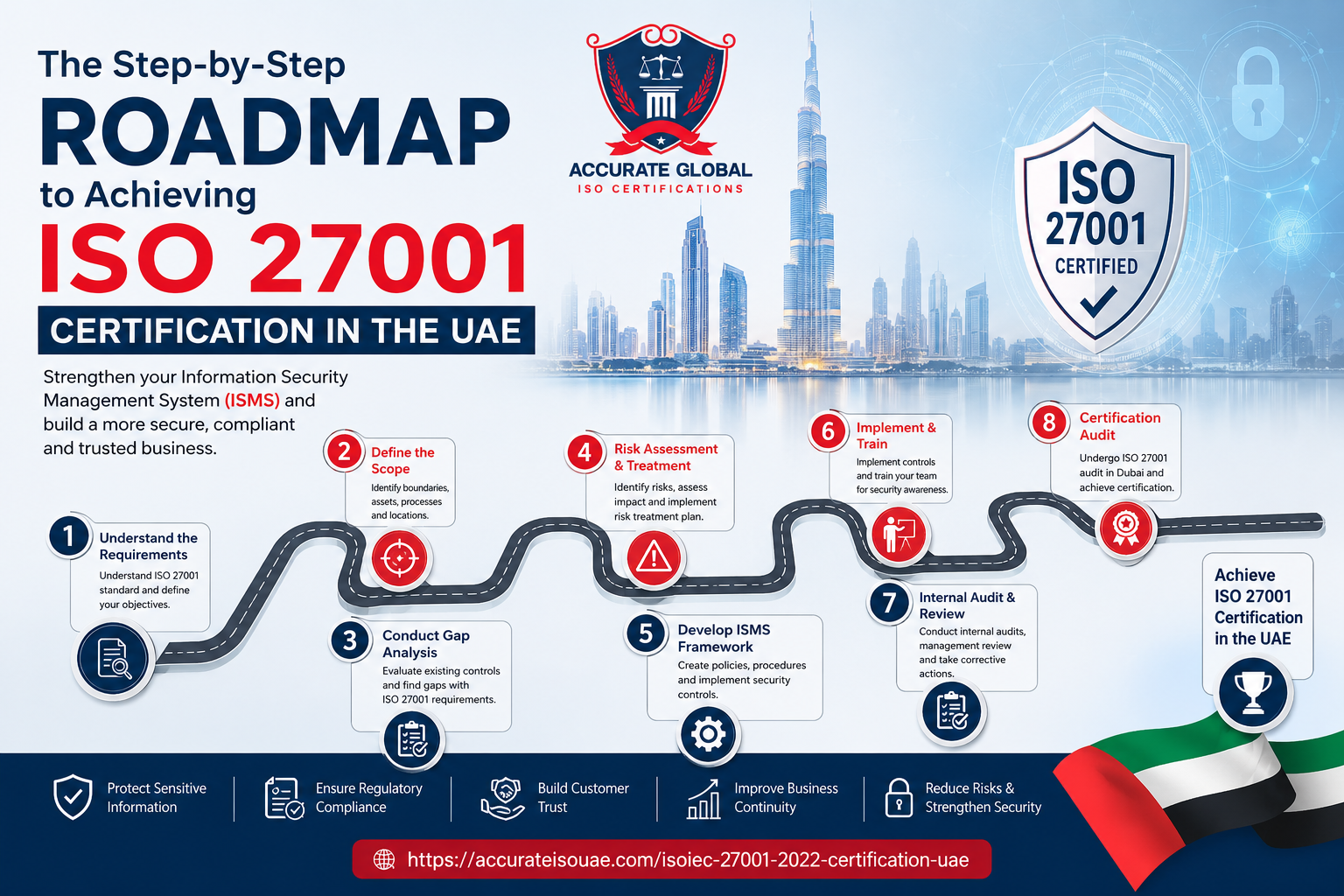
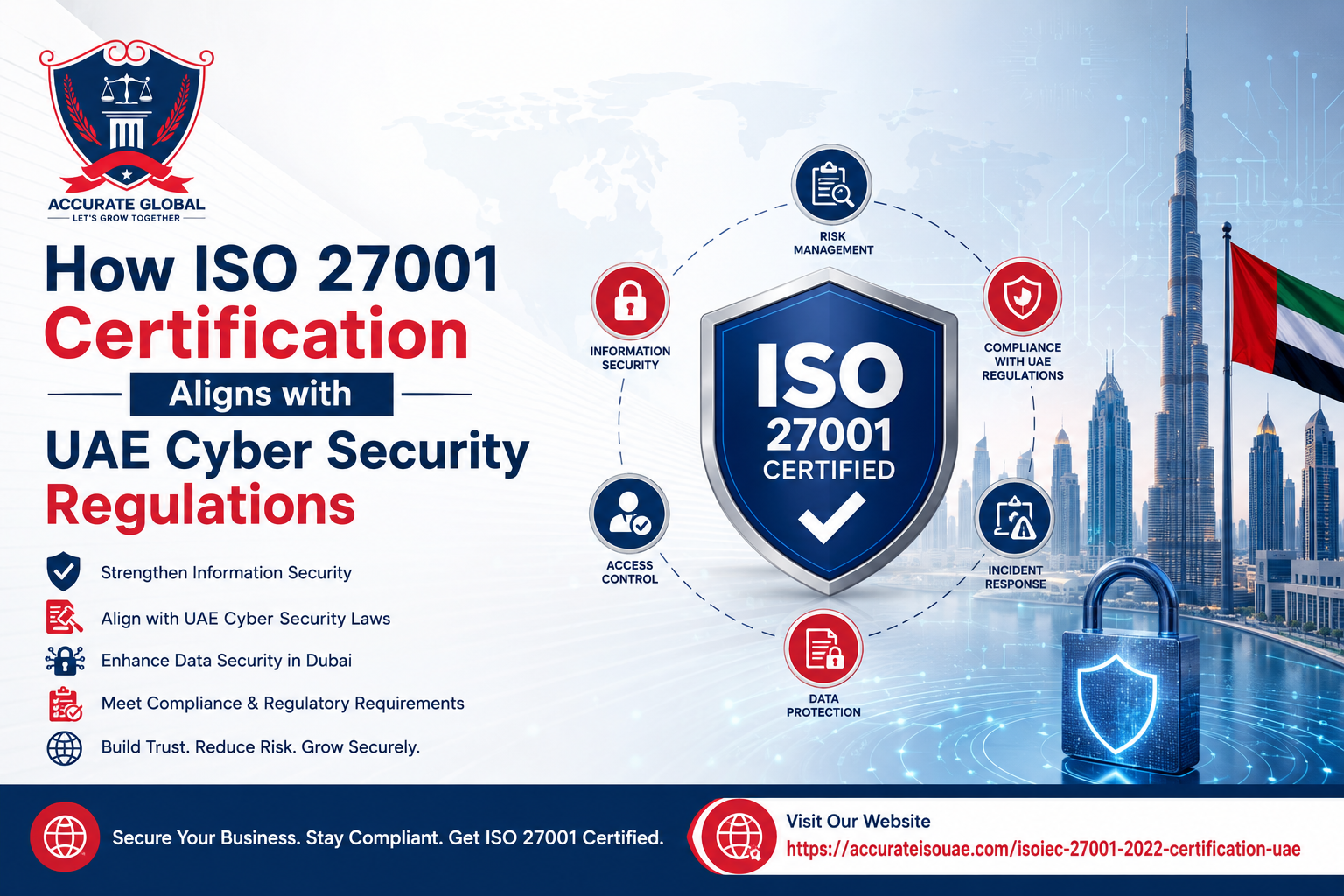
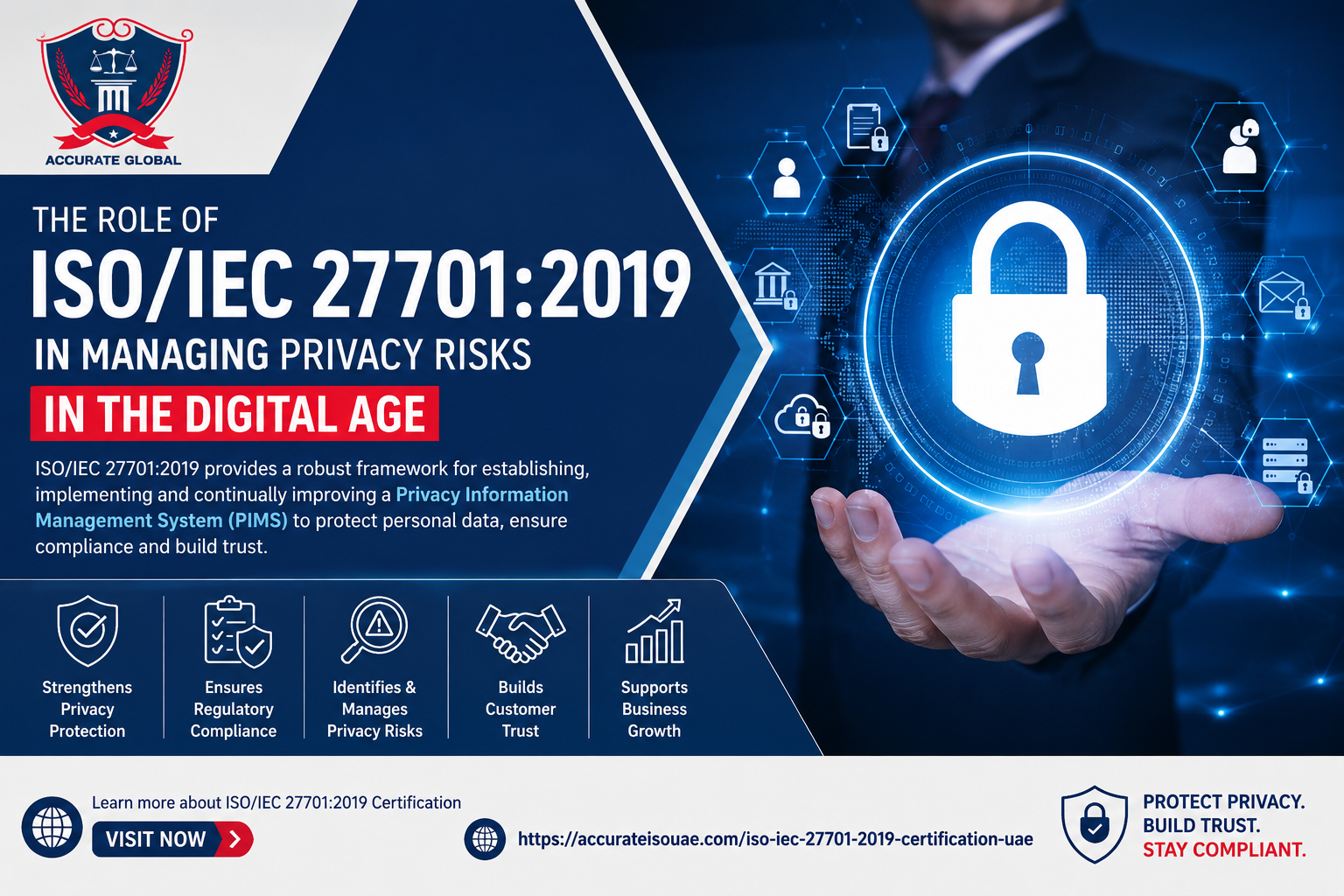
- ISO/IEC 27001:2022 – information security, popular with IT, finance and healthcare firms.
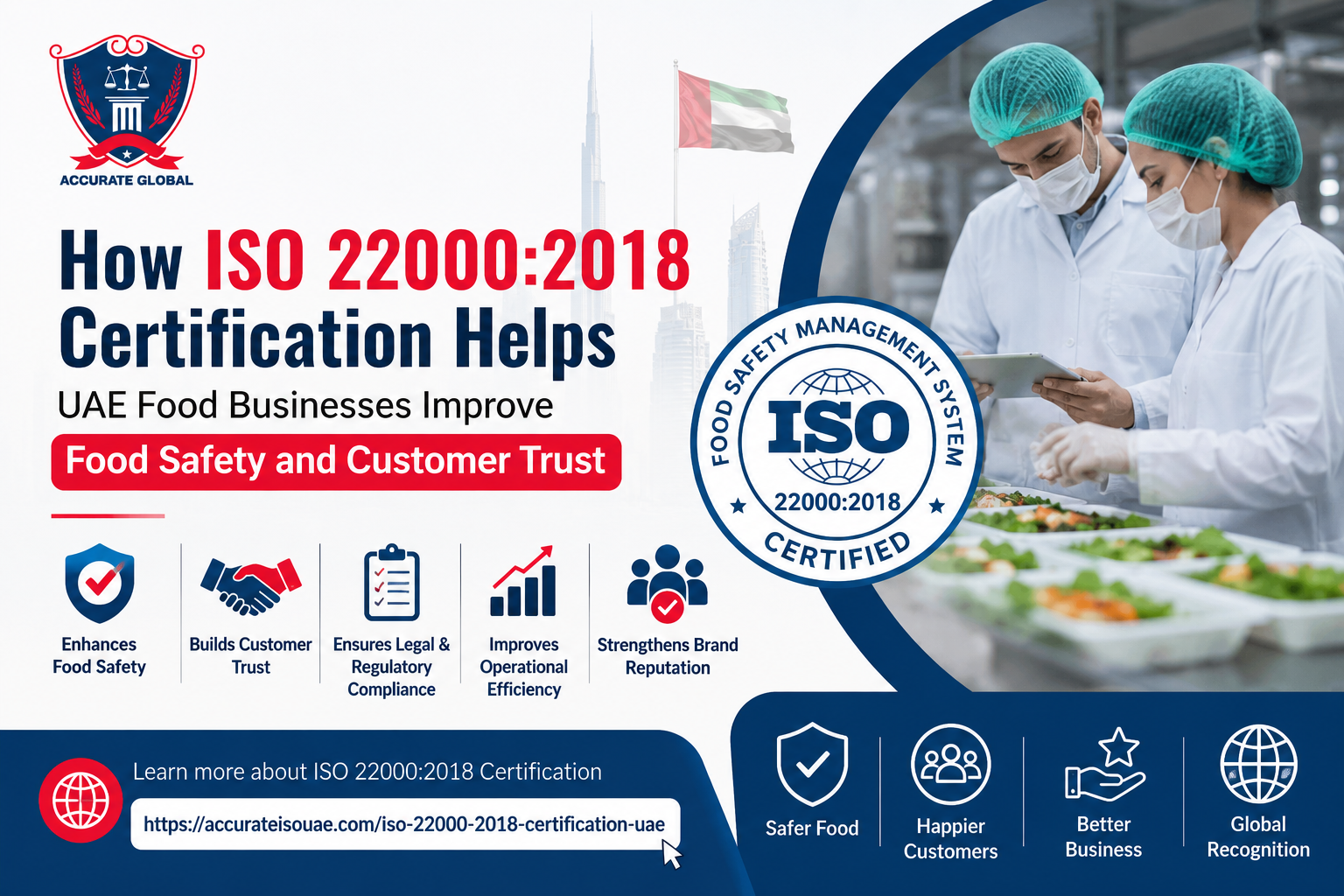
- ISO 22000:2018 – food safety management for the food and beverage chain.
- ISO 13485:2016 – quality systems for medical device organisations.
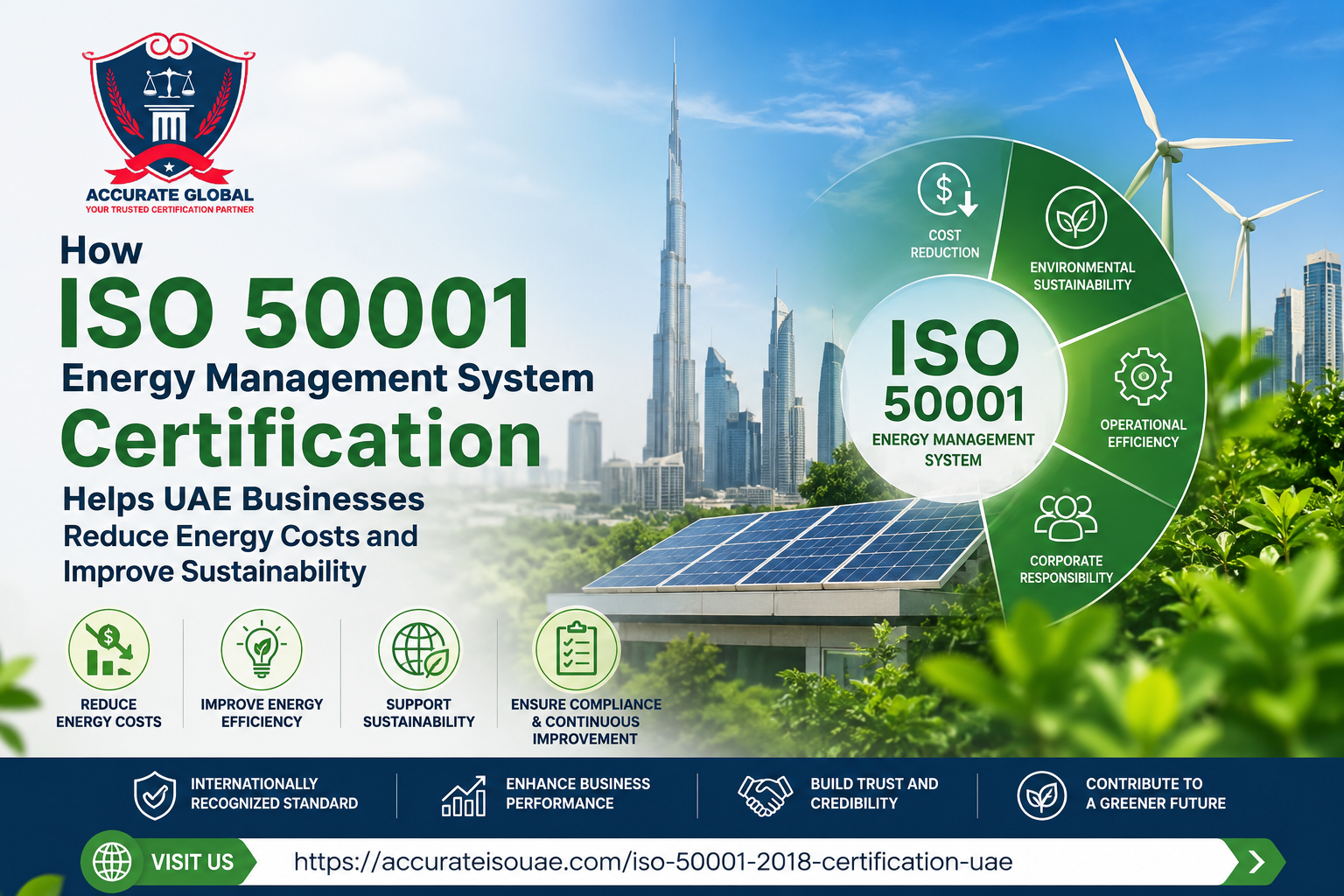
- ISO 50001:2018 – energy management for cost and sustainability goals.
Why UAE Businesses Need ISO Certification
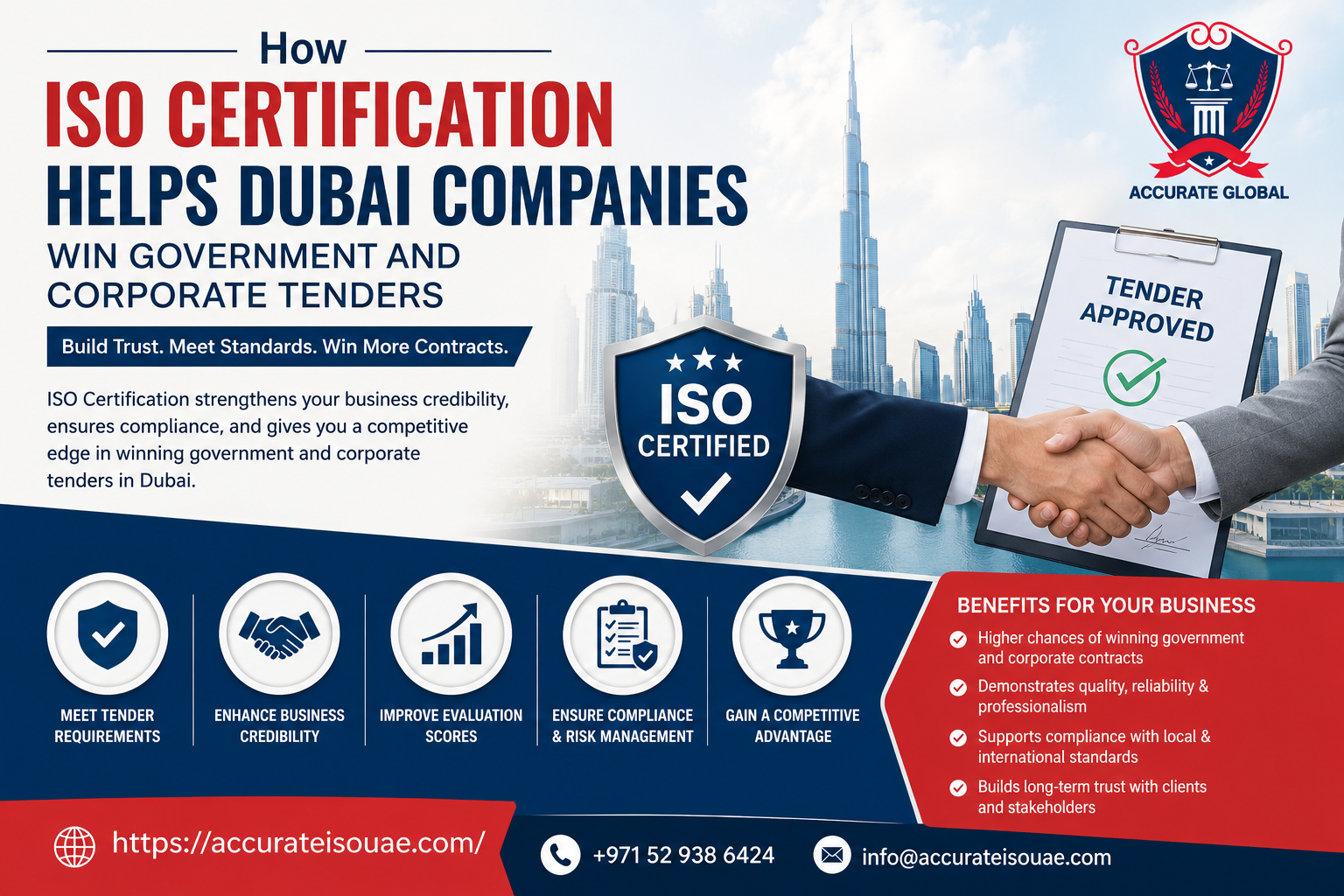
Government and corporate tenders in Dubai, Abu Dhabi and the other emirates frequently list ISO certification as a pre-qualification requirement. Beyond tenders, certification helps you win larger customers, reduce operational errors, and show suppliers and regulators that your processes are controlled and repeatable. Many export customers also expect a valid certificate before they will onboard a UAE supplier.
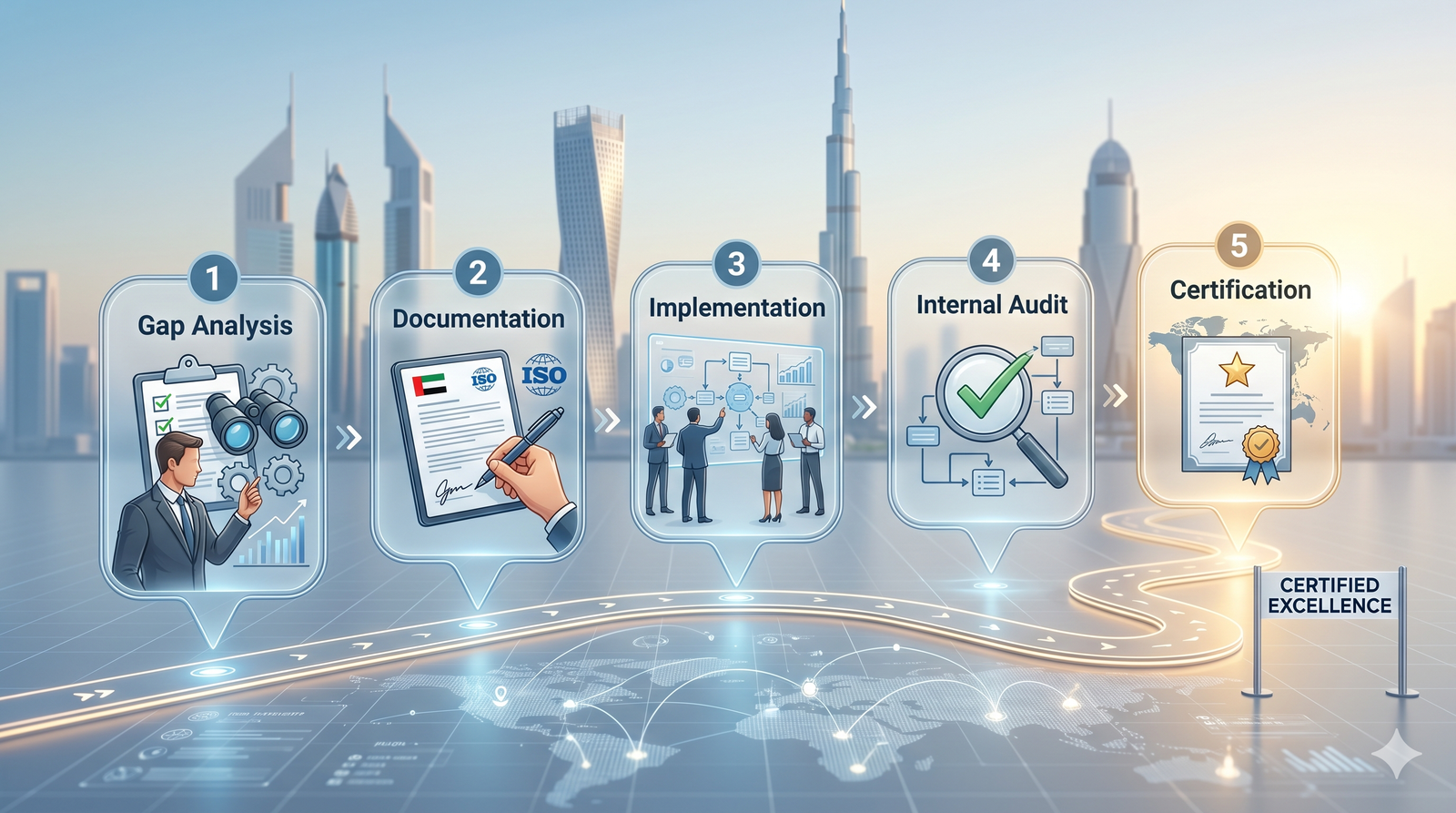
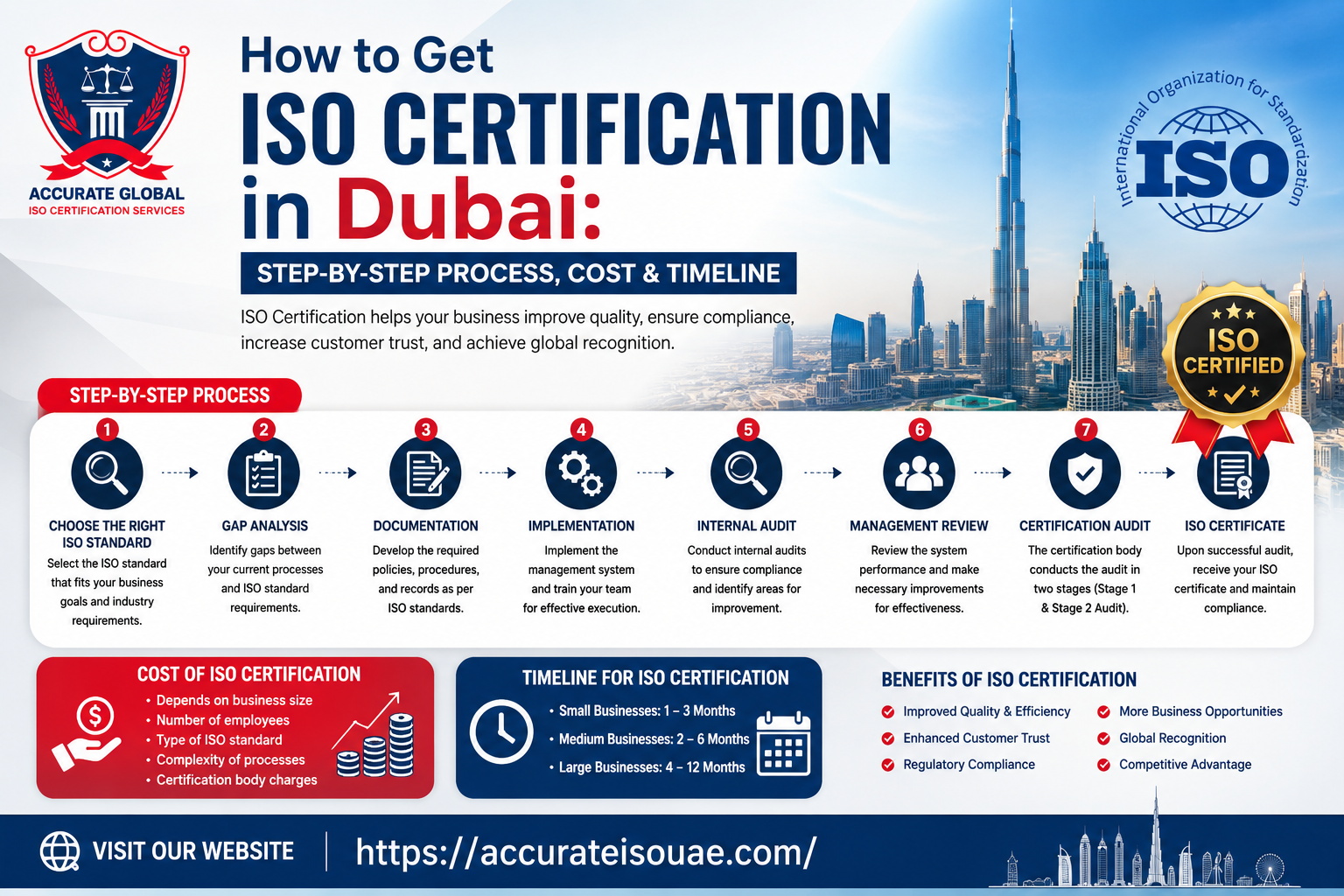
How the ISO Certification Process Works
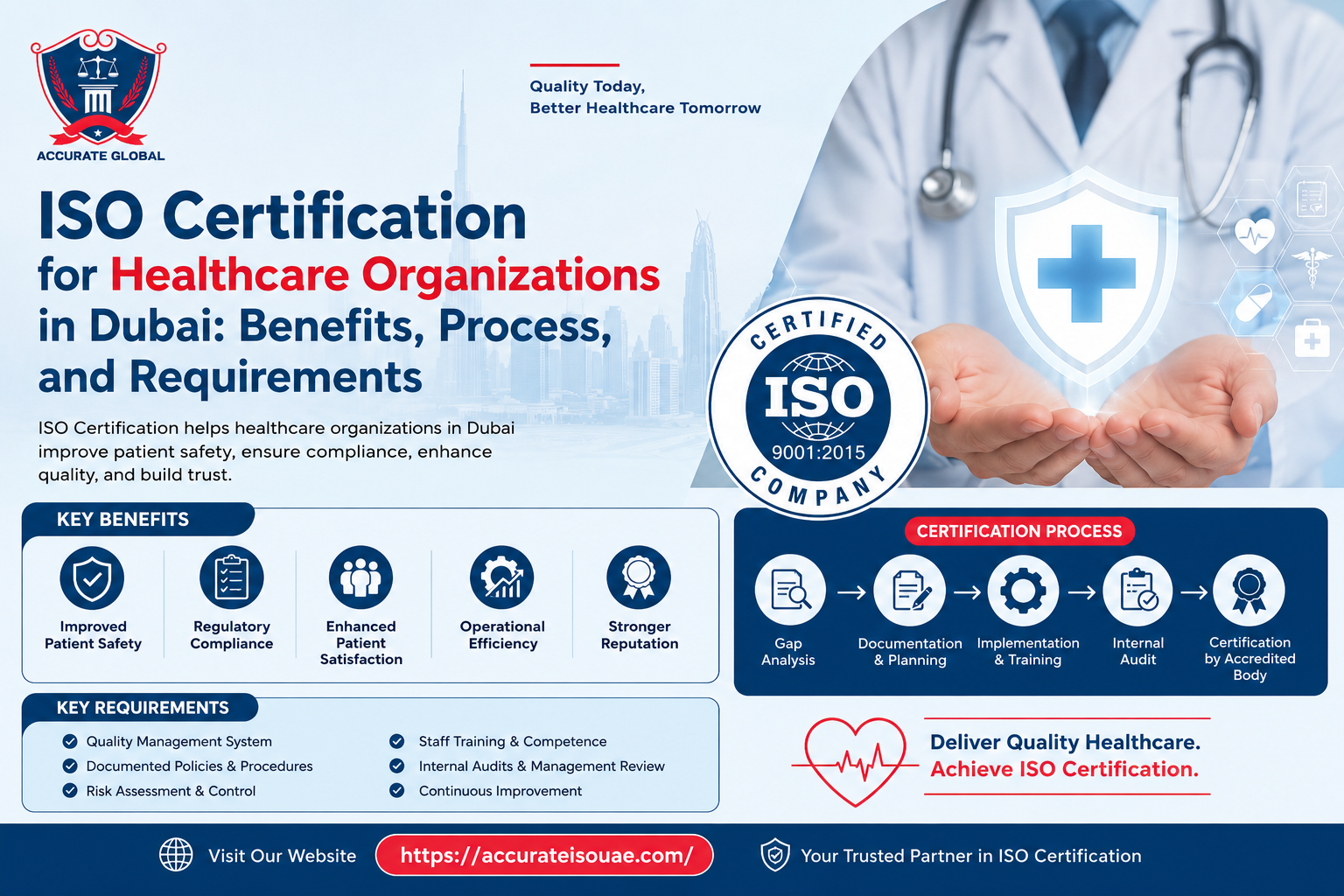
- Application and scoping: You share your business activities, number of employees and sites so the certification body can define the audit scope.
- Documentation review: Policies, procedures and records are reviewed against the standard.
- Stage 1 audit: The auditor checks readiness and confirms that the system is ready for the full assessment.
- Stage 2 audit: The auditor verifies that your processes are actually implemented and effective.
- Corrective actions: Any non-conformities found must be closed within the agreed timeline.
- Certification decision: After review, the certificate is issued, normally valid for three years with annual surveillance audits.
You can read our full process on the certification process page.
How to Choose a Certification Body in the UAE
Not every ISO certificate carries the same weight. Before you sign, check the following:
- Accreditation: Confirm that the certification body is accredited by a recognised accreditation body that is part of the IAF multilateral arrangement. Certificates from non-accredited bodies may be rejected by customers or tender evaluators.
- Verifiable certificates: A genuine certificate should be verifiable through the certification body.
- Impartiality: The body should publish clear impartiality, complaints and appeals policies.
- Scope match: The certificate scope must describe what your company really does.
- Transparent quotation: Ask for the audit days, surveillance audit fees and any extra charges up front.
How Long Does It Take?
Timelines depend on company size, readiness and the standard. A small organisation with documented processes can often complete certification in a matter of weeks, while larger or multi-site companies need more time for implementation and internal audits. Having your documentation and records ready before Stage 1 is the biggest factor in saving time.
Common Mistakes to Avoid
- Copying generic templates without adapting them to your real operations.
- Choosing a provider only on price, without checking accreditation.
- Skipping internal audits and management review before the certification audit.
- Defining a scope that is too narrow or does not match the business.
Get Your ISO Certificate in the UAE
Our team supports businesses across Dubai, Abu Dhabi, Sharjah and the rest of the UAE through every stage of the audit. Review our ISO 9001 and ISO 27001 certification pages, or apply for certification online. If you have questions about scope or timelines, contact our team for guidance.
Frequently Asked Questions
How long is an ISO certificate valid?
An ISO certificate is generally valid for three years, subject to successful annual surveillance audits and a recertification audit at the end of the cycle.
Is ISO certification mandatory in the UAE?
It is not a general legal requirement, but many tenders, contracts and regulated sectors require it.
Can one company hold several ISO certificates?
Yes. Many organisations combine standards such as ISO 9001, ISO 14001 and ISO 45001 into an integrated management system, which can reduce audit effort.
.png)
.png)
.png)
.png)
.png)
.png)
.png)