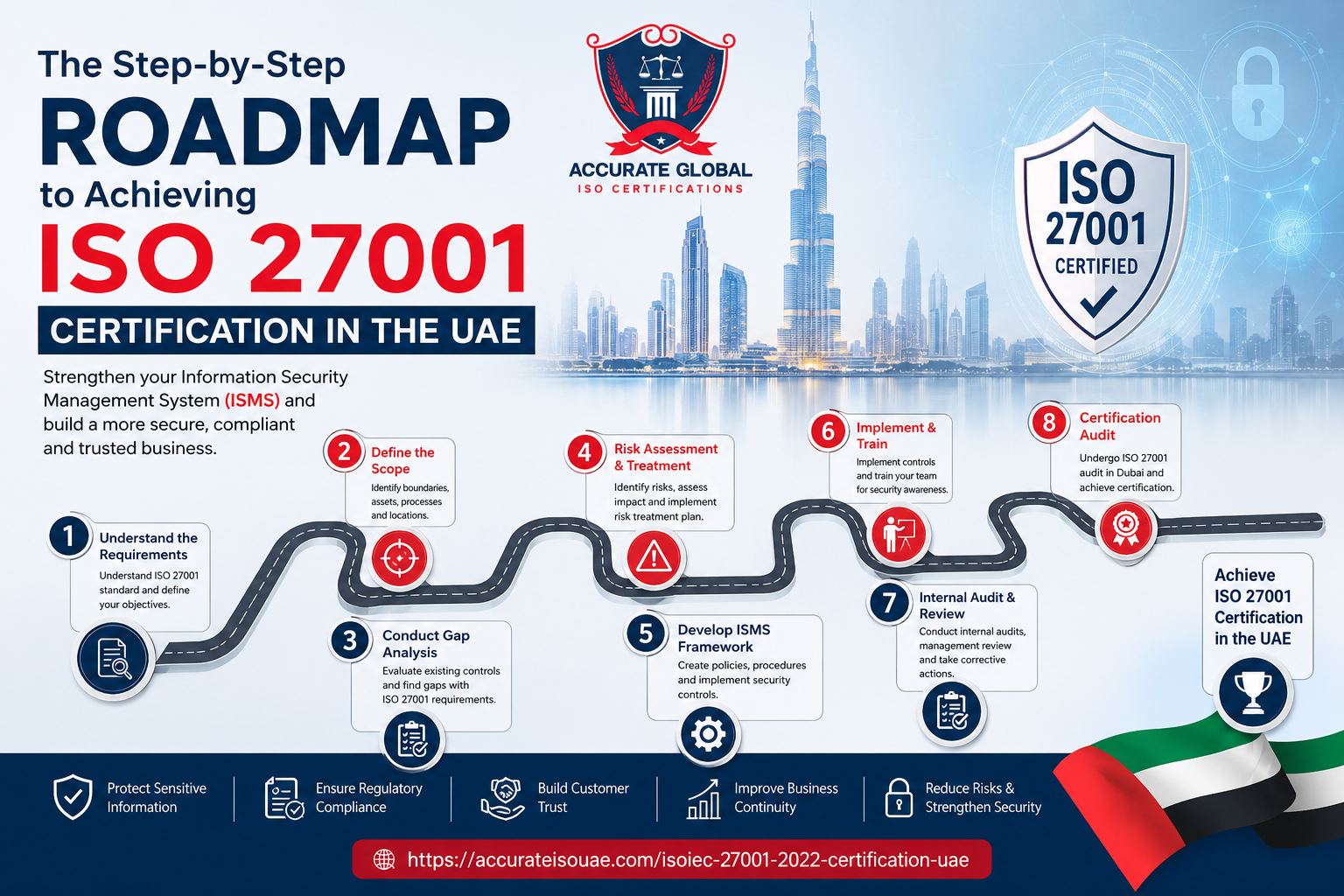
The Step-by-Step Roadmap to Achieving ISO 27001 Certification in the UAE
In today's digital business environment, information is one of an organization's most valuable assets. Businesses across the UAE are increasingly facing cyber threats, data breaches, ransomware attacks, and regulatory compliance requirements. As a result, companies are prioritizing robust cybersecurity frameworks to safeguard sensitive information and maintain customer trust.
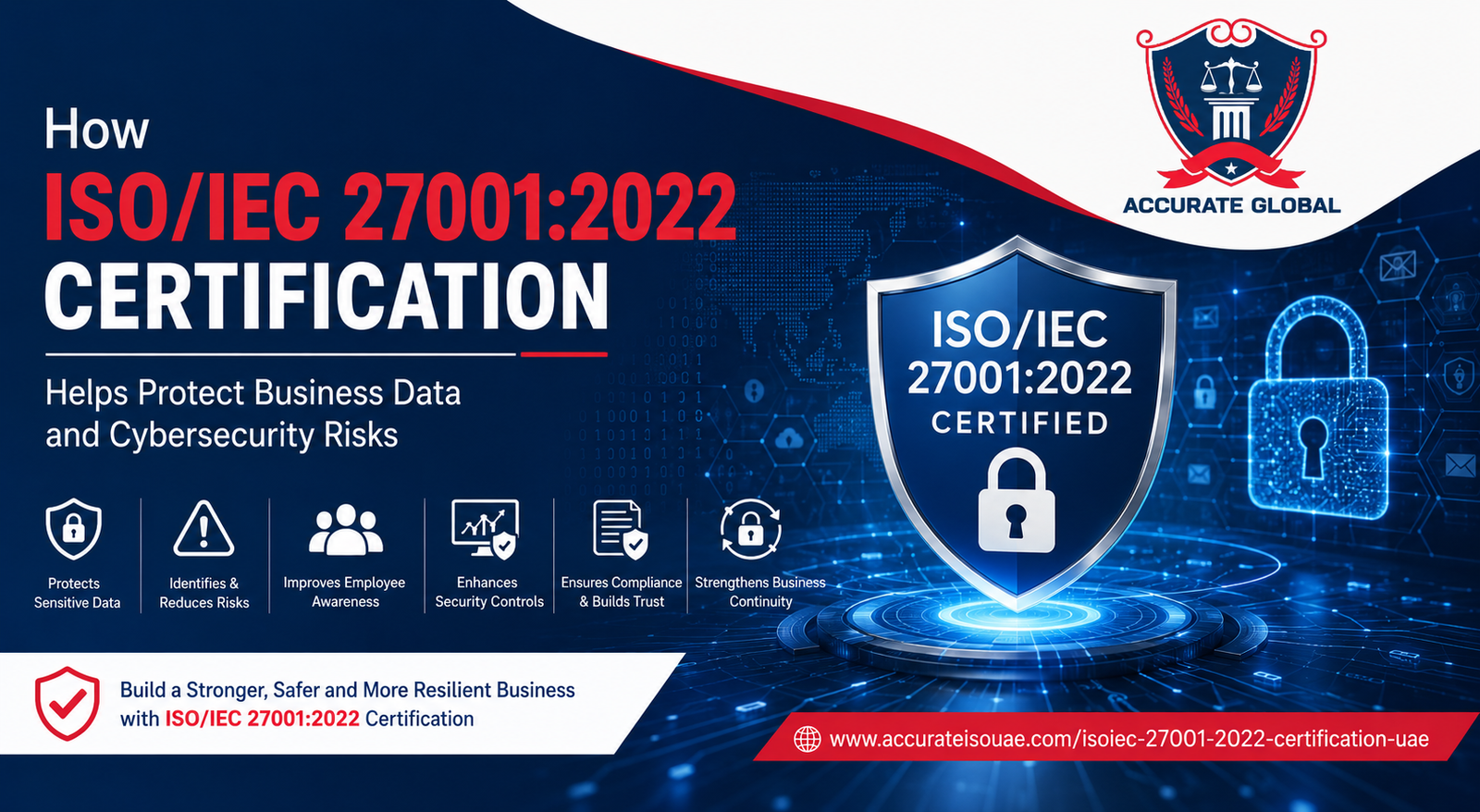
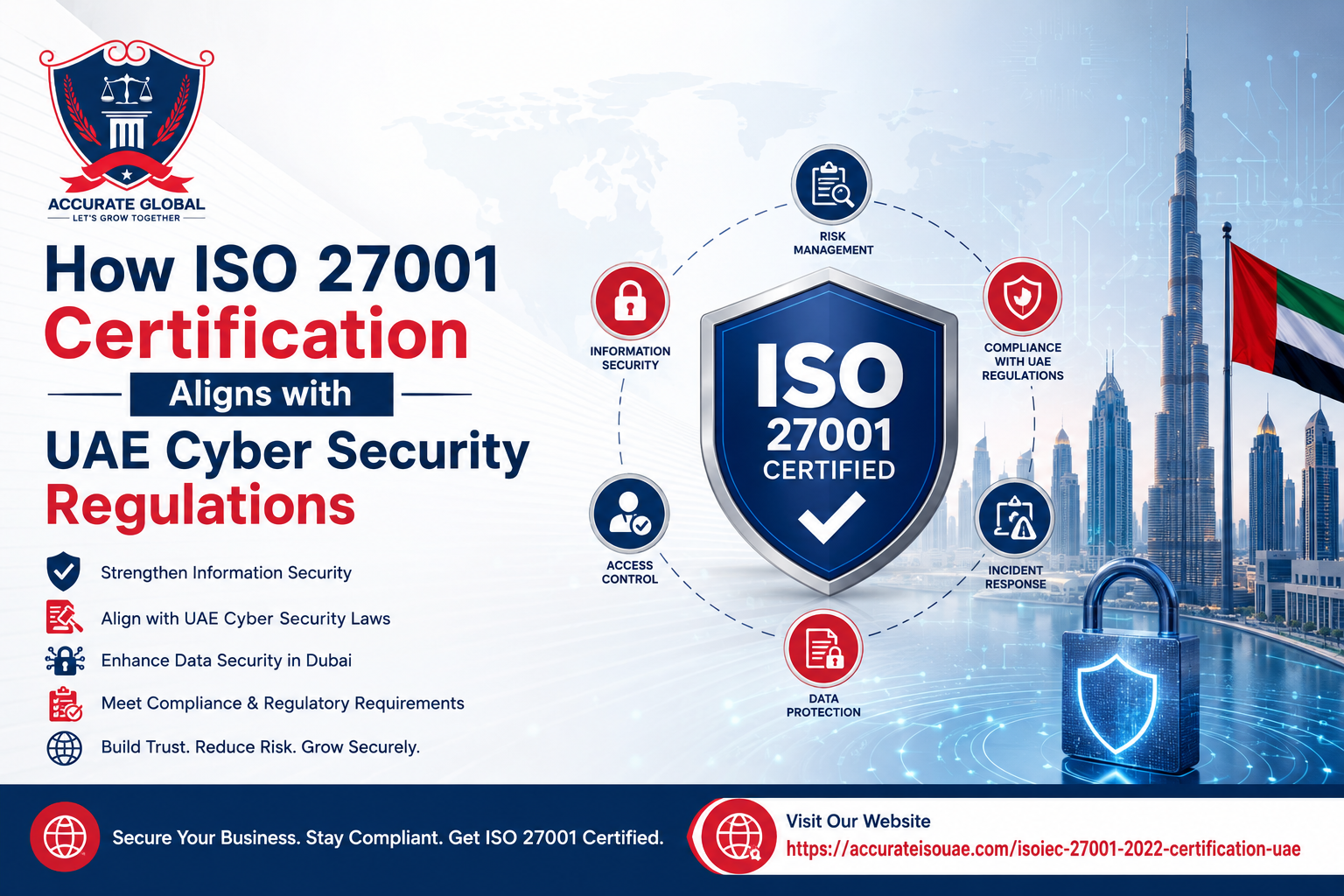
One of the most effective ways to demonstrate commitment to information security is through ISO 27001 certification in UAE. ISO/IEC 27001 is the internationally recognized standard for establishing, implementing, maintaining, and continually improving an Information Security Management System (ISMS).
Whether your organization operates in Dubai, Abu Dhabi, Sharjah, or any other emirate, obtaining ISO 27001 certification can strengthen cybersecurity, improve operational resilience, and enhance your competitive advantage. This comprehensive guide outlines the step-by-step roadmap to achieving certification successfully.
Understanding ISO 27001 Certification
ISO 27001 is an internationally accepted standard developed to help organizations manage information security risks systematically. The standard provides a framework for protecting confidential information through risk management, security controls, monitoring, and continuous improvement.
The primary objective of ISO 27001 is to ensure the confidentiality, integrity, and availability of information assets.
Organizations that achieve certification demonstrate their ability to:
- Protect customer and business data
- Manage cybersecurity risks effectively
- Meet regulatory and contractual requirements
- Improve stakeholder confidence
- Strengthen business continuity capabilities
As cyber risks continue to evolve, many UAE organizations view ISO 27001 certification as an essential business requirement rather than a voluntary initiative.
Step 1: Secure Leadership Commitment
Every successful ISO 27001 implementation begins with strong management support.
Top management must understand the benefits of implementing an Information Security Management System (ISMS) and commit the necessary resources, personnel, and budget to the project.
Leadership responsibilities include:
- Defining information security objectives
- Allocating resources
- Approving policies
- Supporting risk management initiatives
- Promoting a culture of security awareness
Without executive commitment, ISO 27001 implementation often faces delays and resource challenges.
Step 2: Define the Scope of the ISMS
The next step involves determining which parts of the organization will be covered by the ISMS.
The scope should clearly define:
- Business processes
- Departments
- Physical locations
- Information assets
- Technology infrastructure
- Third-party services
For example, a software company in Dubai may include software development, cloud infrastructure, customer support systems, and data centers within its ISMS scope.
Clearly defining the scope ensures effective implementation and simplifies the future ISO 27001 audit Dubai process.
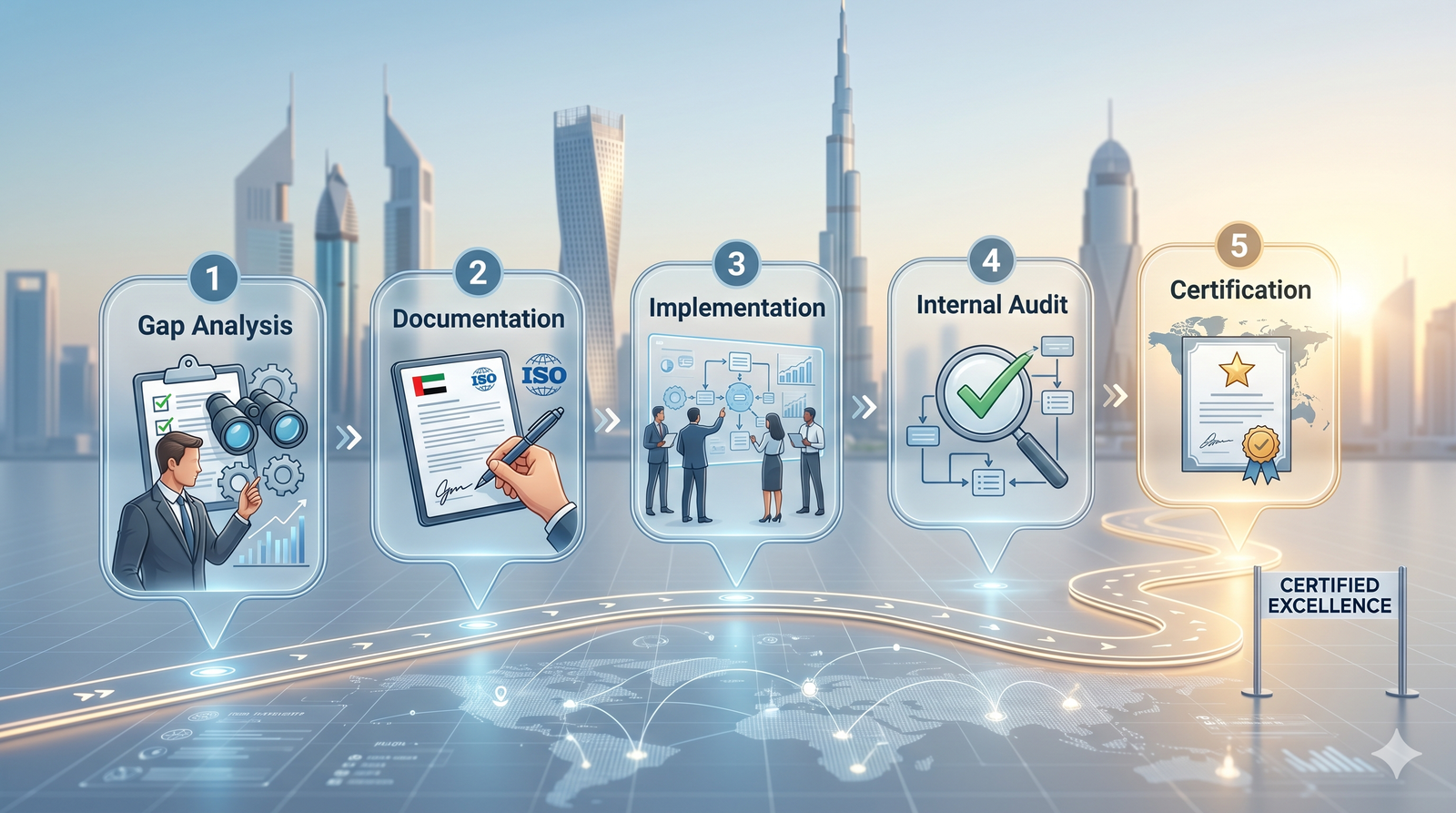
Step 3: Conduct a Gap Analysis
A gap analysis helps organizations understand their current level of compliance against ISO 27001 requirements.
This assessment identifies:
- Existing security controls
- Compliance strengths
- Missing requirements
- Areas needing improvement
The findings provide a clear implementation roadmap and help prioritize activities based on risk and business objectives.
Benefits of a gap analysis include:
- Reduced implementation costs
- Faster certification readiness
- Better resource planning
- Improved audit preparation
Step 4: Perform Information Security Risk Assessment
Risk assessment is one of the most important components of ISO 27001.
Organizations must identify and evaluate risks associated with their information assets.
Key activities include:
Asset Identification
Identify critical assets such as:
- Customer databases
- Financial records
- Employee information
- Intellectual property
- Cloud applications
- Business-critical systems
Threat Identification
Potential threats may include:
- Cyberattacks
- Malware infections
- Data breaches
- Insider threats
- Human error
- System failures
Vulnerability Assessment
Organizations should identify weaknesses that could be exploited by threats, such as:
- Weak passwords
- Inadequate access controls
- Outdated software
- Poor employee awareness
The risk assessment process forms the foundation of the entire Information Security Management System (ISMS).
Step 5: Develop Risk Treatment Plans
After identifying risks, organizations must determine how to address them.
Risk treatment options include:
- Risk mitigation
- Risk avoidance
- Risk transfer
- Risk acceptance
The chosen treatment measures should align with business objectives and risk tolerance levels.
A documented risk treatment plan demonstrates how identified risks will be managed and monitored over time.
Step 6: Establish Information Security Policies and Procedures
ISO 27001 requires organizations to develop documented policies and procedures that govern information security activities.
Common documents include:
- Information Security Policy
- Access Control Policy
- Password Management Policy
- Incident Response Procedure
- Backup and Recovery Procedure
- Business Continuity Plan
- Vendor Security Policy
- Risk Management Procedure
These documents provide clear guidance for employees and support compliance during certification audits.
Step 7: Implement Security Controls
Based on the risk assessment results, organizations must implement appropriate controls to protect information assets.
Technical Controls
Examples include:
- Firewalls
- Encryption
- Multi-factor authentication
- Antivirus solutions
- Security monitoring systems
Physical Controls
Examples include:
- CCTV systems
- Secure server rooms
- Visitor management controls
- Physical access restrictions
Administrative Controls
Examples include:
- Security awareness training
- Employee background verification
- Incident reporting processes
- Vendor security assessments
Effective implementation of these controls is essential for achieving ISO 27001 certification in UAE.
Step 8: Train Employees and Build Security Awareness
Human error remains one of the leading causes of security incidents.
Organizations should conduct regular training programs covering:
- Cybersecurity best practices
- Phishing awareness
- Password security
- Data handling procedures
- Incident reporting processes
Building a strong security culture significantly improves ISMS effectiveness and reduces organizational risk.
Step 9: Monitor and Measure ISMS Performance
Once controls are implemented, organizations must continuously monitor their effectiveness.
Performance monitoring may include:
- Security incident tracking
- Compliance reviews
- Vulnerability assessments
- Risk reassessments
- KPI measurement
Regular monitoring ensures the ISMS remains aligned with evolving business and security requirements.
Step 10: Conduct Internal Audits
Before the external certification audit, organizations must conduct internal audits to verify compliance.
Internal audits help identify:
- Nonconformities
- Documentation gaps
- Ineffective controls
- Improvement opportunities
Corrective actions should be implemented to address any issues discovered during the audit process.
This step is critical for successful preparation for the ISO 27001 audit Dubai certification assessment.
Step 11: Perform Management Review
ISO 27001 requires top management to review the performance and effectiveness of the ISMS.
Management reviews typically evaluate:
- Audit findings
- Security objectives
- Risk management performance
- Incident trends
- Resource requirements
- Improvement opportunities
These reviews demonstrate leadership involvement and support continual improvement.
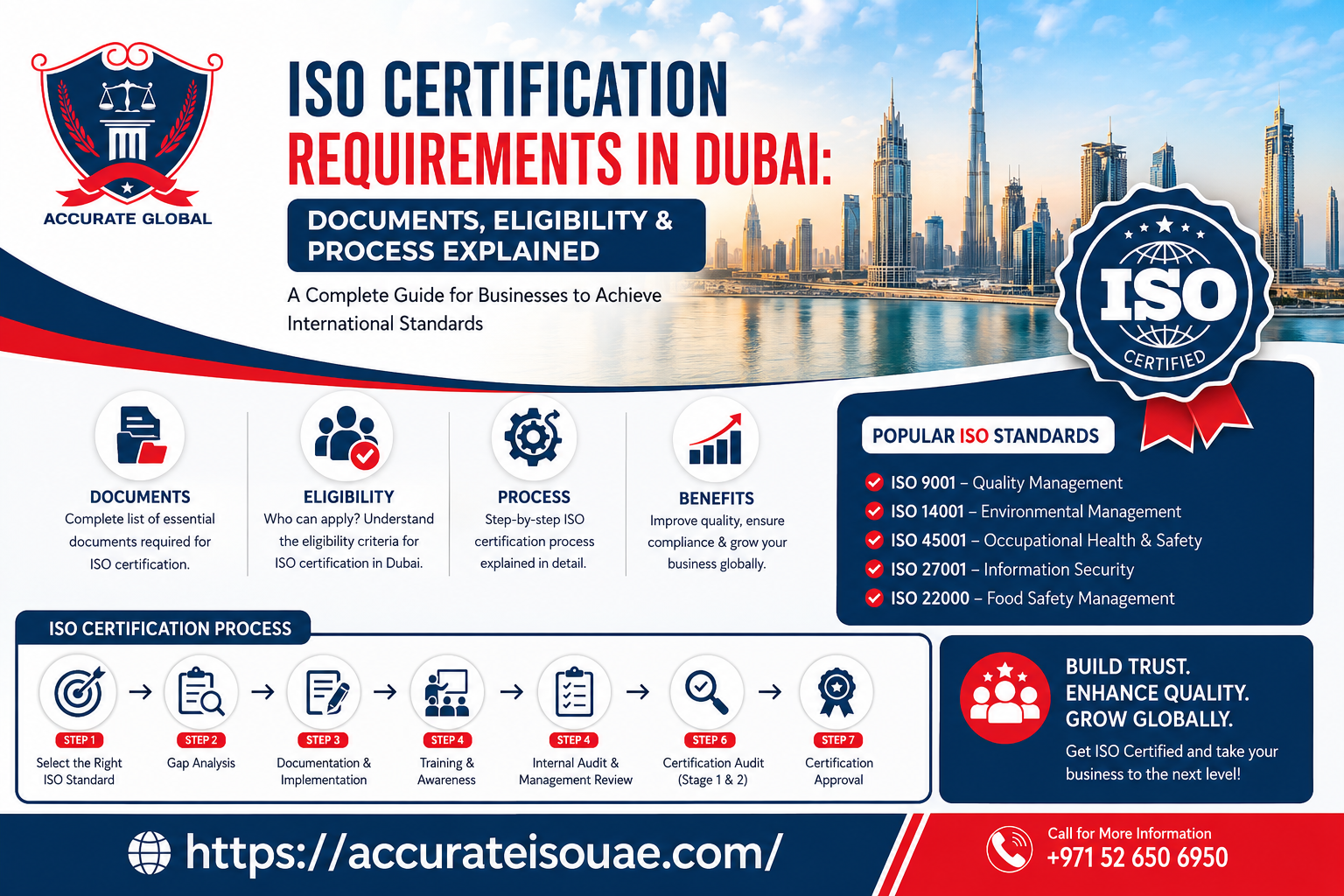
Step 12: Complete the ISO 27001 Certification Audit
The final stage involves certification audits conducted by an accredited certification body.
Stage 1 Audit
The auditor reviews:
- ISMS documentation
- Scope definition
- Risk assessment methodology
- Policies and procedures
Stage 2 Audit
The auditor evaluates:
- Practical implementation
- Employee awareness
- Security controls
- Operational effectiveness
- Compliance evidence
Upon successful completion, the organization receives ISO 27001 certification in UAE.
Benefits of ISO 27001 Certification in UAE
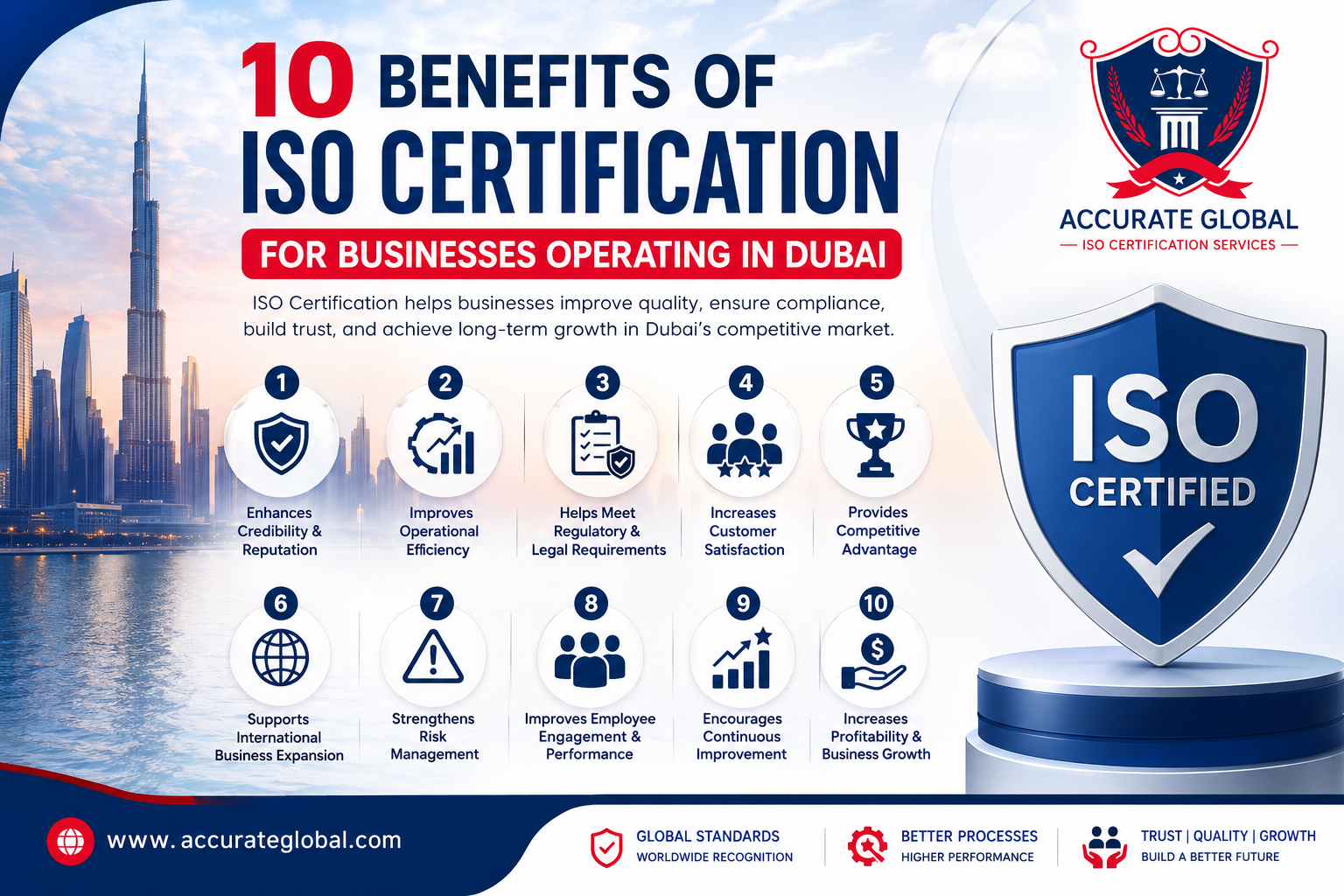
Organizations that achieve certification gain several strategic advantages.
Enhanced Information Security
Protects sensitive business and customer information from cyber threats.
Regulatory Compliance
Supports compliance with UAE cybersecurity and data protection requirements.
Increased Customer Confidence
Demonstrates commitment to information security and privacy protection.
Competitive Advantage
Strengthens credibility when pursuing contracts, tenders, and partnerships.
Improved Risk Management
Provides a systematic approach to identifying and mitigating security risks.
Business Continuity
Improves resilience against cyber incidents and operational disruptions.
Conclusion
Achieving ISO 27001 certification in UAE is a strategic journey that helps organizations establish a strong Information Security Management System (ISMS) and protect critical information assets. By following a structured implementation roadmap—from leadership commitment and risk assessment to internal audits and the final ISO 27001 audit Dubai process—organizations can successfully achieve certification and build long-term cybersecurity resilience.
As cybersecurity threats continue to grow, ISO 27001 provides UAE businesses with a globally recognized framework for managing information security risks, improving stakeholder confidence, and supporting sustainable business growth.

.png)

.png)

.png)
.png)
.png)
.png)
.png)