ISO Certification in Dubai: A Complete Guide for Business Owners
In the fast-paced and competitive business landscape of the UAE, standing out is no longer just about having a great product—it is about proving your commitment to quality, safety, and reliability. Whether you are a startup in Dubai Marina or an established enterprise in JAFZA, obtaining an ISO certification is one of the most effective ways to build trust with stakeholders and clients alike.
But what exactly does ISO certification mean for your business, and how do you navigate the path to compliance? In this guide, we break down everything you need to know about ISO certification in the UAE.
What is ISO Certification?
ISO (International Organization for Standardization) develops international standards to ensure the quality, safety, and efficiency of products, services, and systems. An ISO certification is a seal of approval from a third-party body, verifying that your company complies with one of the international standards developed by the ISO.
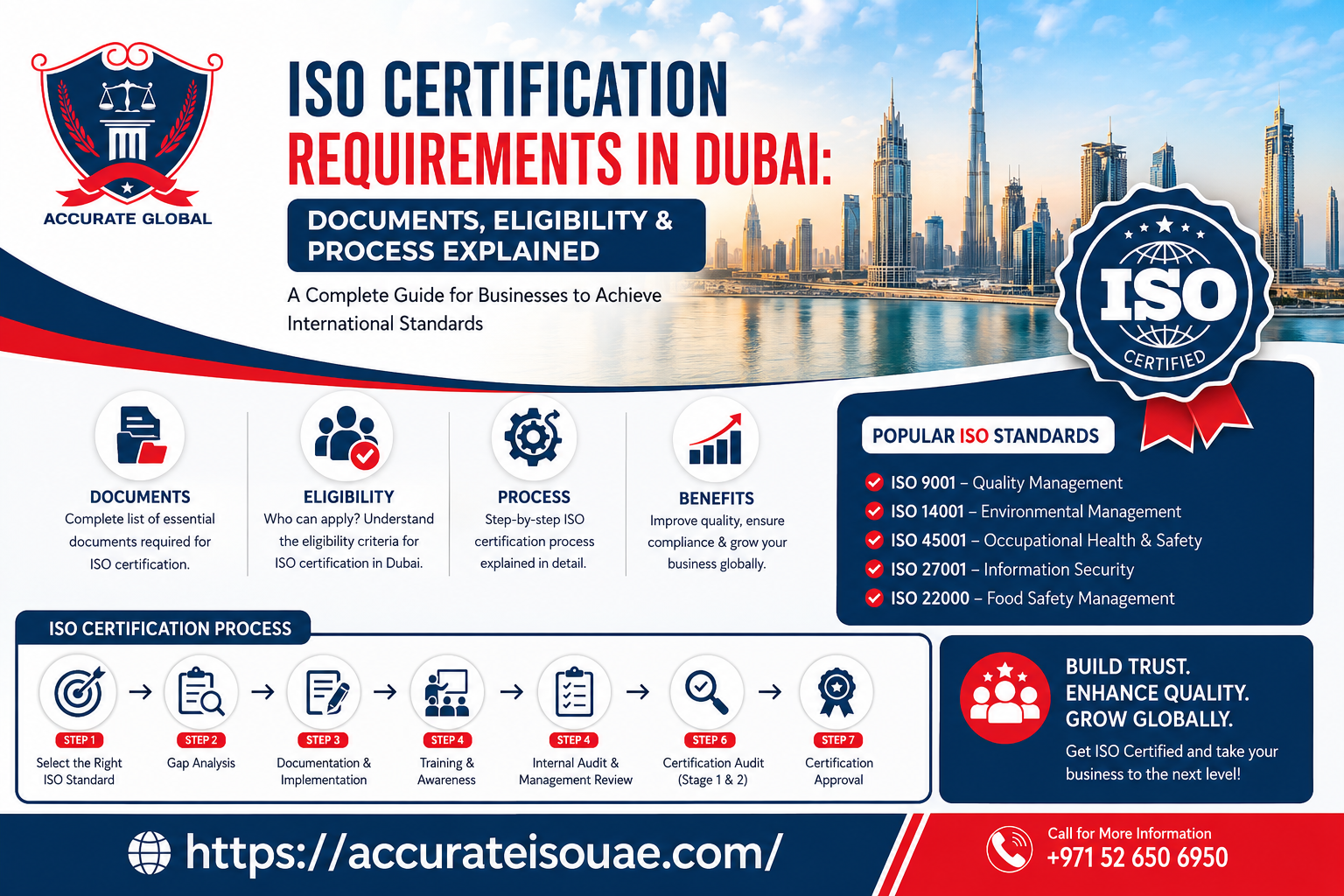
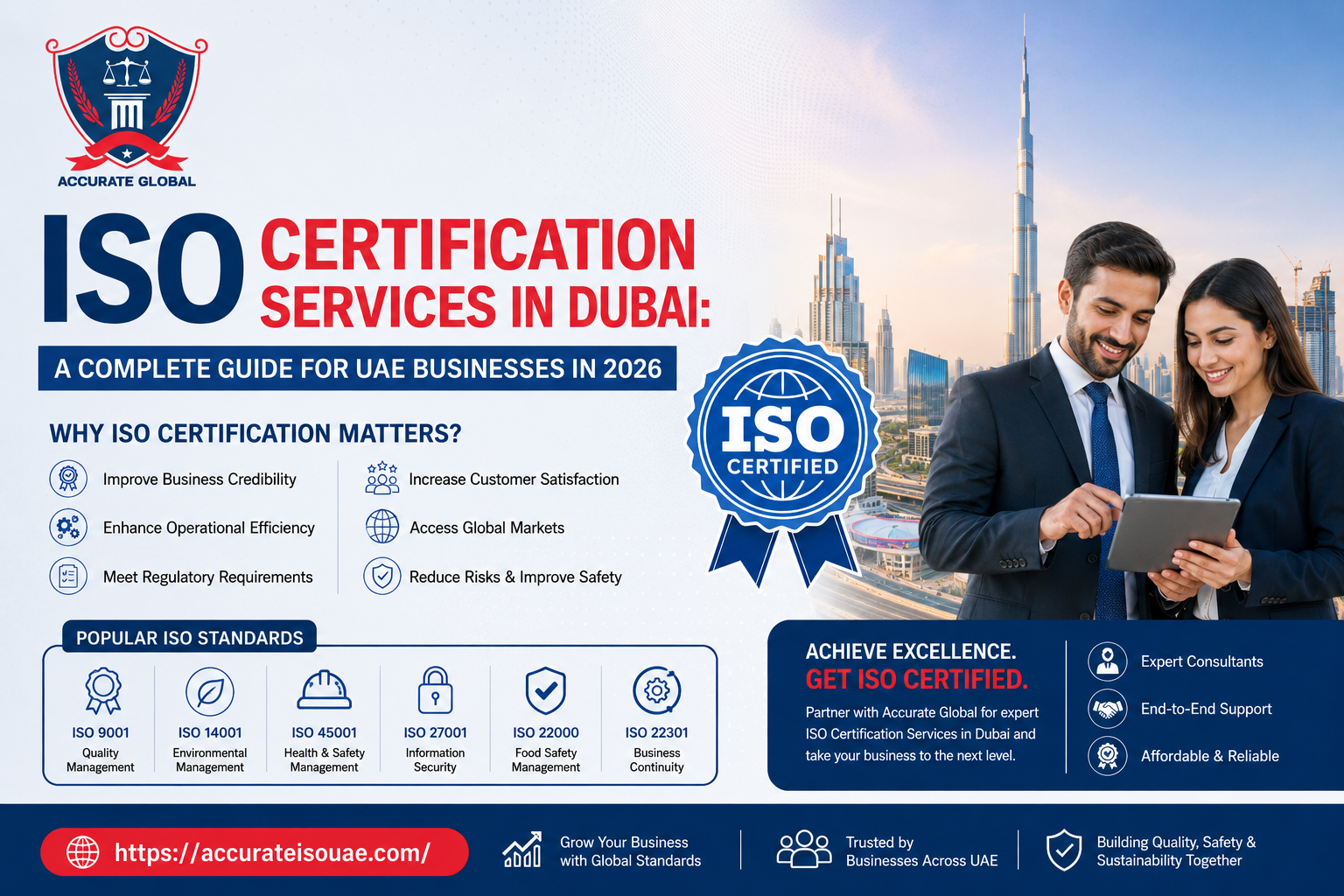
Popular standards in the Dubai market include:
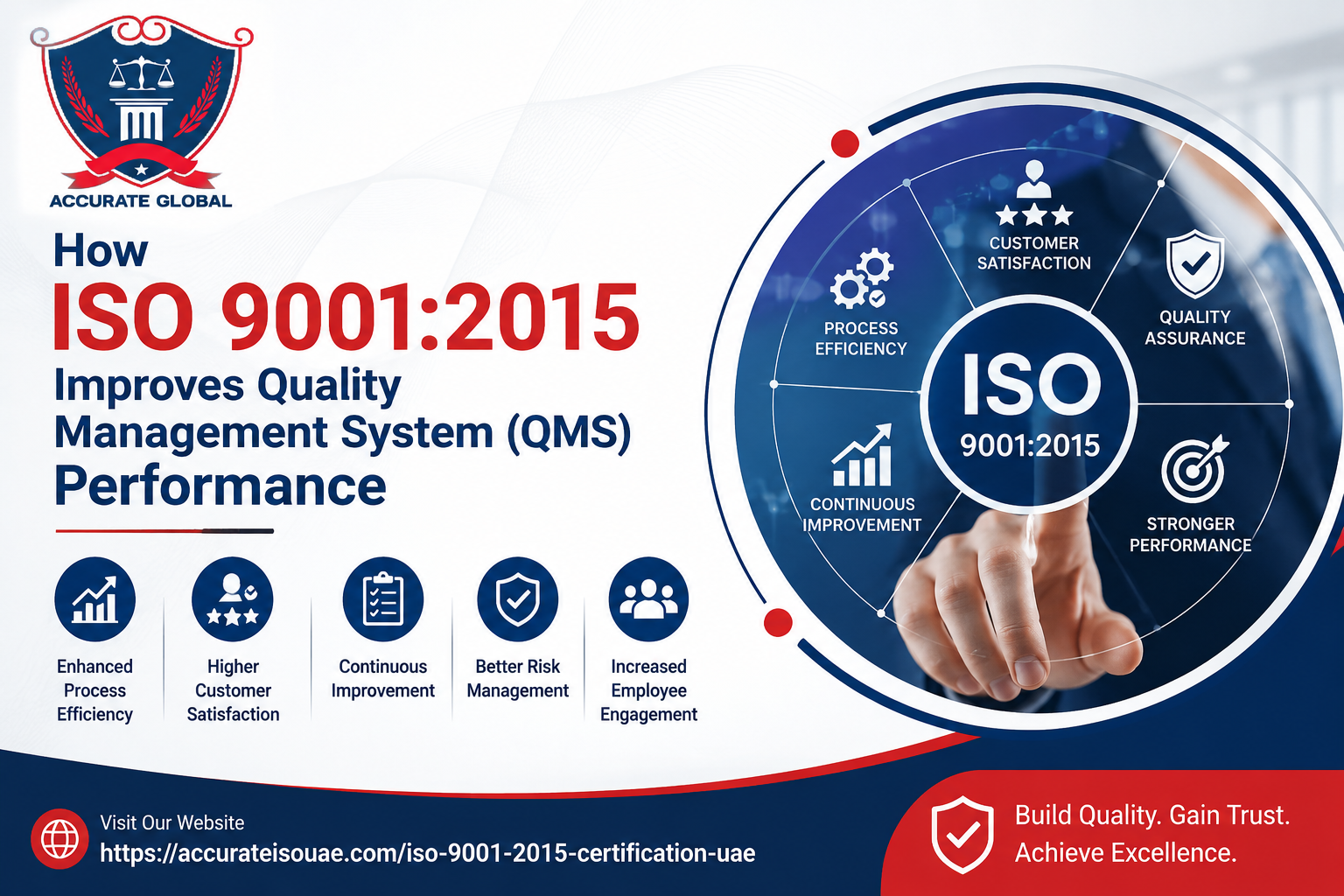
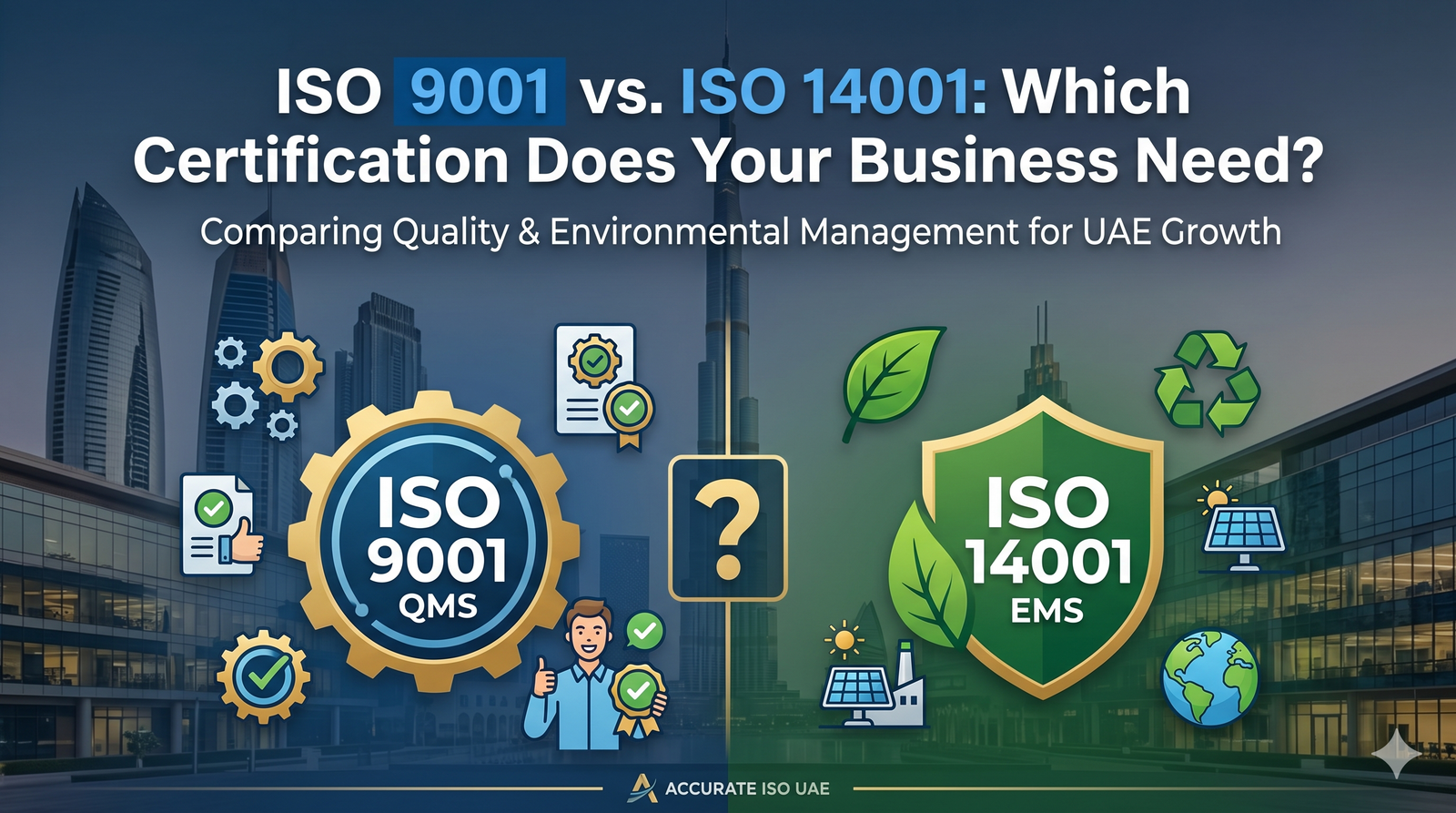
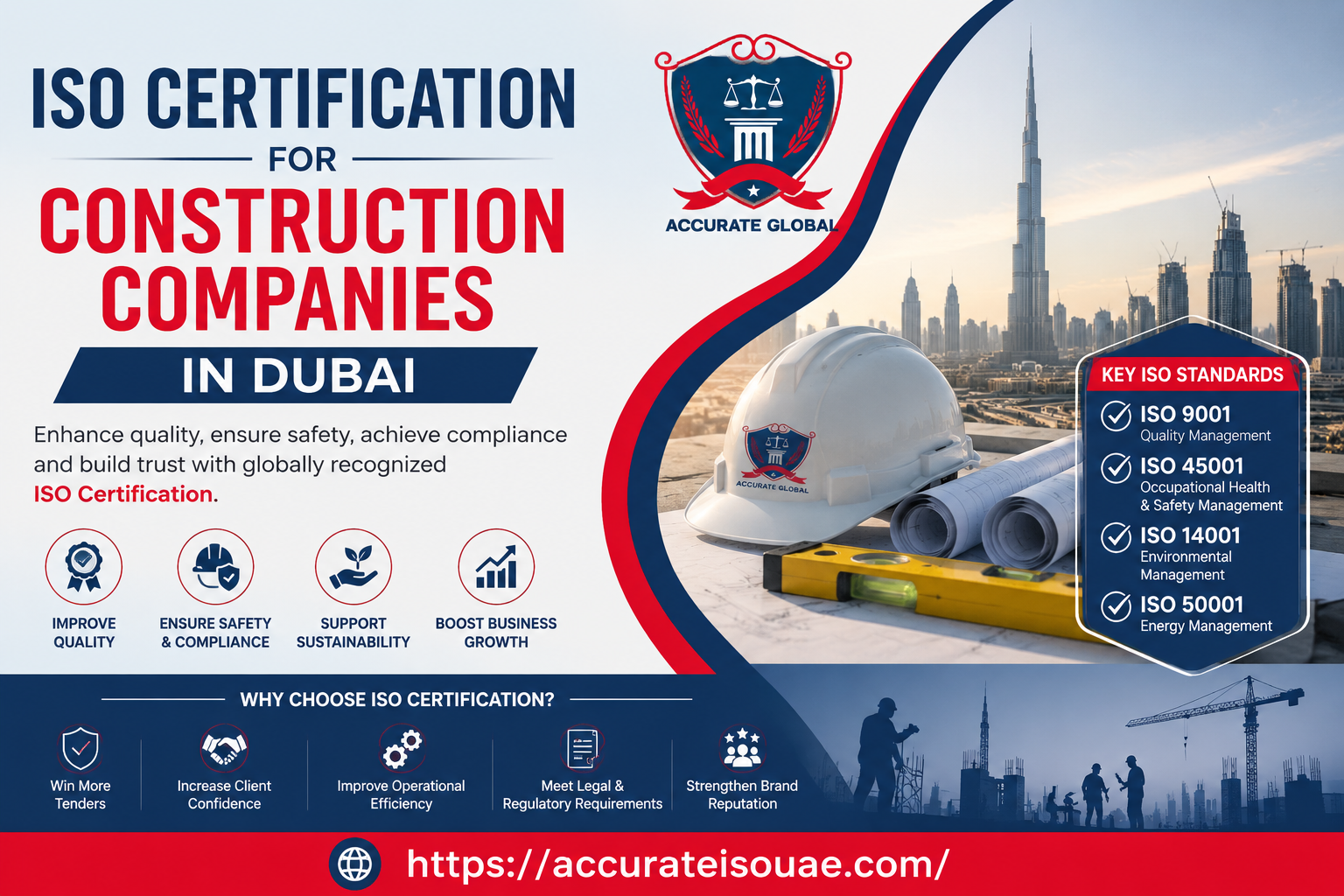
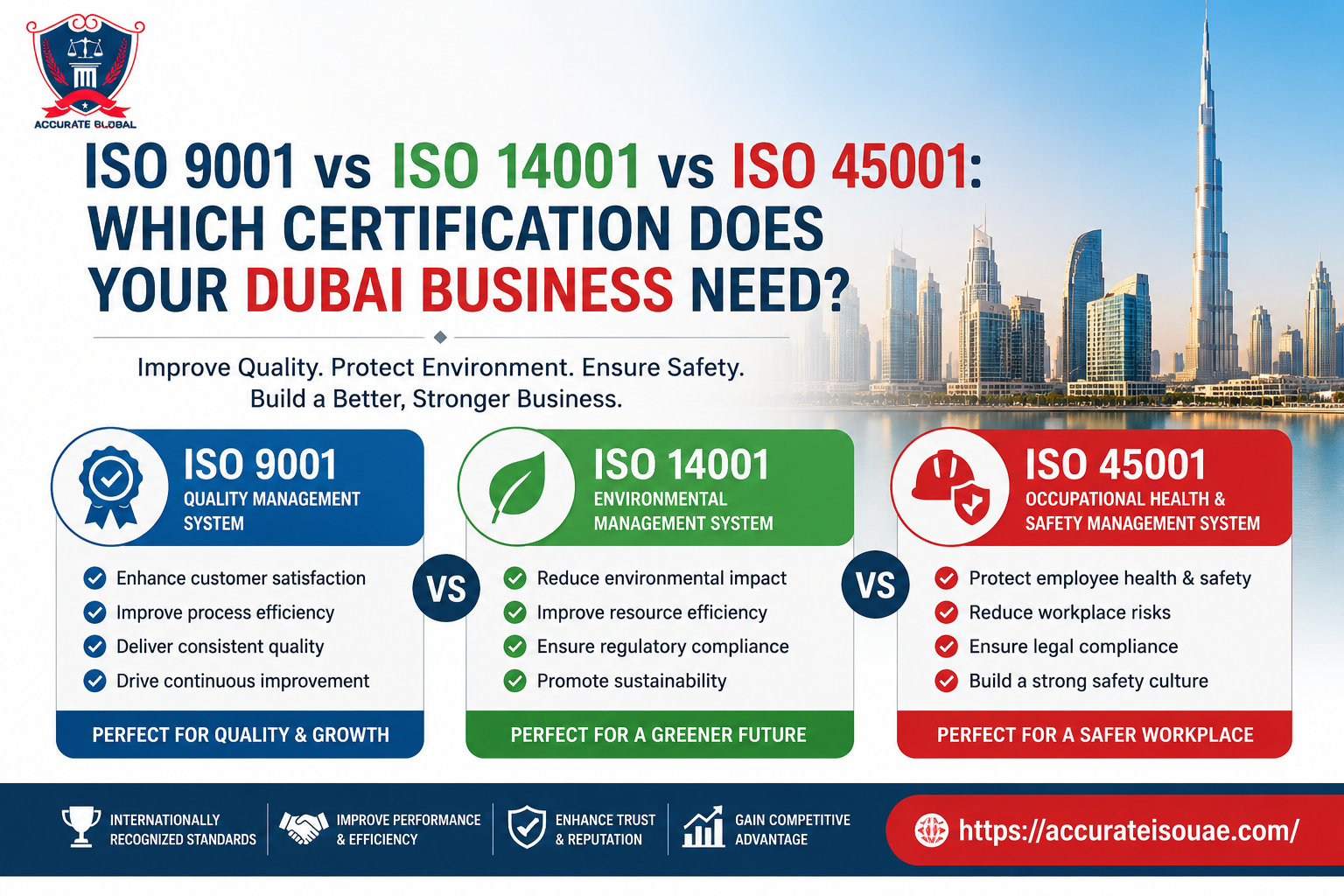
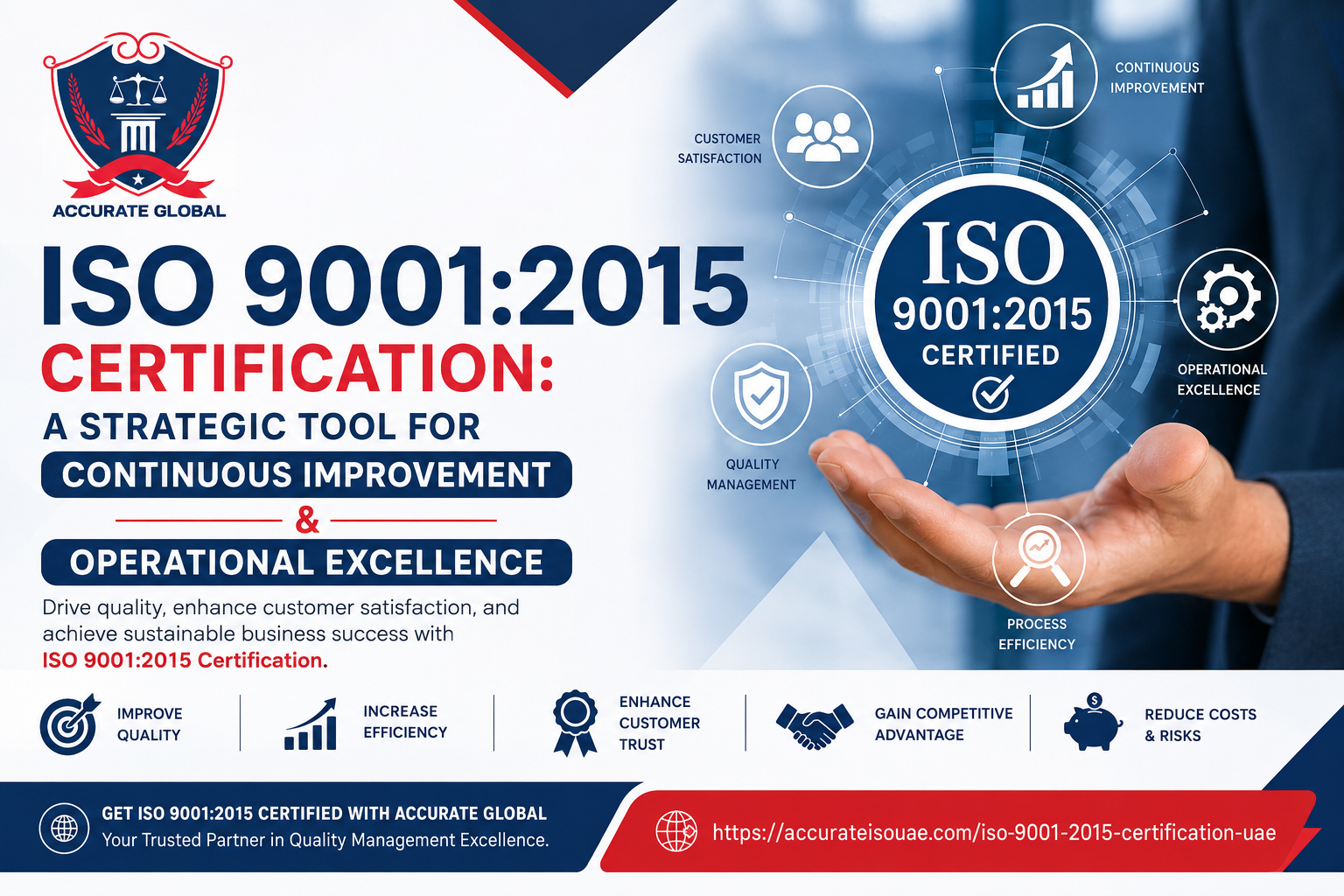
- ISO 9001: Quality Management Systems (QMS).
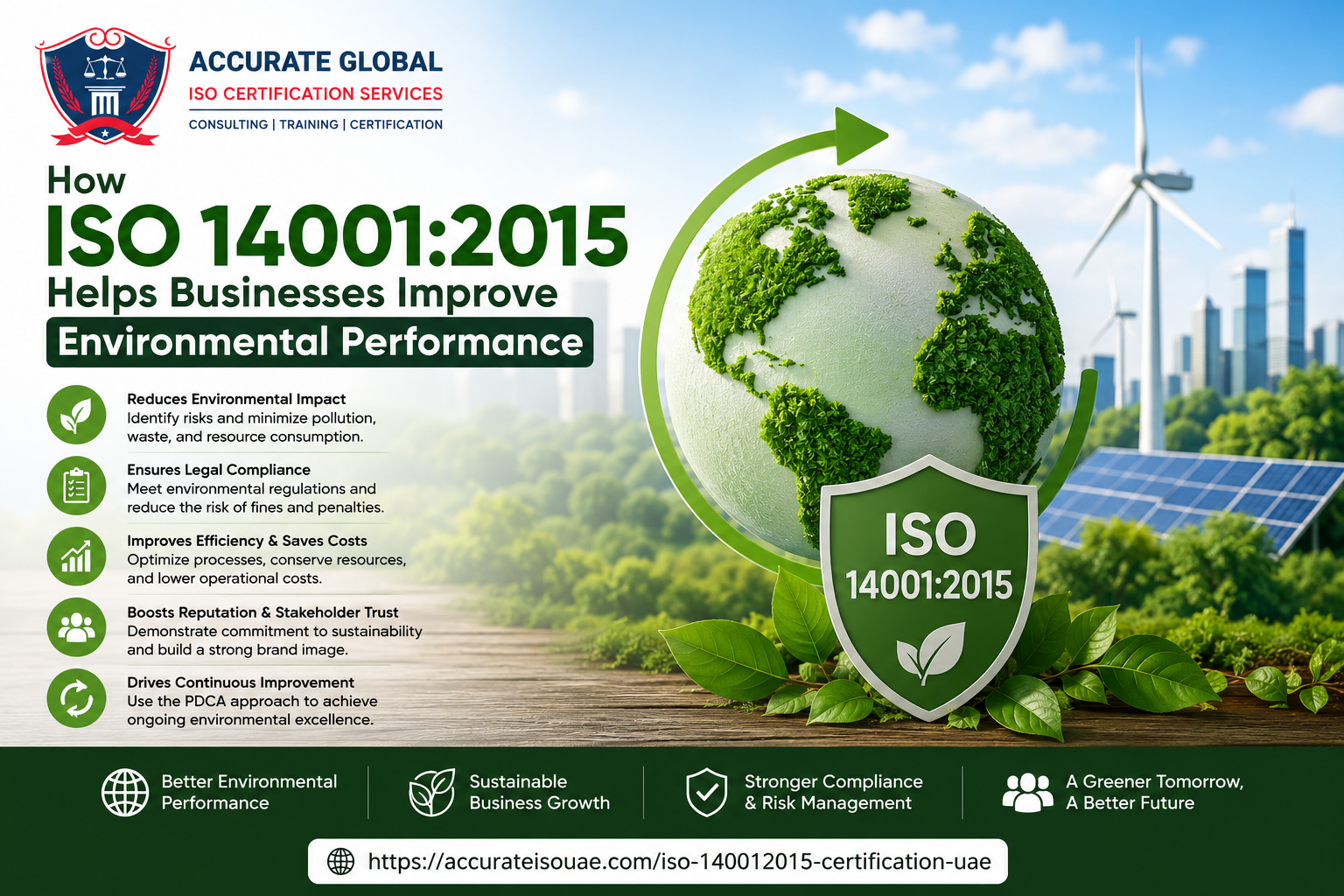
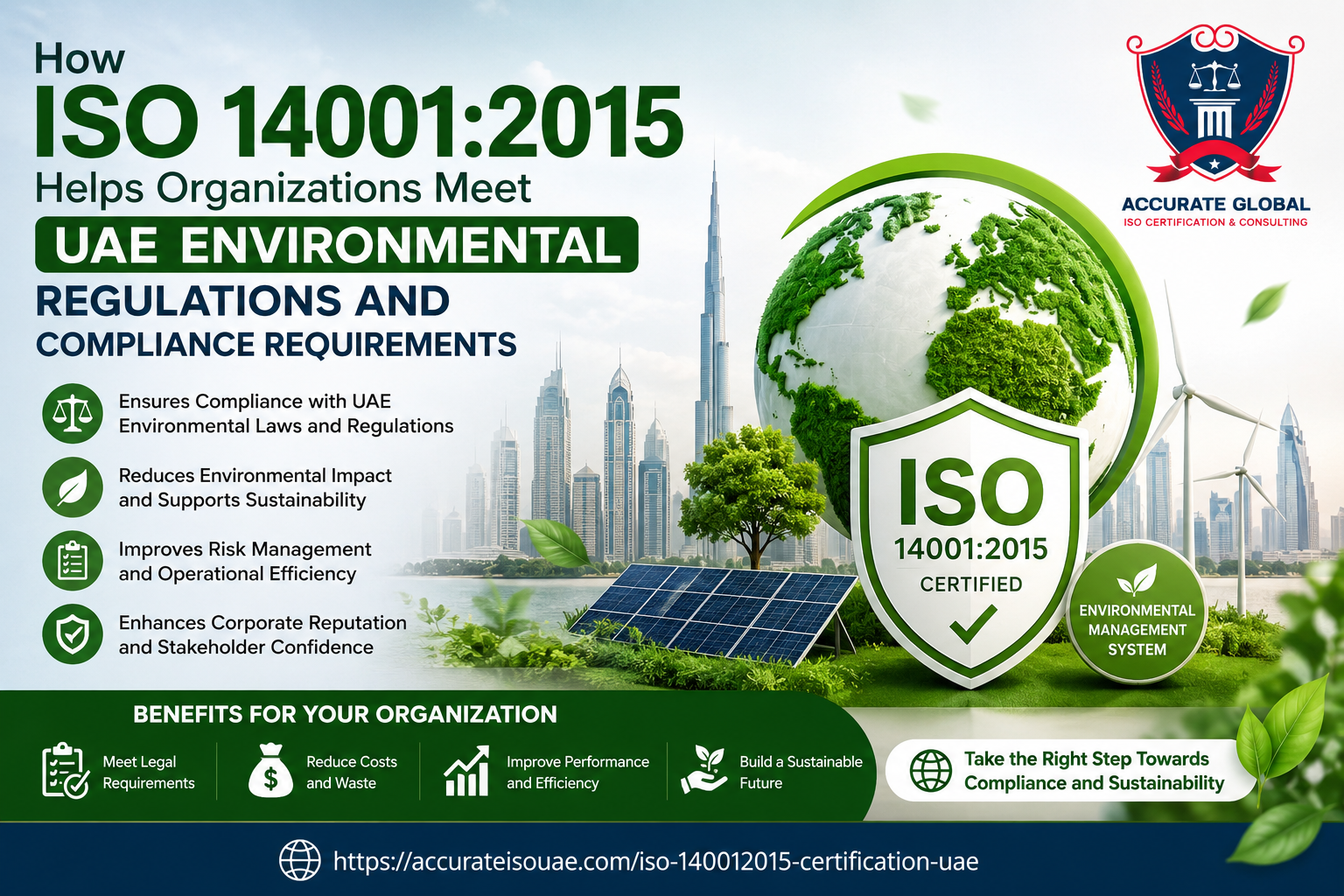
- ISO 14001: Environmental Management Systems (EMS).
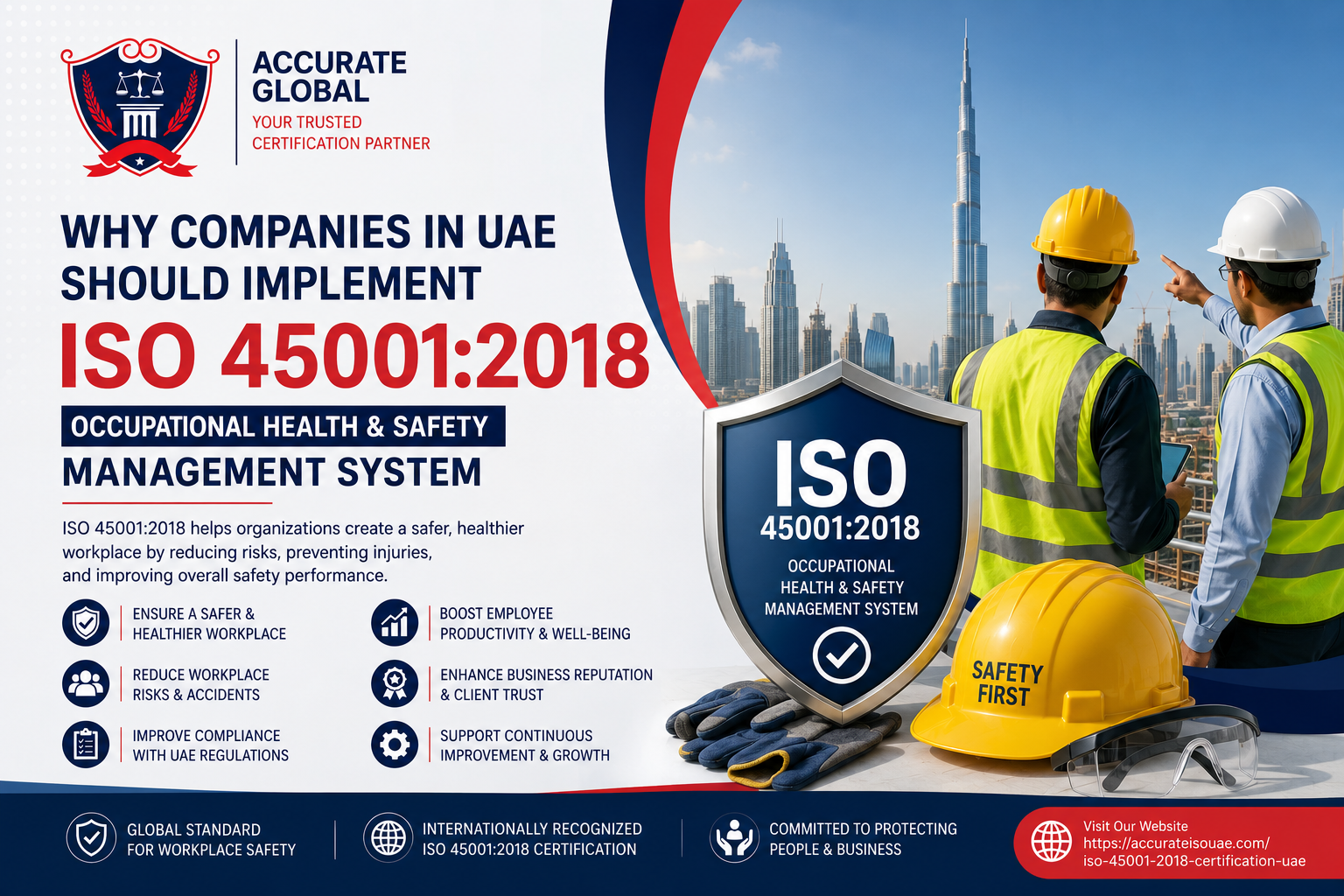
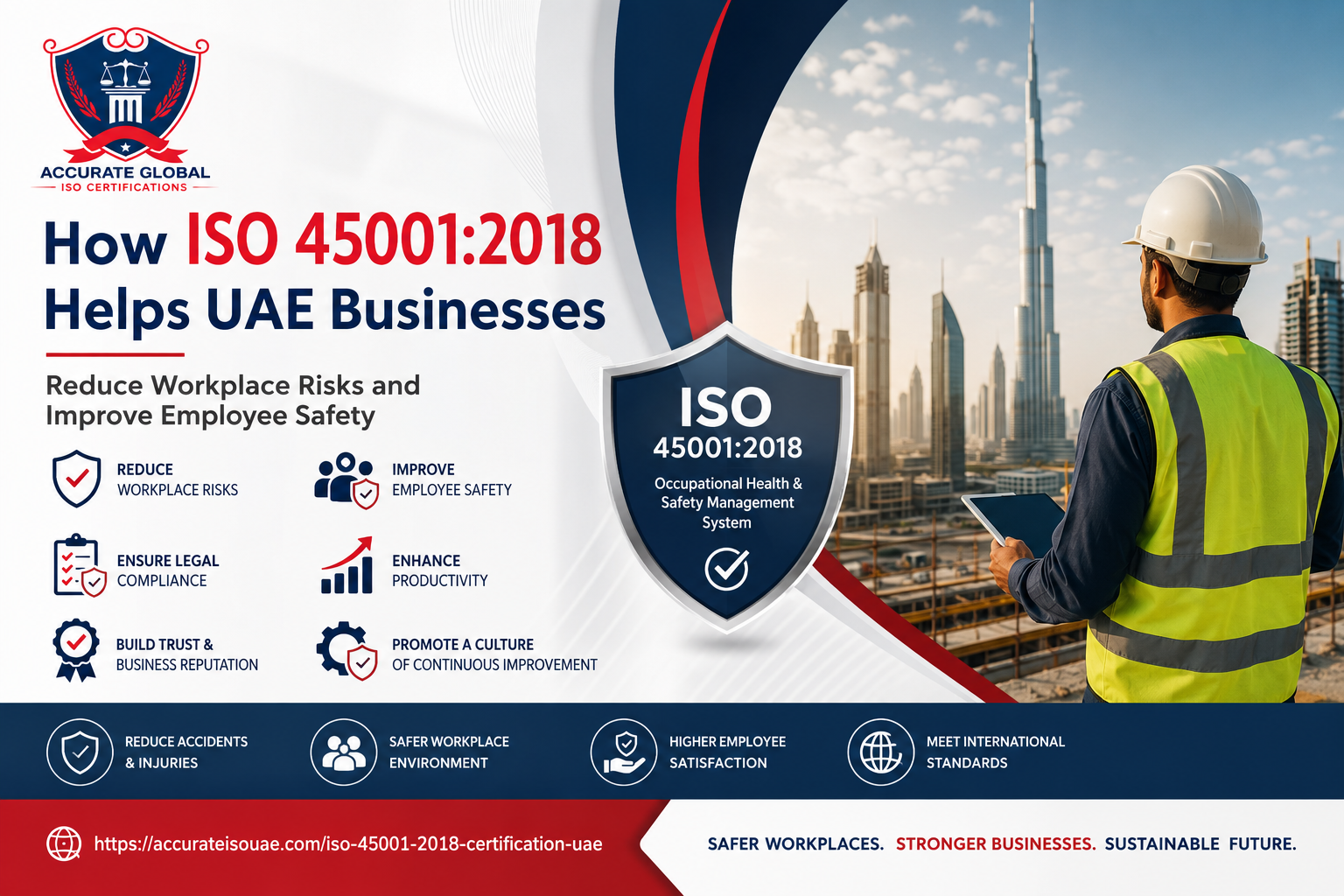
- ISO 45001: Occupational Health and Safety Management.
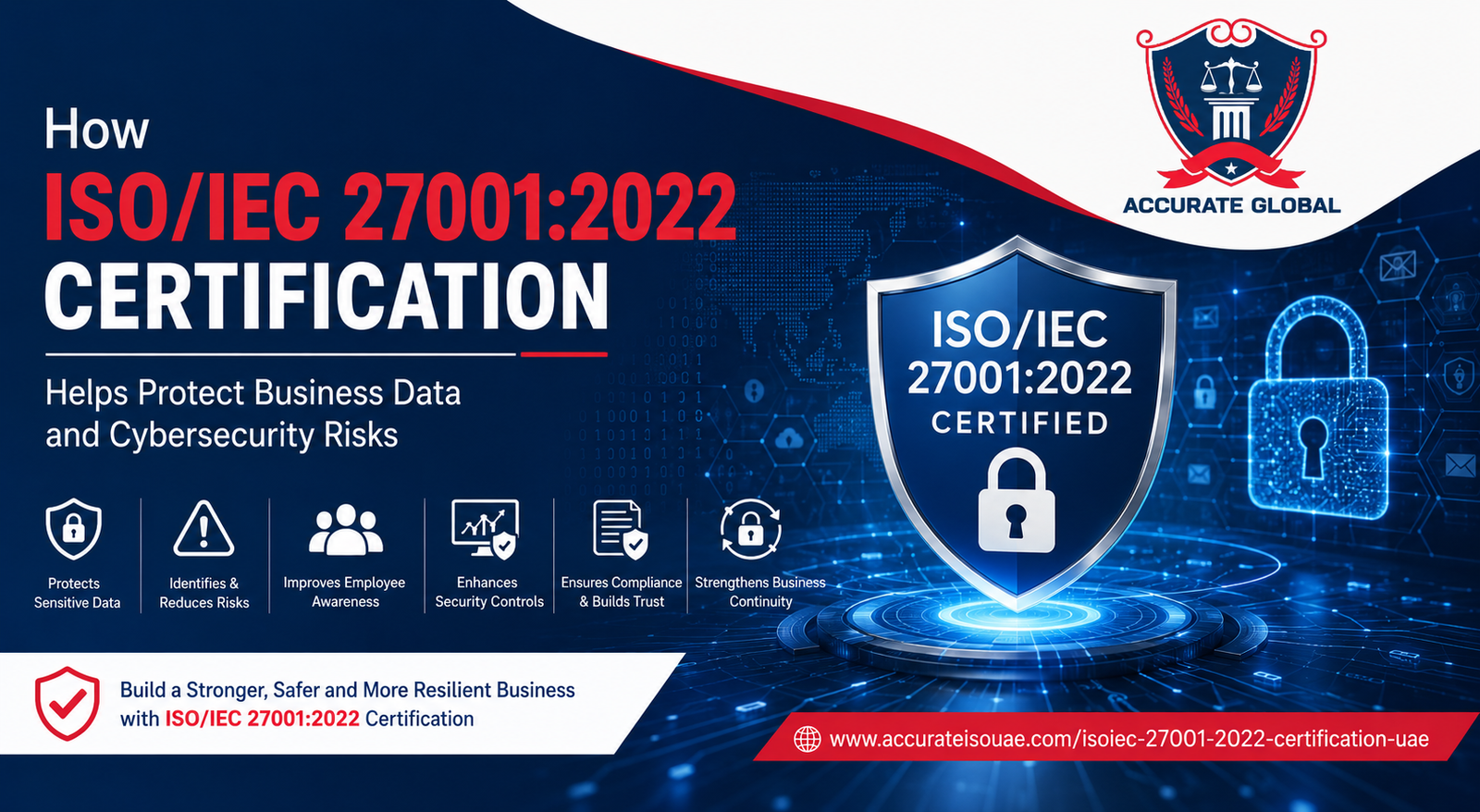
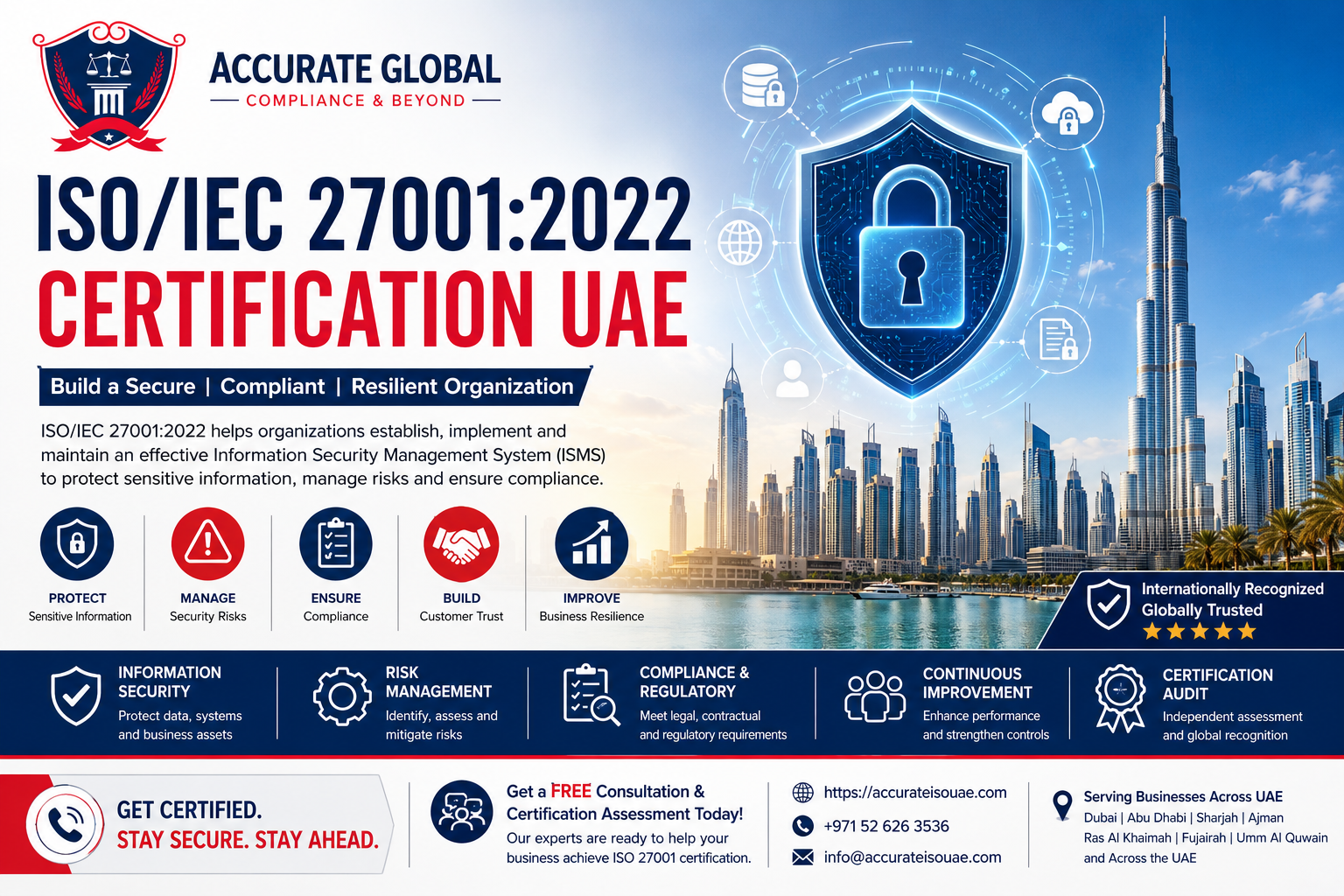
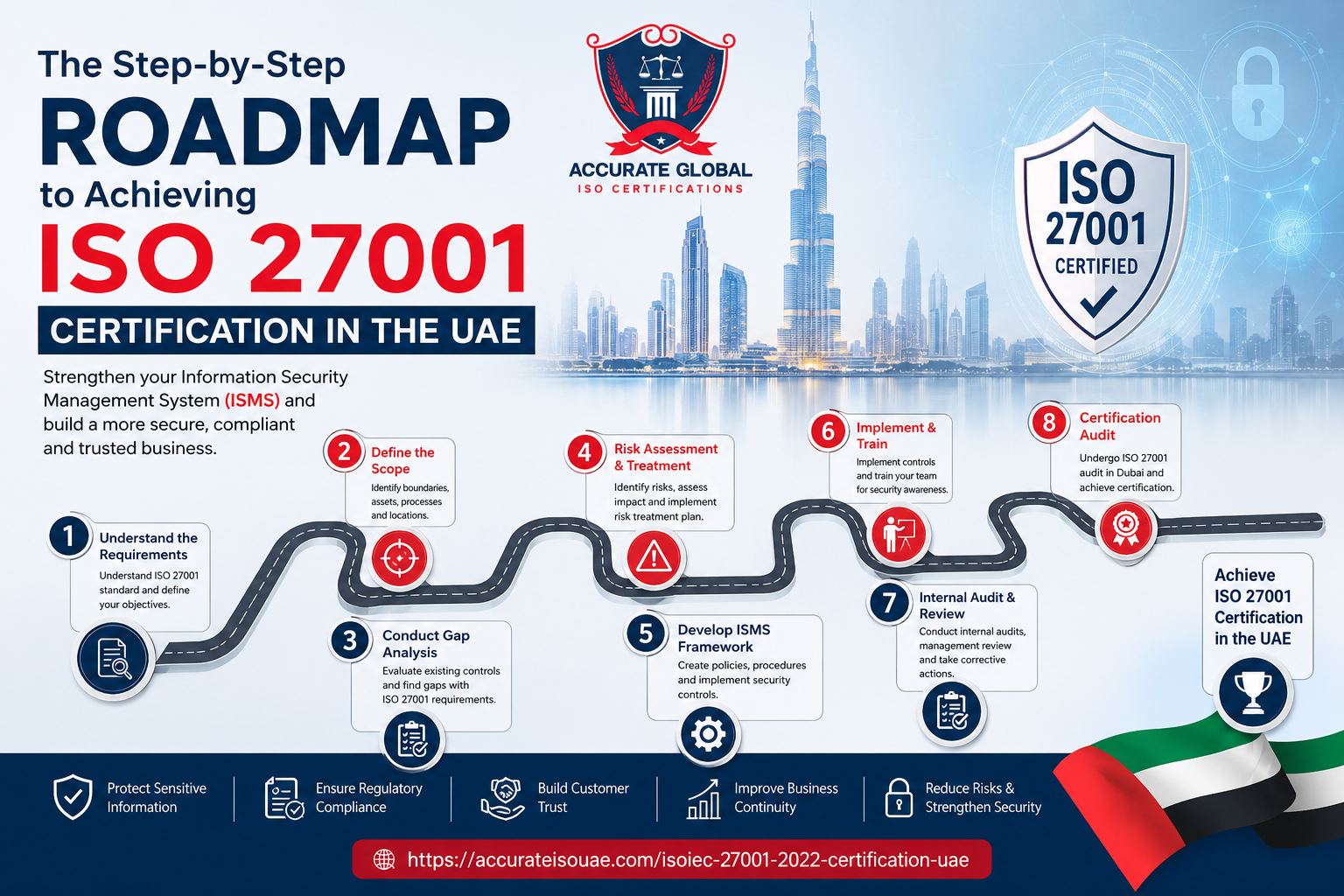
- ISO 27001: Information Security Management.
Why Your Business Needs ISO Certification in Dubai
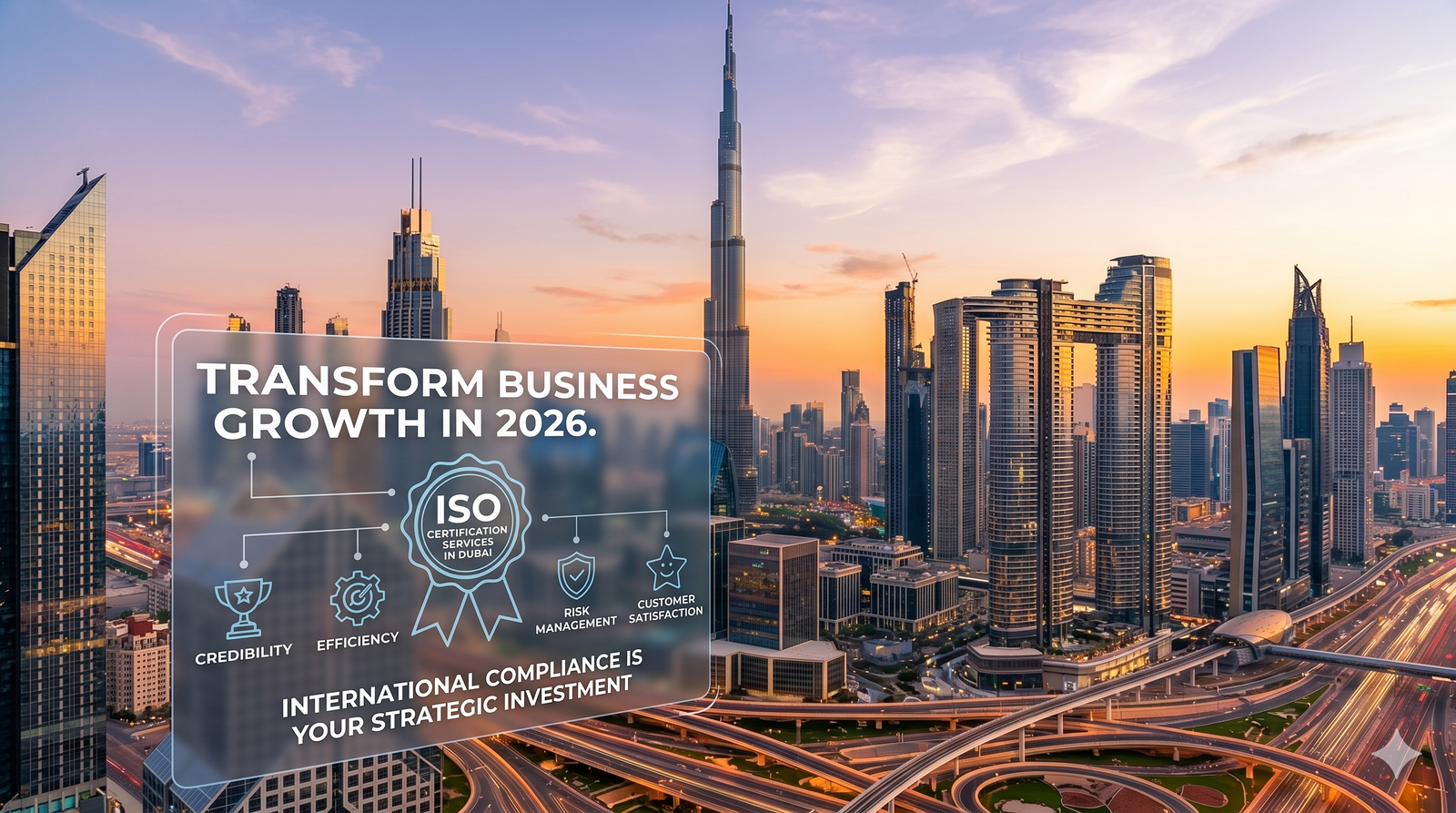
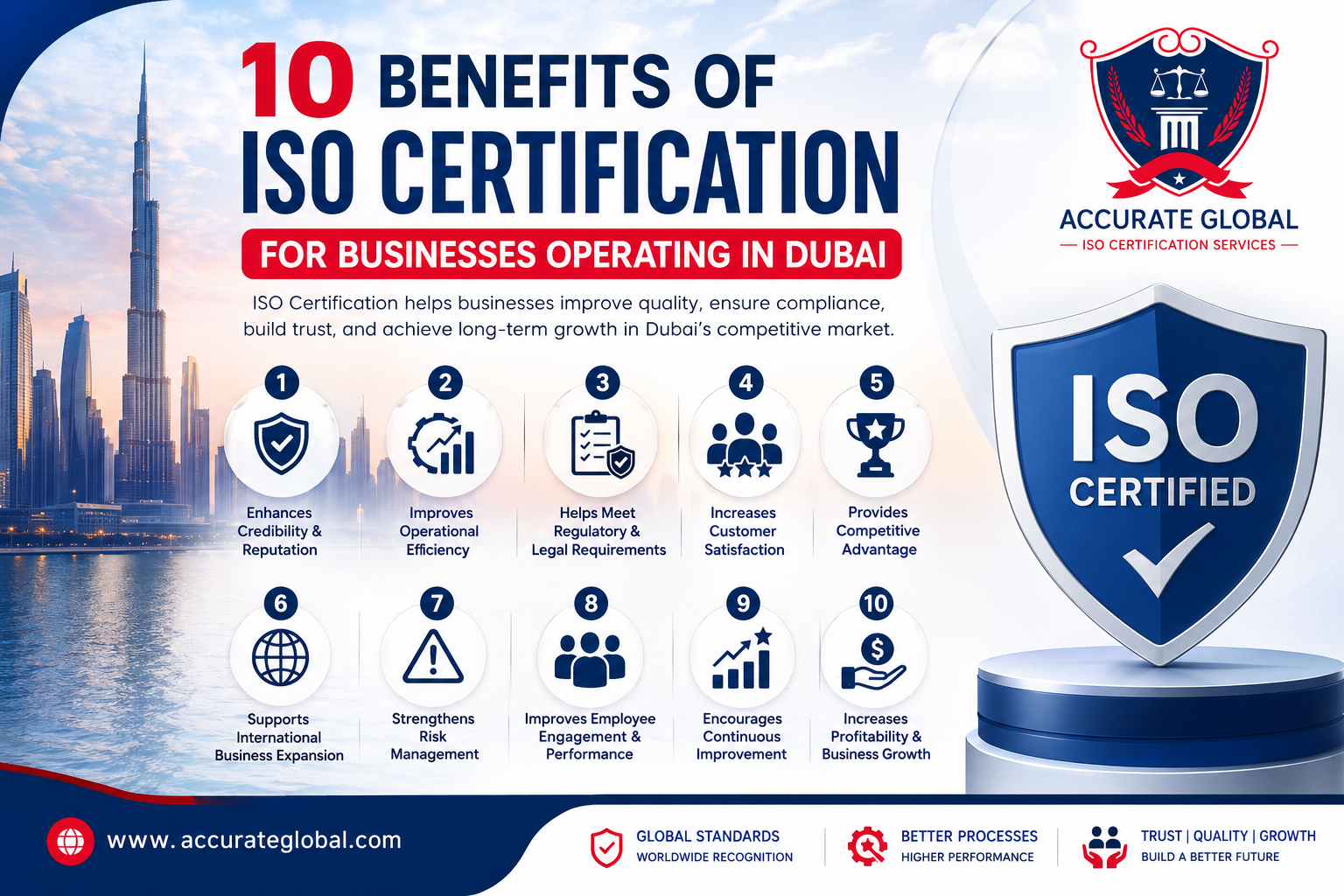
For businesses operating in the UAE, ISO certification is more than just a certificate on the wall—it is a strategic business move. Here is why:
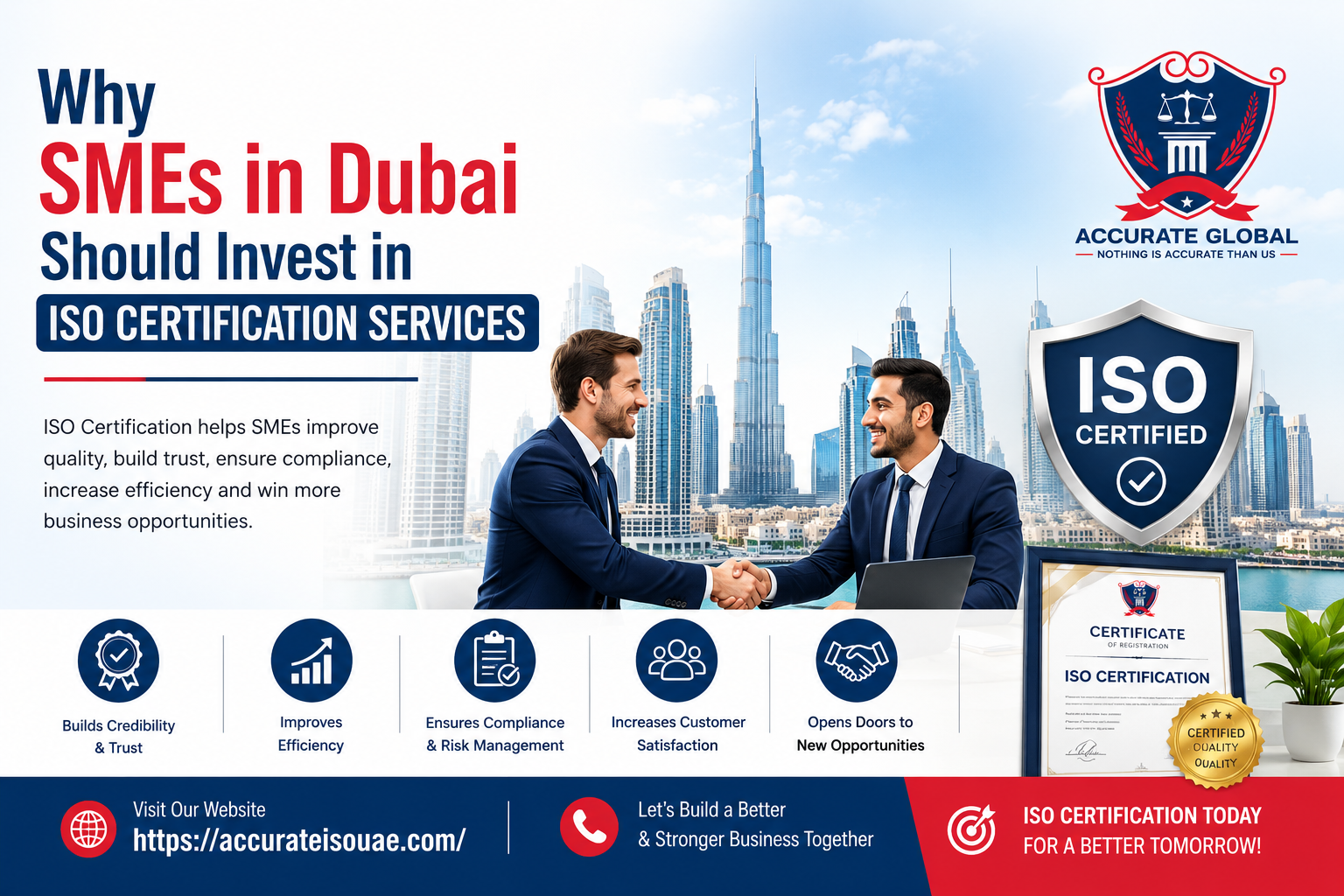
- Global Credibility & Trust: Clients and partners view ISO certification as a hallmark of excellence. It signals that your business adheres to globally recognized benchmarks.
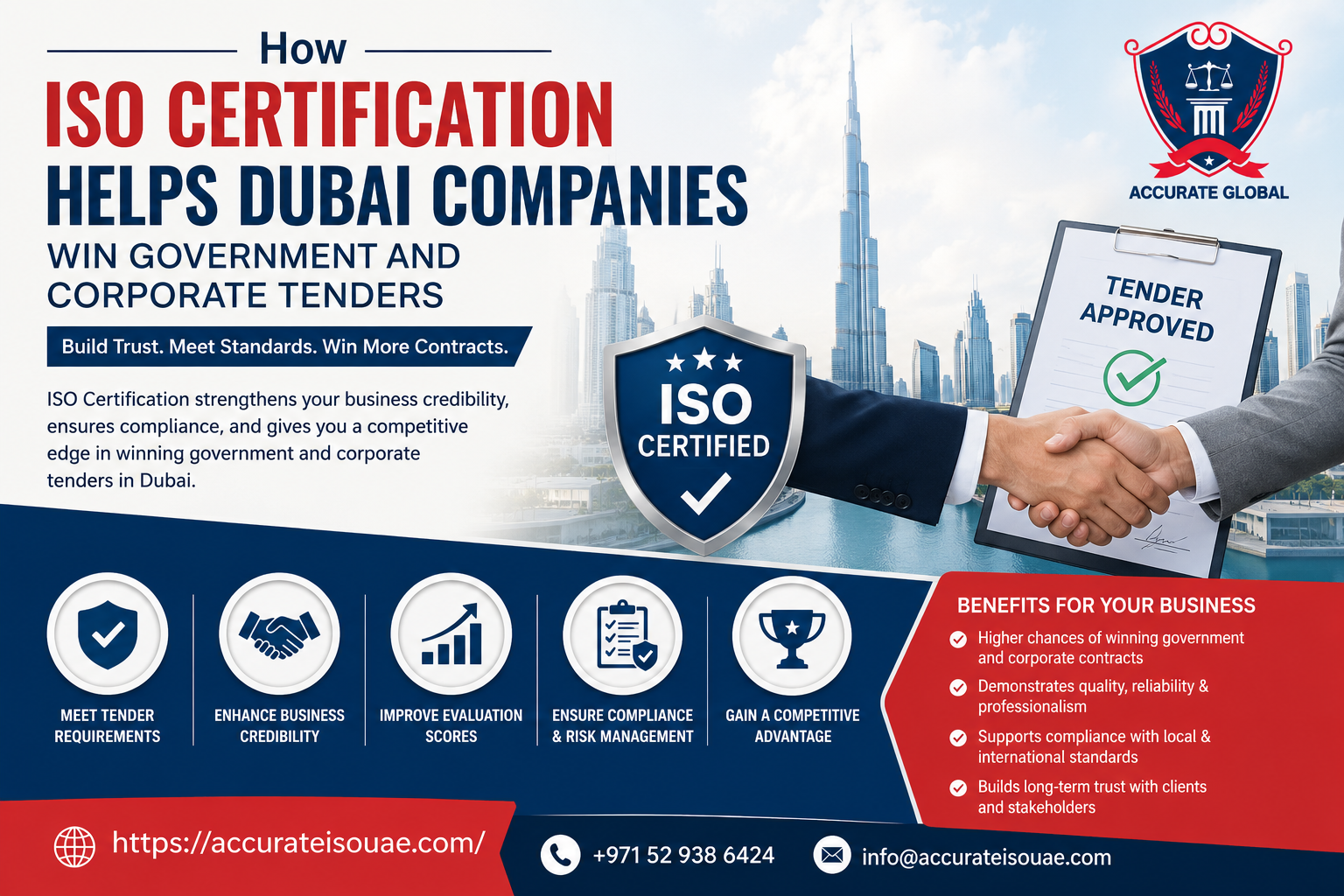
- Access to New Markets: Many large-scale projects and government tenders in the UAE explicitly require suppliers to hold specific ISO certifications. Without one, you might be excluded from lucrative bidding opportunities.
- Enhanced Operational Efficiency: The process of becoming certified forces you to look closely at your internal processes, helping you identify inefficiencies, reduce waste, and streamline workflows.
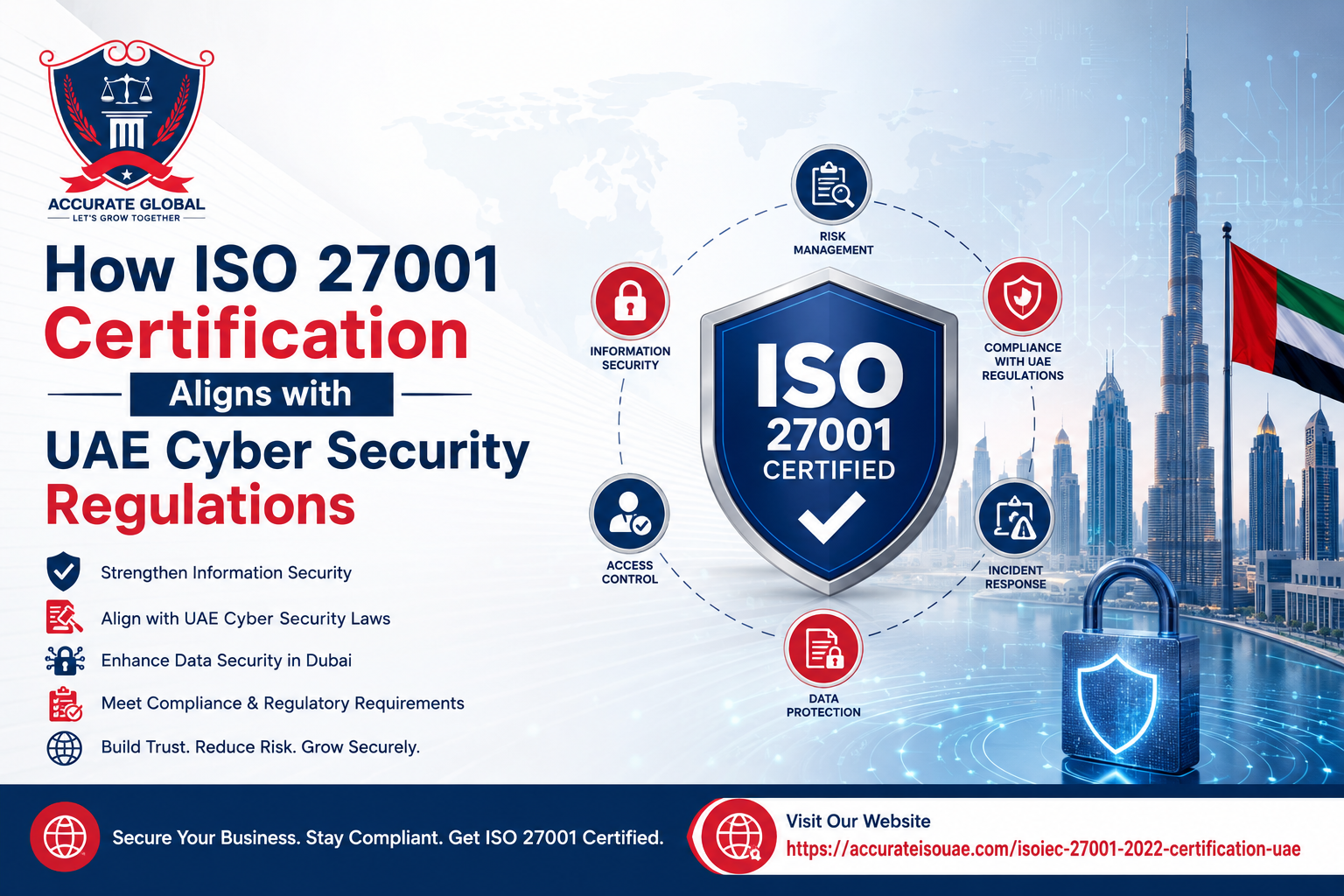
- Risk Management: Standards like ISO 27001 and ISO 45001 provide a framework to proactively identify and mitigate risks, protecting your business from costly operational disruptions or data breaches.
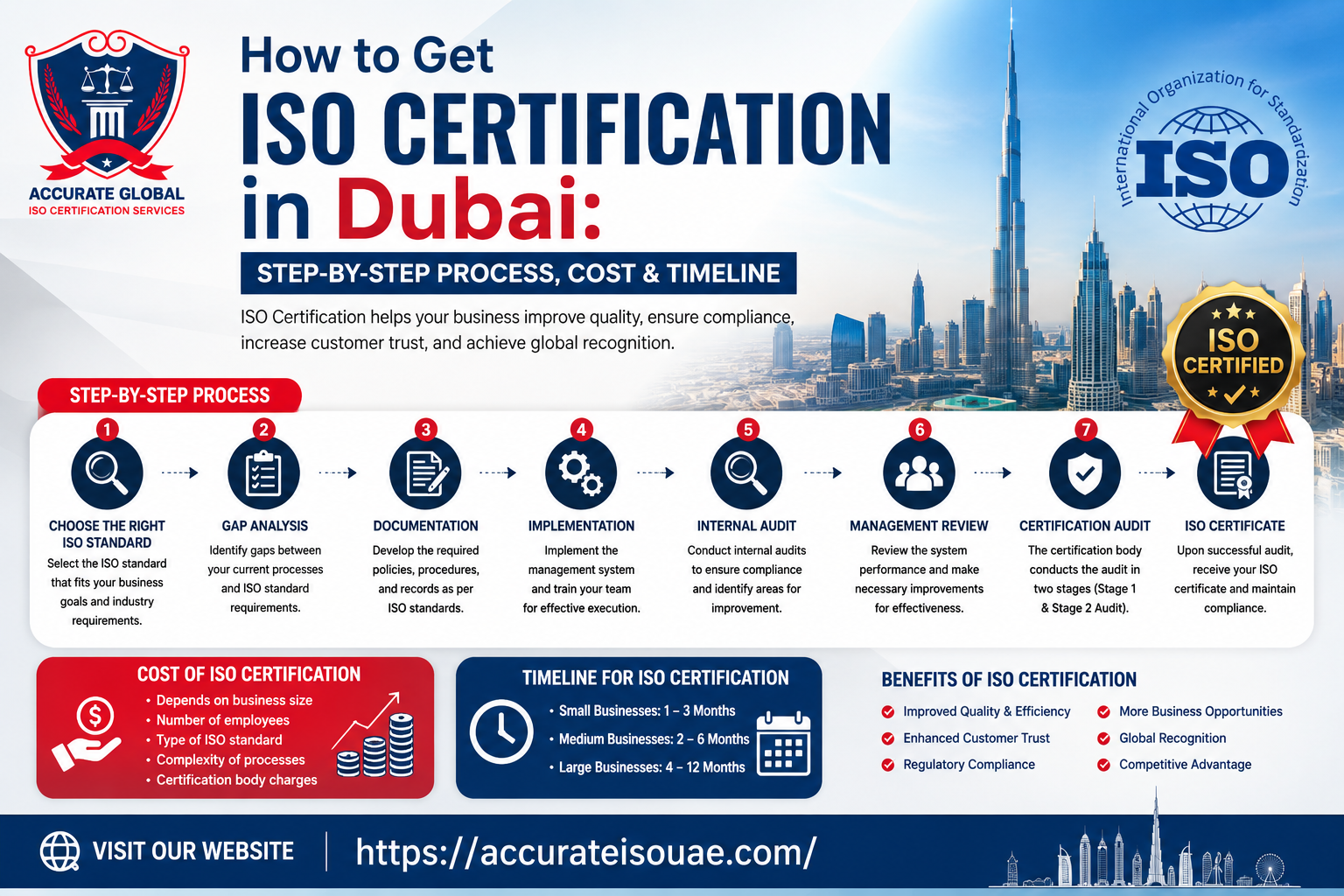
The Step-by-Step ISO Certification Process
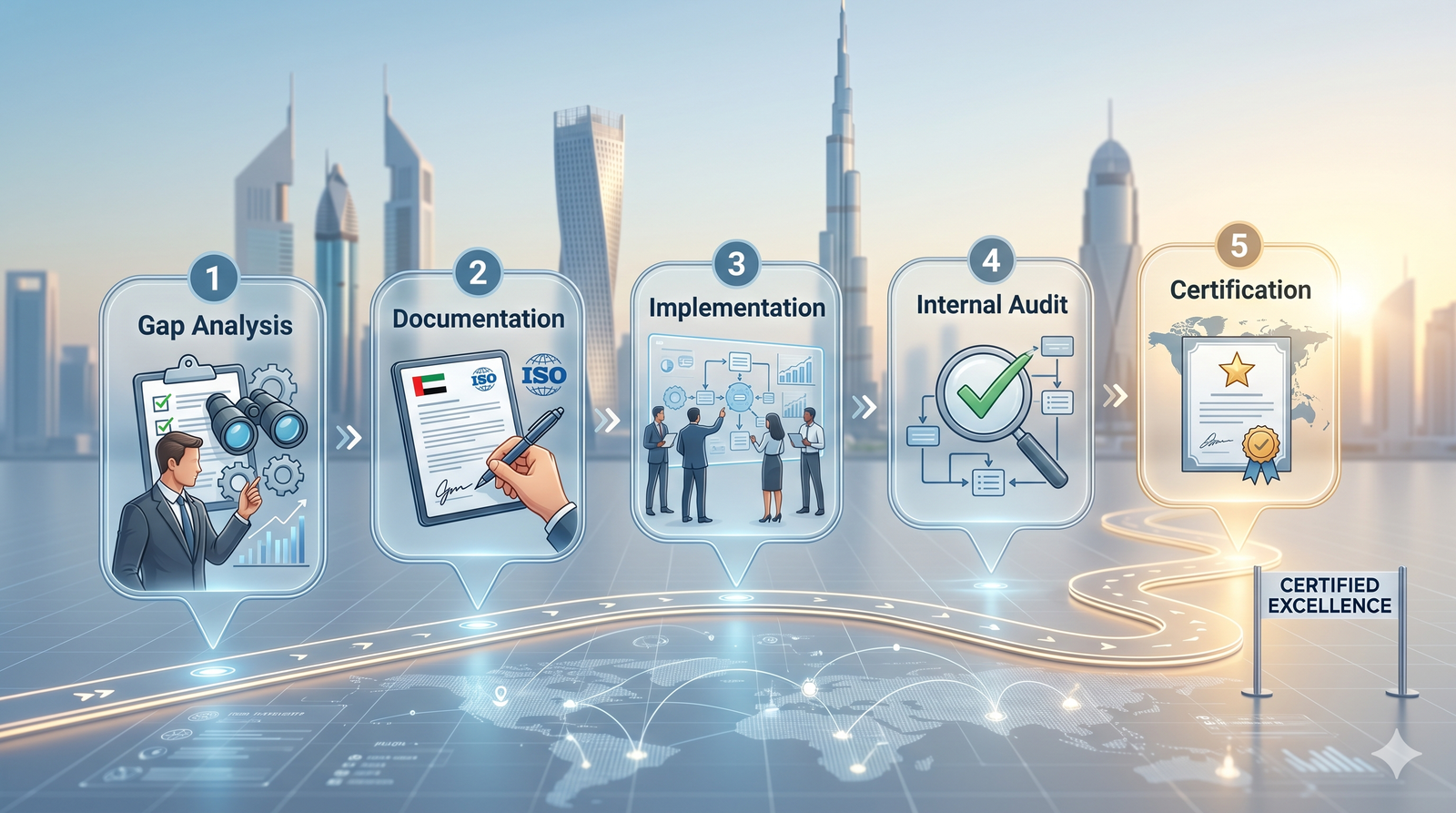
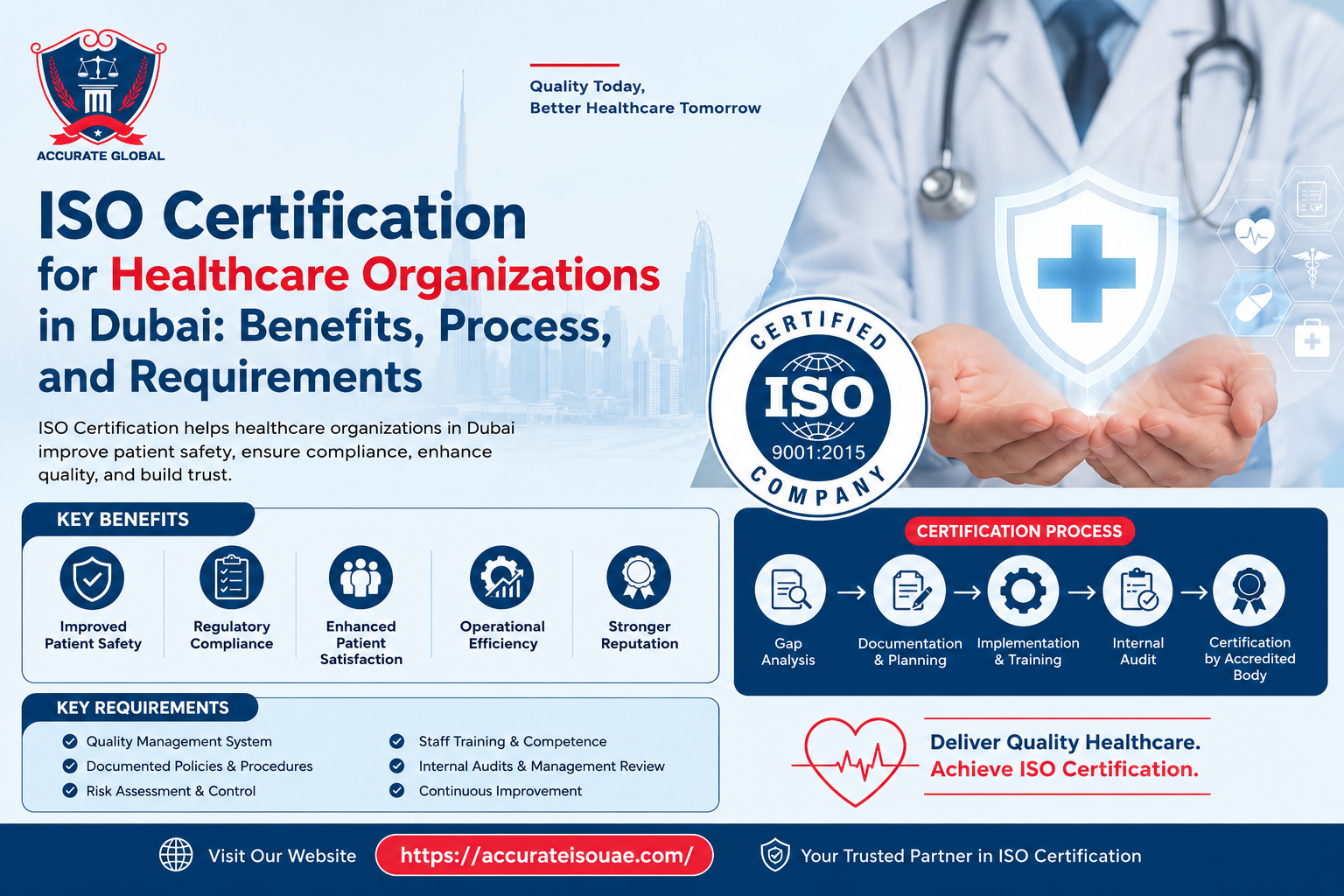
Achieving ISO certification can seem daunting, but it follows a clear, logical progression:
- Step 1: Gap Analysis: Before you start, you need to know where you stand. An expert consultant assesses your current processes against the requirements of your chosen ISO standard.
- Step 2: Implementation & Documentation: This is the core phase. You will update your policies, standardize your procedures, and document everything to ensure it meets the standard’s requirements.
- Step 3: Internal Audit: Before the official audit, an internal audit is conducted to identify any remaining gaps or non-conformities that need to be addressed.
- Step 4: External Certification Audit: A certified external body conducts a final audit of your systems. If everything meets the requirements, you are awarded the certificate.
- Step 5: Maintaining Compliance: ISO is not a "one-and-done" task. It requires a commitment to continuous improvement and periodic surveillance audits to maintain your status.
How We Can Help
Navigating the complexities of ISO standards while managing your day-to-day business operations can be overwhelming. You don’t have to do it alone.
At Accurate ISO UAE, we specialize in simplifying the certification process. From conducting initial gap analyses to guiding your team through the final audit, we provide end-to-end support to ensure you get certified on time and within budget.
If you are ready to streamline your compliance process and gain a competitive edge, explore our ISO certification services in Dubai today. Let us help you turn your commitment to excellence into an internationally recognized credential.
.png)
.png)
.png)
.png)
.png)
.png)
.png)