ISO 9001 Certification in Dubai and UAE: Process, Documents and Timeline
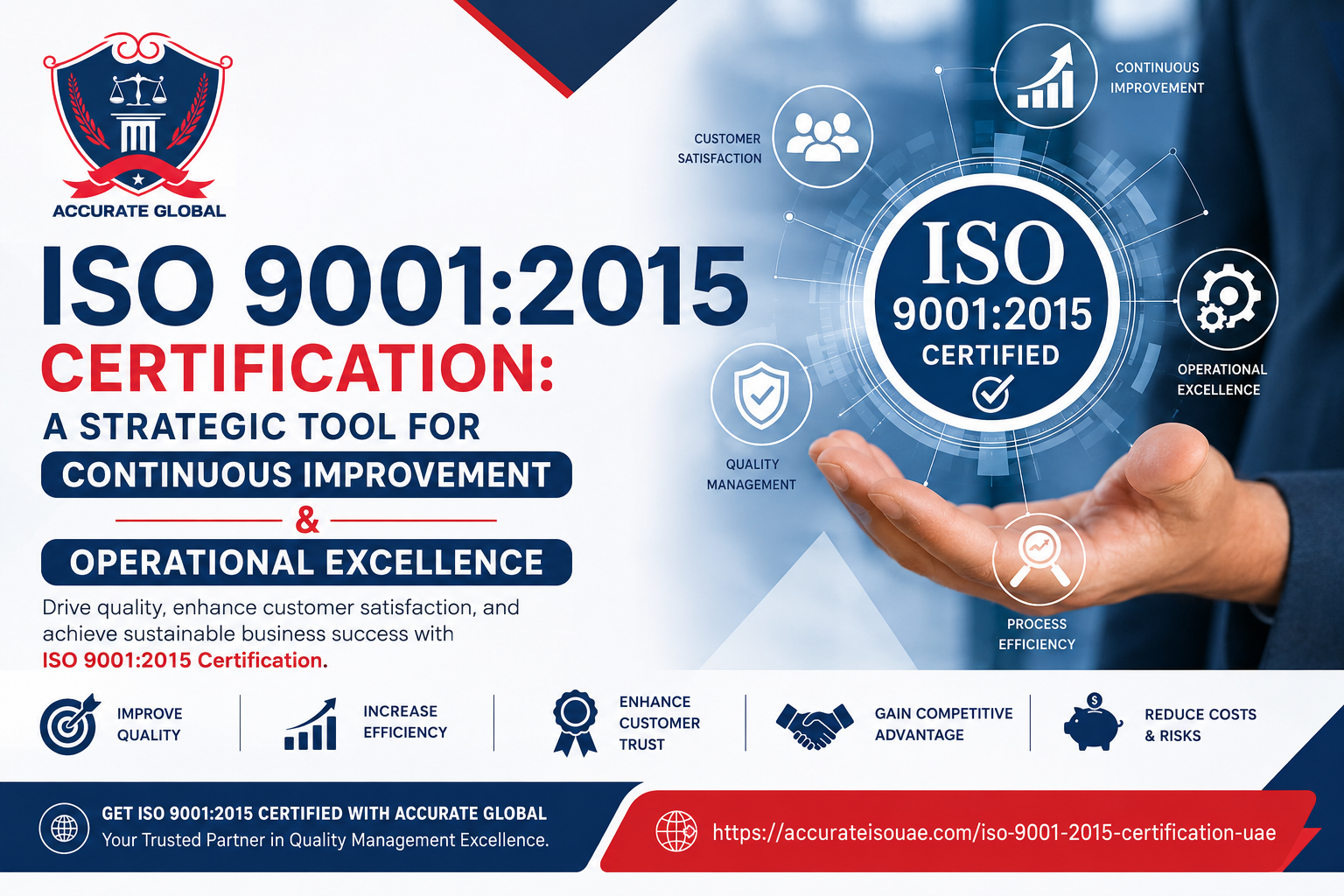
ISO 9001:2015 is the most widely used quality management standard in the world, and it is one of the most requested certificates by UAE tenders, contractors and corporate buyers. If you are planning ISO 9001 certification in Dubai or elsewhere in the UAE, this guide walks you through the requirements, documents, process and realistic timeline.
What Is ISO 9001:2015?
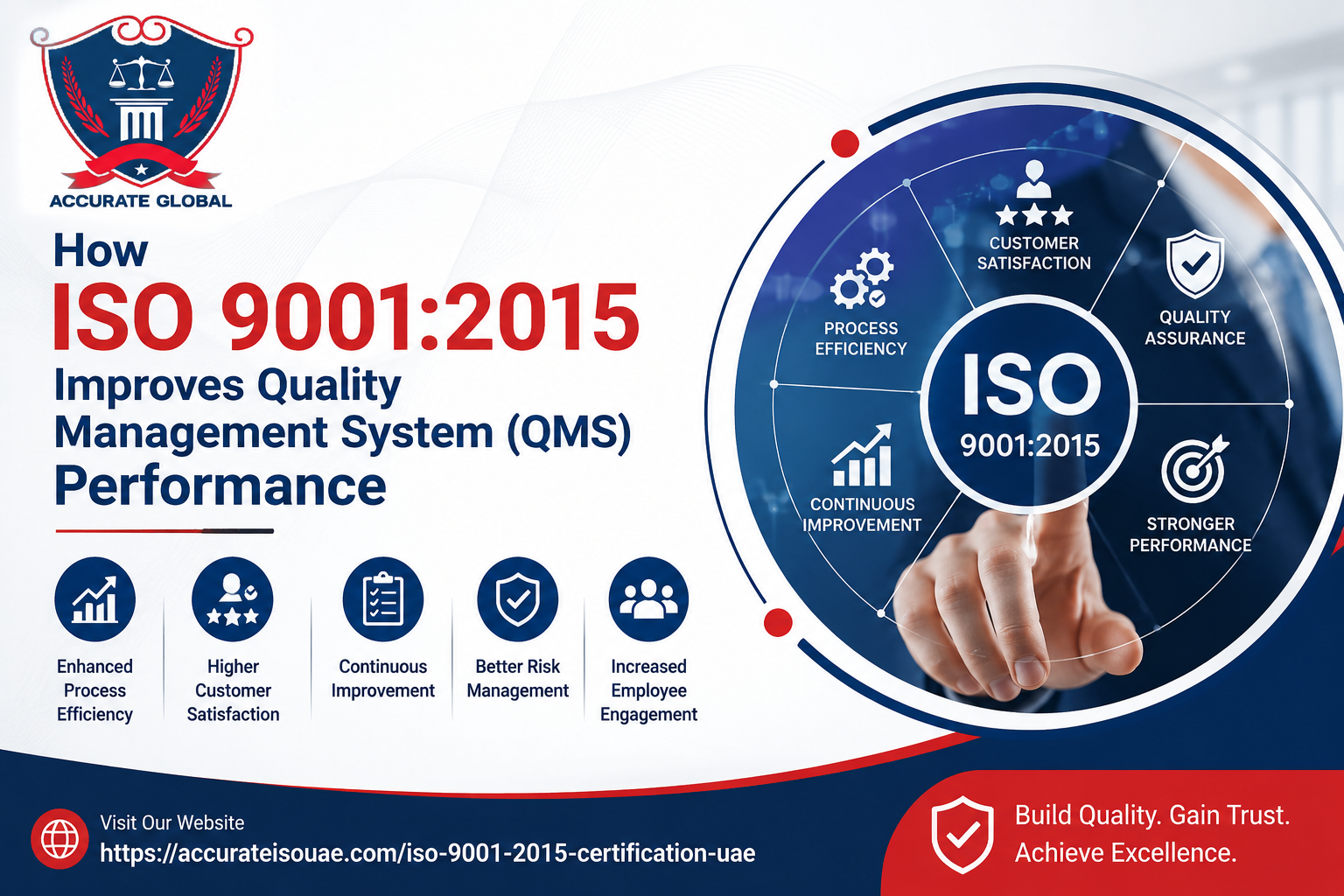
ISO 9001:2015 sets out the requirements for a Quality Management System (QMS). It does not tell you how to make your product; it asks you to define your processes, meet customer and legal requirements, manage risks and keep improving. It applies to companies of any size and industry, including services, trading, construction, manufacturing and IT.
Who Needs ISO 9001 in the UAE?
- Contractors and suppliers who bid for government and semi-government tenders.
- Manufacturers supplying large corporates or export markets.
- Service companies that want consistent delivery and fewer customer complaints.
- Growing SMEs that need structured processes as the team expands.
Core Requirements of the Standard
- Context and scope: Understand your market, stakeholders and the boundaries of the QMS.
- Leadership: A quality policy, defined roles and management commitment.
- Planning: Risk-based thinking and measurable quality objectives.
- Support: Competent people, infrastructure, documented information and communication.
- Operation: Controlled processes for design, purchasing, production or service delivery and release.
- Performance evaluation: Customer satisfaction, internal audits and management review.
- Improvement: Corrective actions and continual improvement.
Documents and Records You Should Prepare
- Scope of the QMS and quality policy.
- Quality objectives and process maps.
- Risk and opportunity register.
- Internal audit programme and reports.
- Management review minutes.
- Training and competence records.
- Supplier evaluation and customer feedback records.
- Non-conformity and corrective action log.
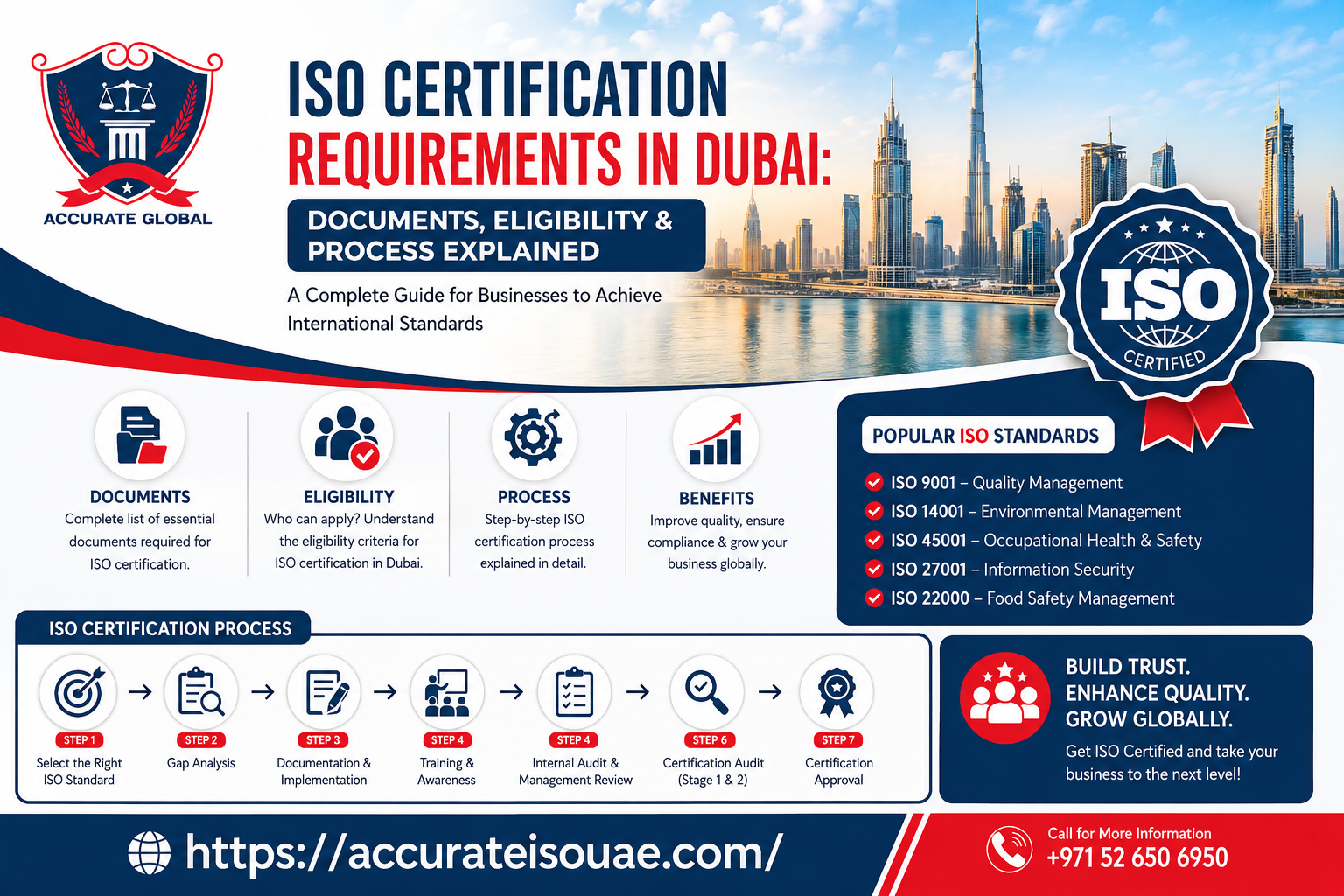
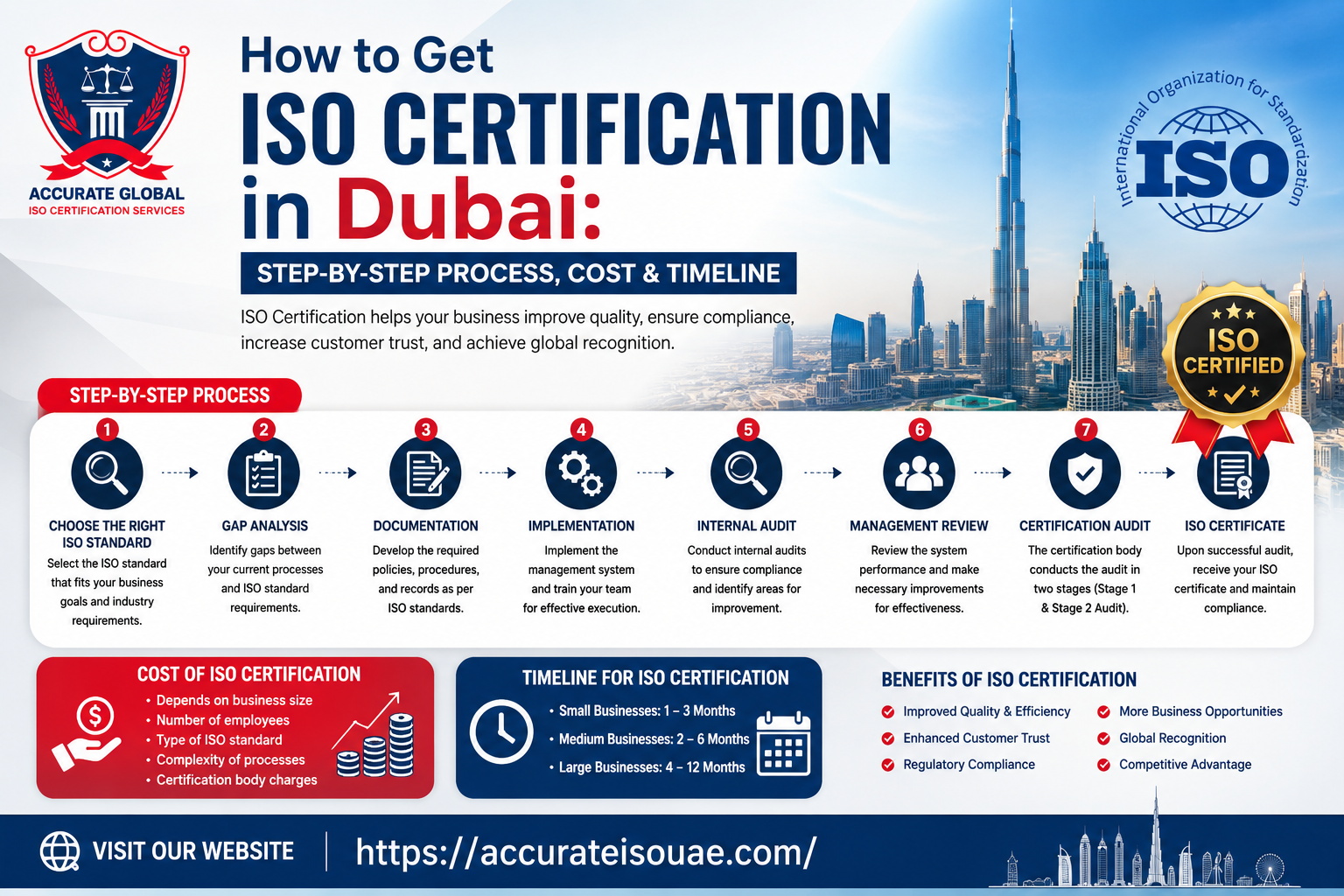
Step-by-Step ISO 9001 Certification Process
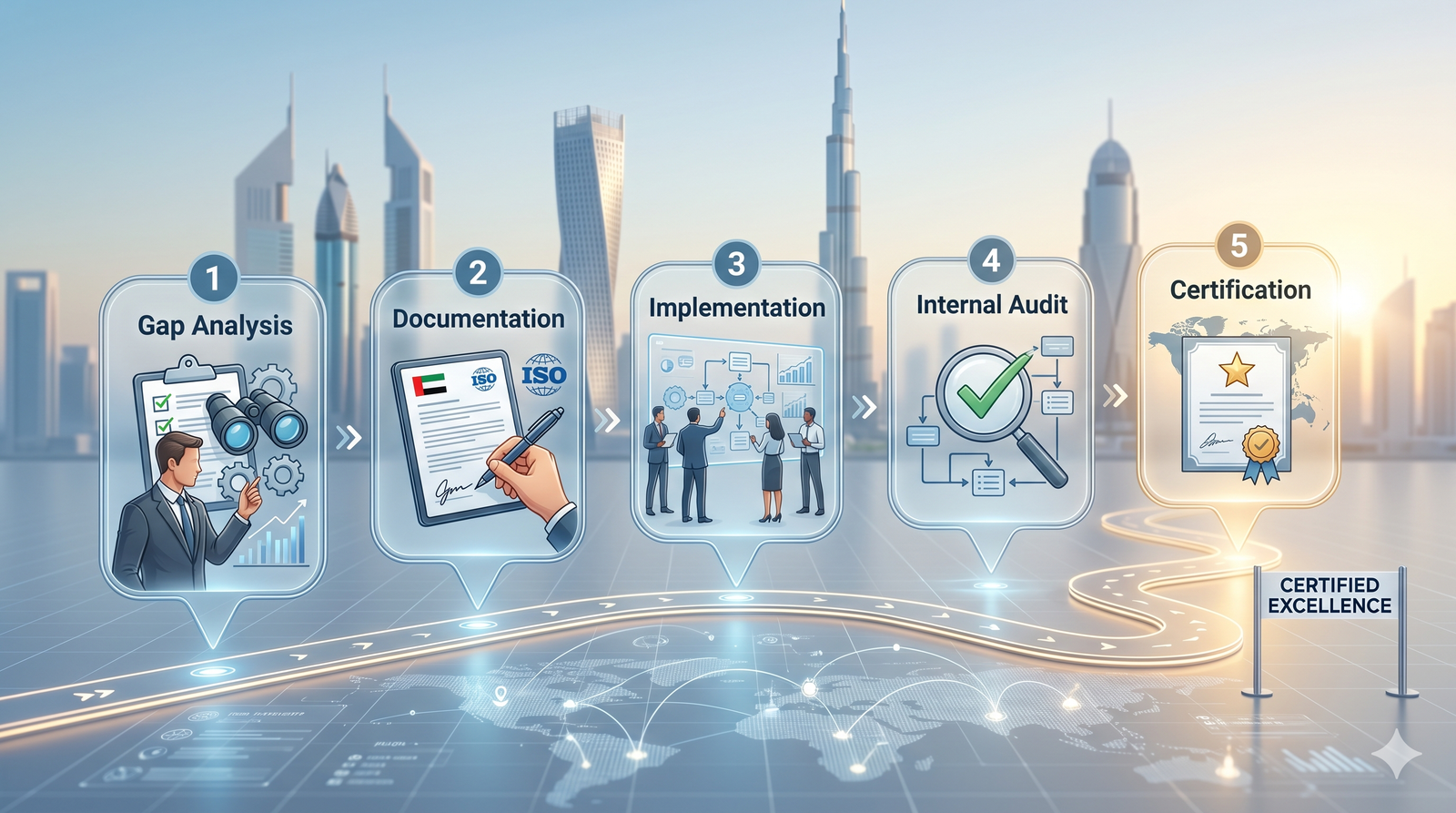
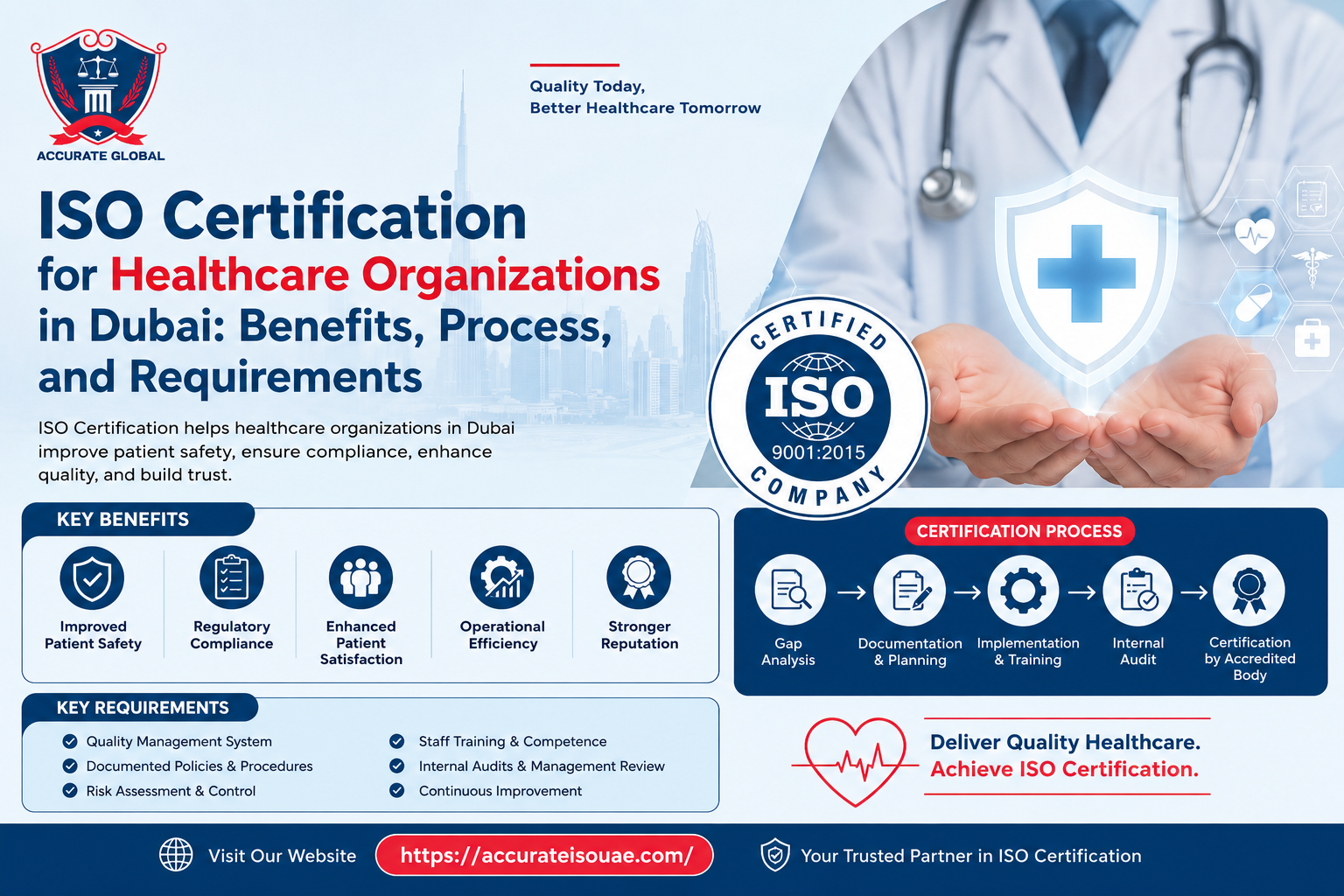
- Gap analysis: Identify what already meets the standard and what is missing.
- Design and document the QMS: Keep it practical and based on how you actually work.
- Implement and train: Run the processes and collect records for a period of time.
- Internal audit and management review: Test the system before the external audit.
- Select an accredited certification body: Check accreditation and verify that the certificate will be accepted by your clients.
- Stage 1 audit: Documentation and readiness review.
- Stage 2 audit: On-site verification that the system is implemented and effective.
- Certificate issue: Issued after non-conformities are closed, valid for three years with annual surveillance audits.
How Long Does It Take?
The timeline depends on how mature your processes already are. Small companies with simple operations can move faster, while larger organisations or multi-site operations need more time for implementation and internal audits. Starting records early and assigning a responsible person for the QMS are the best ways to avoid delays.
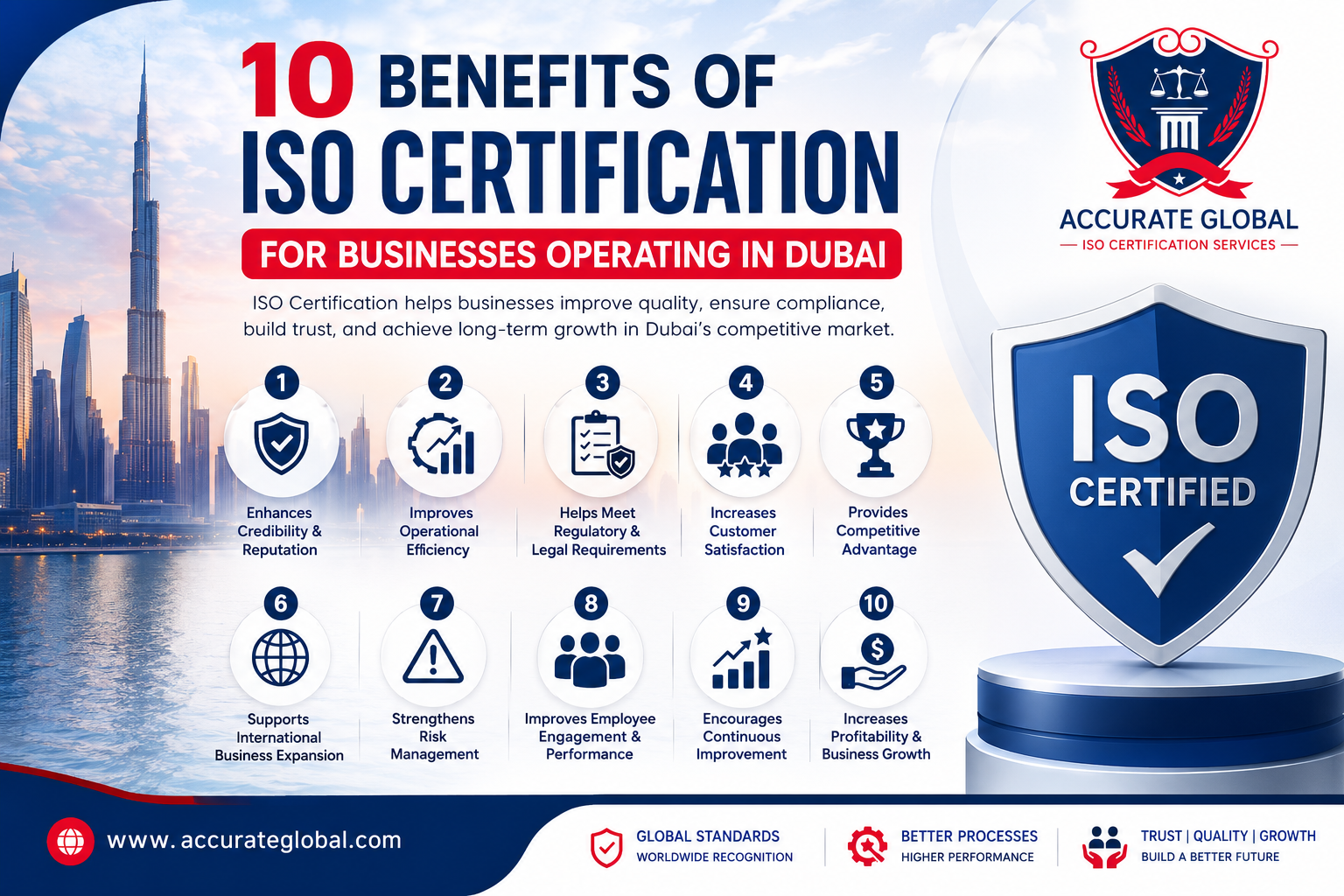
Benefits for Dubai and UAE Companies
- Eligibility for tenders and approved supplier lists.
- Fewer errors, rework and customer complaints.
- Clearer responsibilities and better management decisions.
- Stronger credibility with international customers.
Mistakes That Delay Certification
- Writing procedures that nobody follows.
- Having no records because processes were not actually run before the audit.
- Overlooking risks and objectives in the planning stage.
- Waiting until the last minute to schedule internal audits.
Start Your ISO 9001 Certification
See the requirements on our ISO 9001:2015 certification page, read the practical ISO 9001 guide for small businesses, or check how our certification process works. To begin, apply online or contact our team.
Frequently Asked Questions
Is ISO 9001 certification mandatory in Dubai?
It is not a general legal requirement, but many tenders and customers require it.
How long is the ISO 9001 certificate valid?
Three years, with surveillance audits each year and recertification at the end of the cycle.
Can small businesses get ISO 9001?
Yes. The standard scales to the size and complexity of the organisation.
.png)
.png)
.png)
.png)
.png)
.png)
.png)