ISO 45001 Certification in UAE: Requirements, Benefits and Implementation Steps
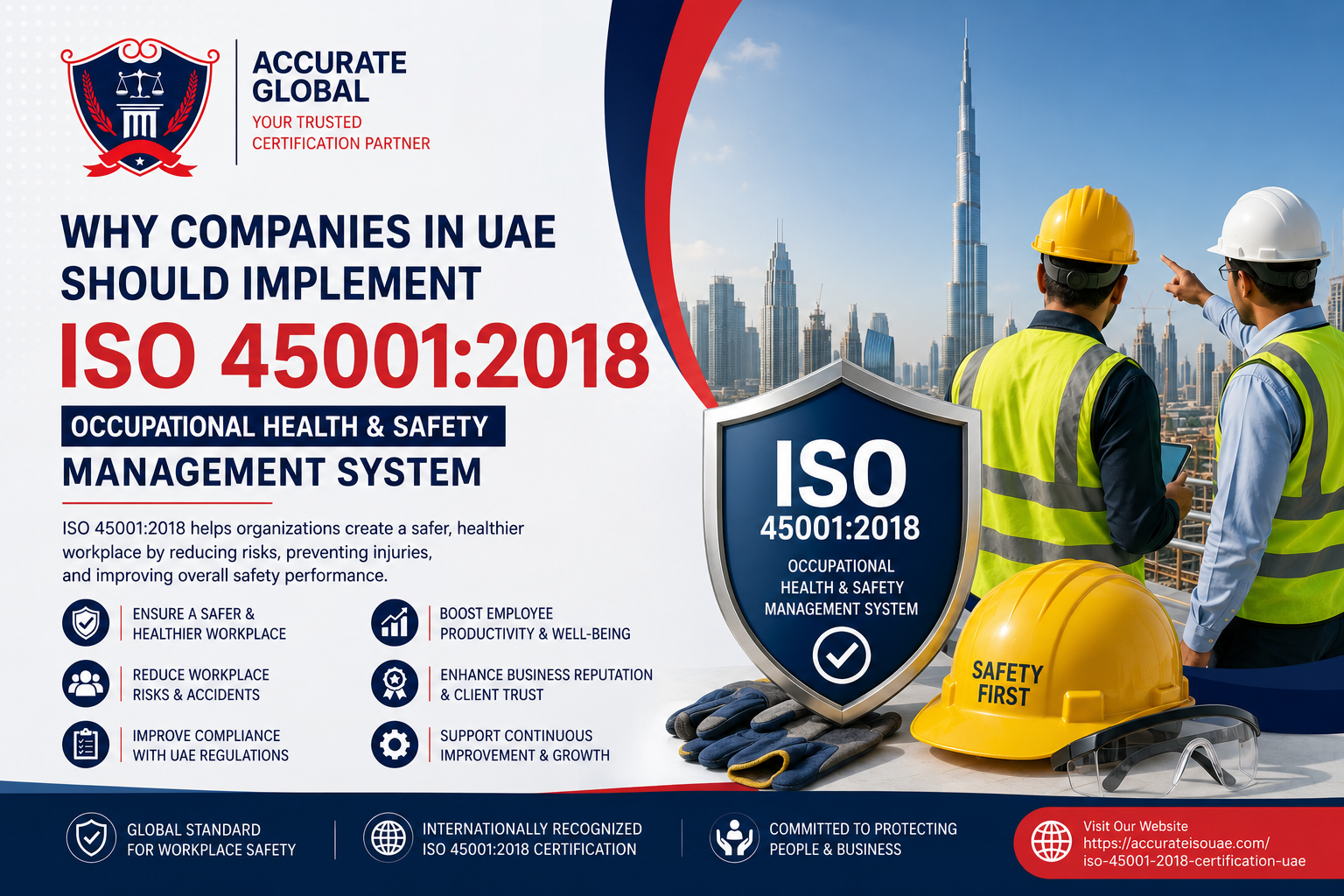
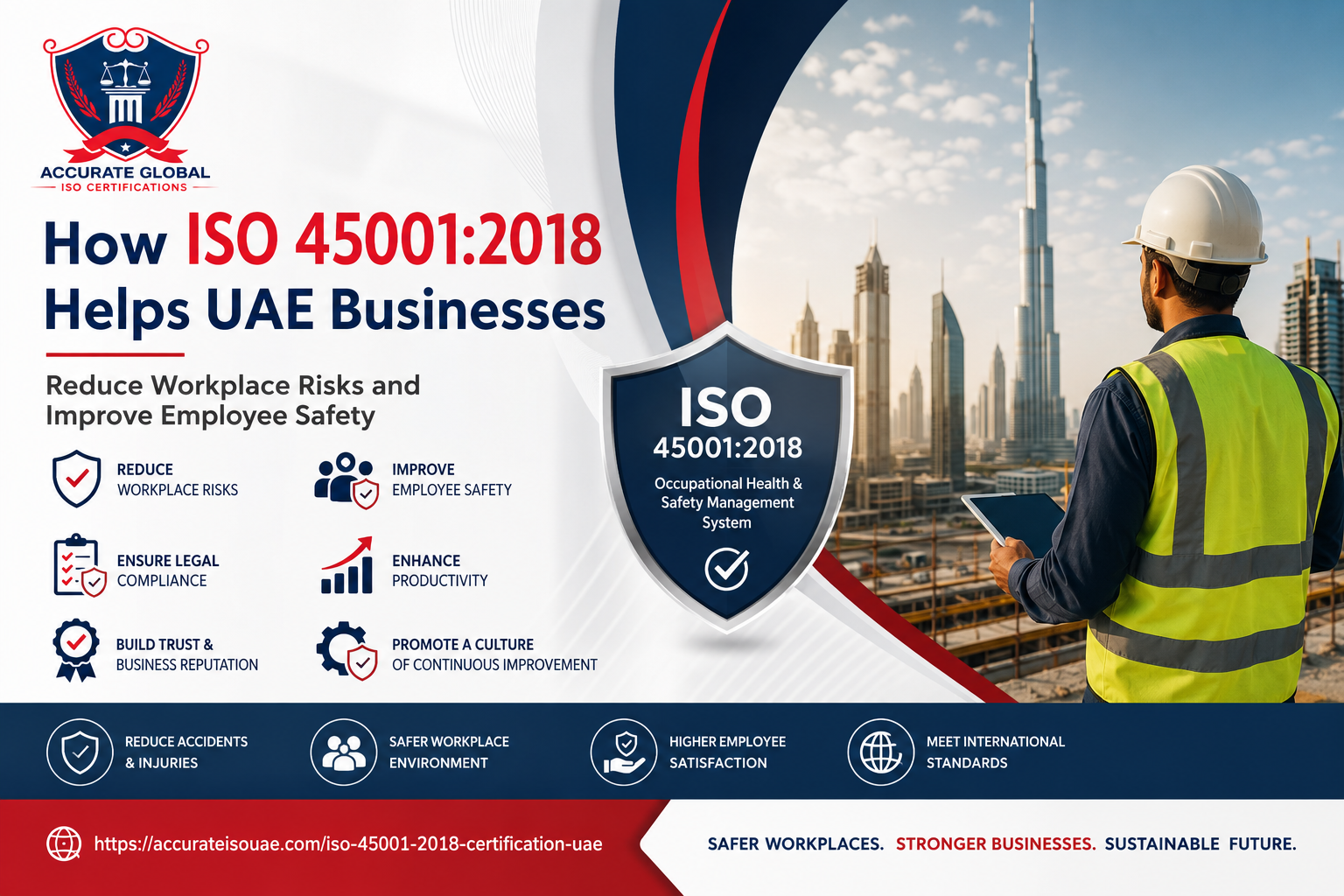
Workplace safety is a priority for companies operating in construction, oil and gas, manufacturing, logistics, facilities management and hospitality across the UAE. ISO 45001:2018 is the international standard for occupational health and safety (OH&S) management systems, and it helps organisations prevent injuries, reduce incidents and meet client expectations. This guide explains the requirements, benefits and steps to get ISO 45001 certification in the UAE.
What Is ISO 45001:2018?
ISO 45001:2018 sets requirements for an OH&S management system. It replaced OHSAS 18001 and follows the same high-level structure as ISO 9001 and ISO 14001. The standard focuses on leadership, worker participation, hazard identification, risk control and continual improvement, with the aim of providing safe and healthy workplaces.
Who Should Consider ISO 45001 in the UAE?
- Construction and contracting companies bidding on large projects.
- Manufacturing and industrial plants.
- Oil, gas and energy service providers.
- Logistics, warehousing and transport companies.
- Facilities management, hospitality and healthcare operators.
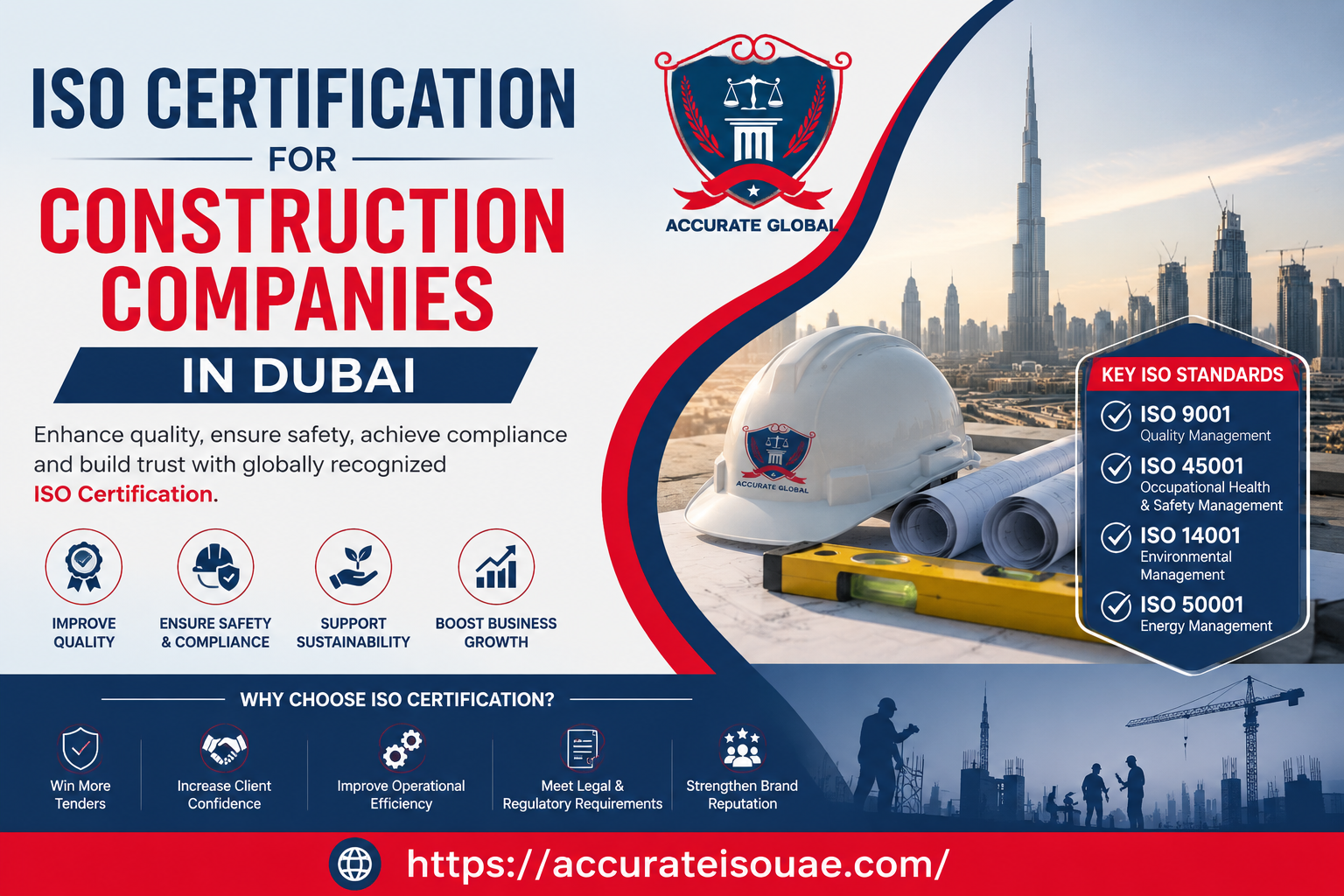
Main contractors and corporate clients often make ISO 45001 a prequalification requirement for their subcontractors.
Key Requirements of ISO 45001
- Context and interested parties: Understand legal duties and the needs of workers and other stakeholders.
- Leadership and worker participation: Top management must take responsibility, and workers must be consulted.
- Hazard identification and risk assessment: Identify hazards, assess risks and set controls using the hierarchy of controls.
- Legal compliance: Keep track of applicable UAE and emirate-level requirements.
- Operational controls: Contractor management, emergency preparedness, change management and procurement.
- Performance evaluation: Monitoring, incident investigation, internal audit and management review.
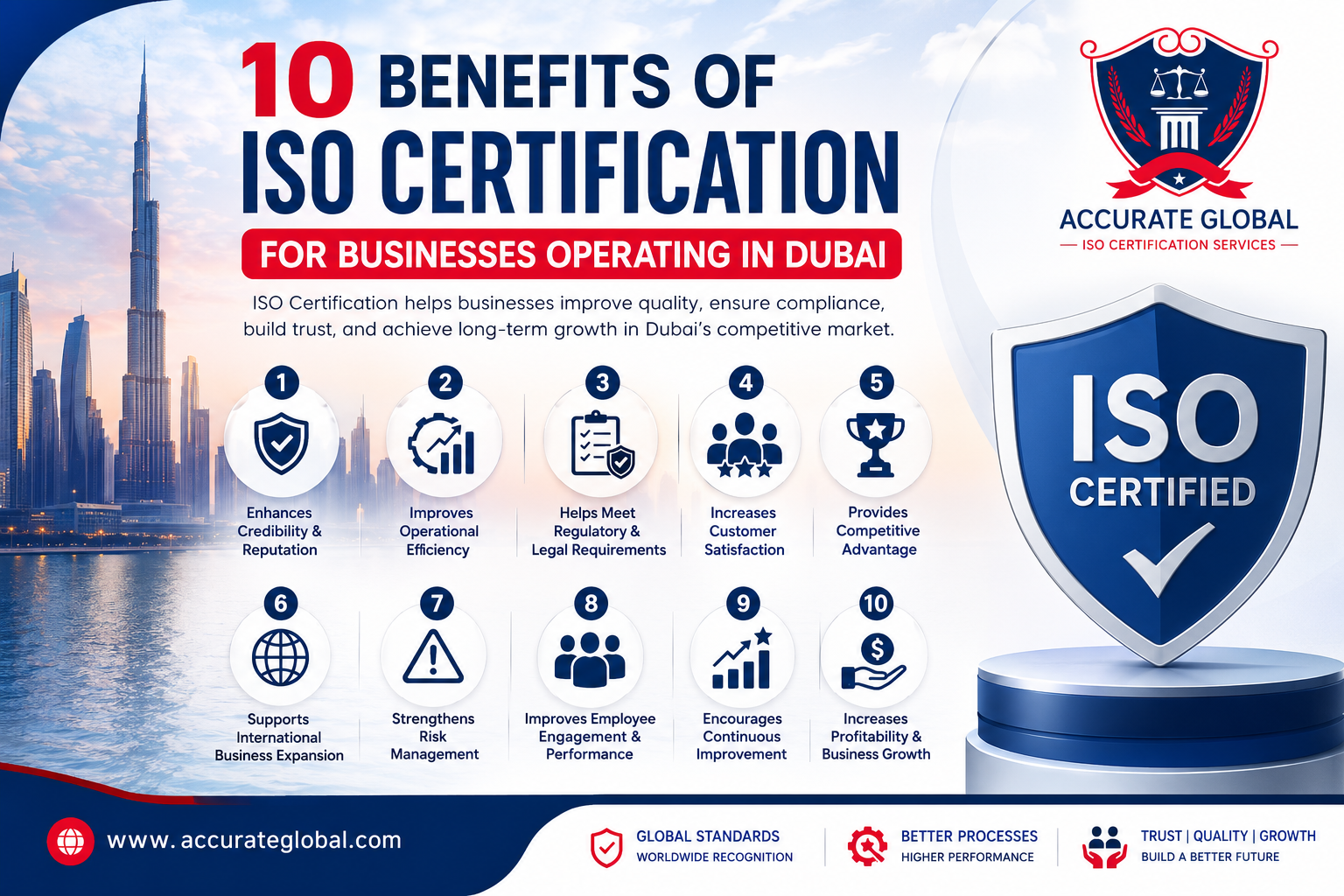
Benefits of ISO 45001 Certification
- Fewer accidents, near misses and lost working days.
- Better evidence of legal compliance and due diligence.
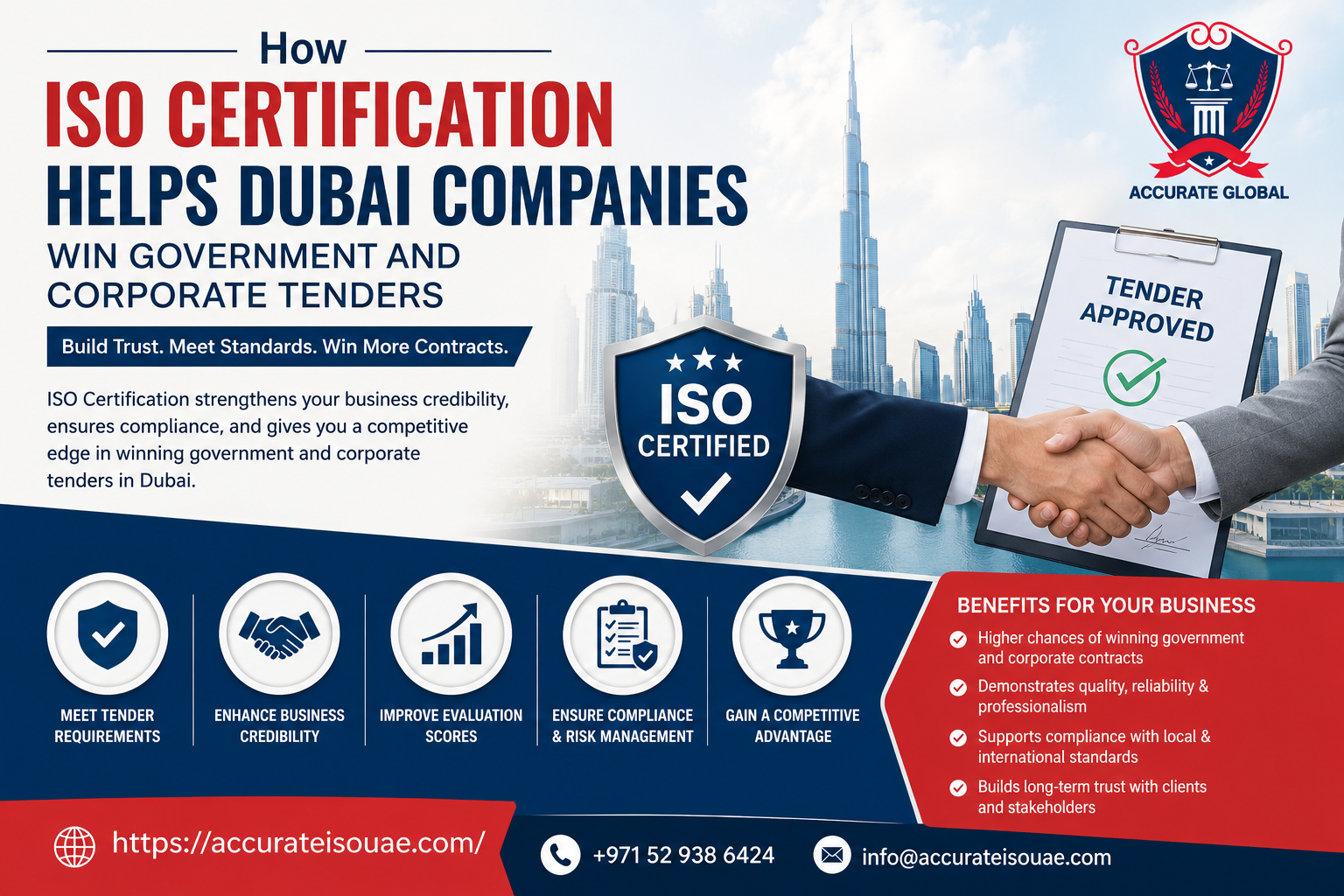
- Access to tenders and contractor lists that require ISO 45001.
- Improved employee confidence and safety culture.
- Possible reductions in downtime and incident-related costs.
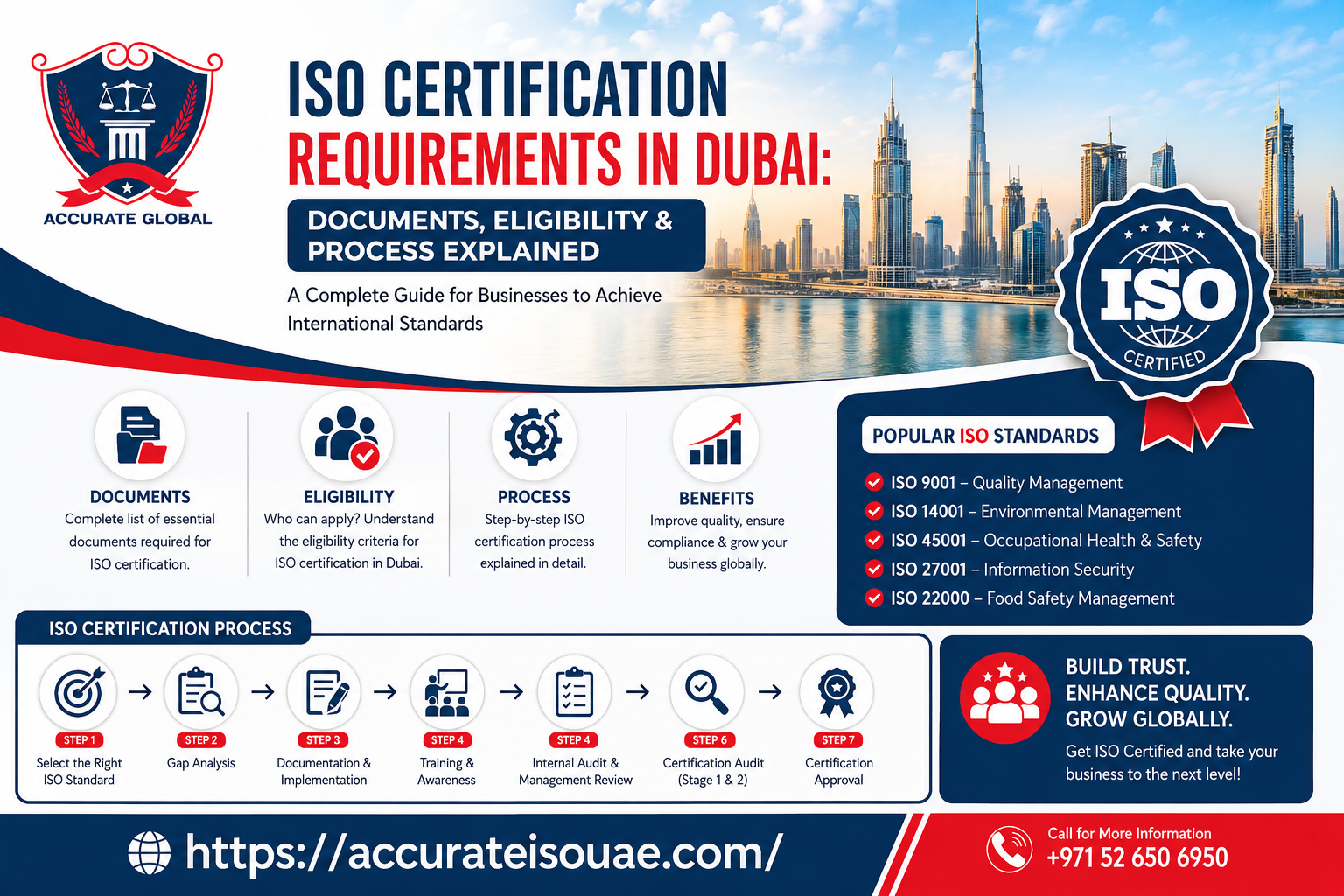
Steps to Get ISO 45001 Certified
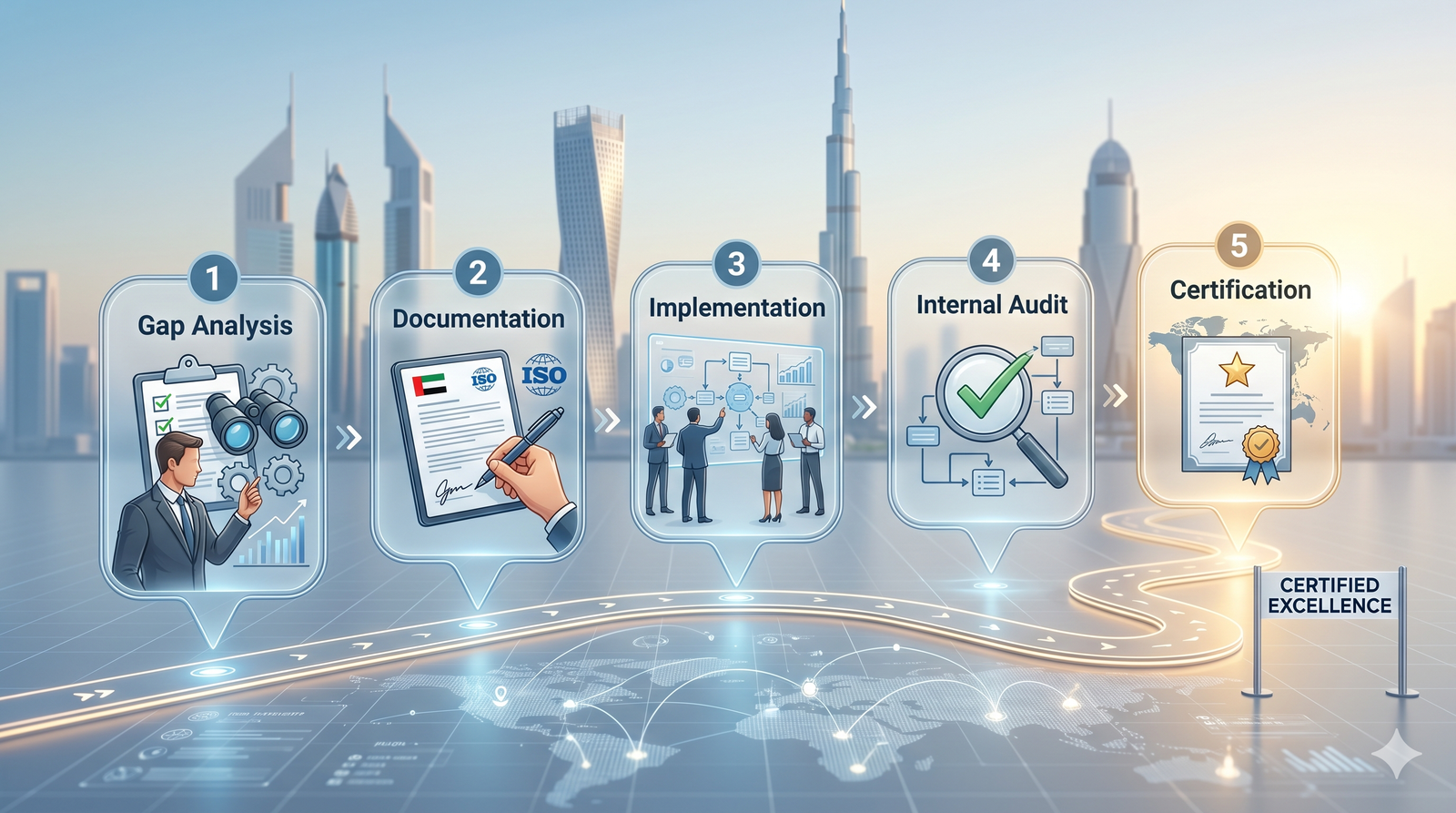
- Gap analysis: Compare your current safety practices with the standard.
- Define scope and policy: Set the OH&S policy, objectives and responsibilities.
- Hazard and risk assessment: Cover routine and non-routine activities, contractors and visitors.
- Implement controls and procedures: Include permits to work, PPE, training, inspections and emergency plans.
- Train and consult workers: Make sure workers understand their roles and can report hazards.
- Internal audit and management review: Verify the system and correct weaknesses.
- Certification audit: Complete Stage 1 and Stage 2 audits with an accredited certification body.
Common Challenges
- Safety being seen as paperwork rather than daily practice.
- Poor contractor control on multi-party sites.
- Incident and near-miss reporting that is incomplete.
- Risk assessments that are generic and not updated after changes.
Getting Started
Review our ISO 45001:2018 certification page for audit details, or read how the standard helps reduce workplace risks. To discuss scope and next steps, contact our team or apply for certification.
Frequently Asked Questions
Is ISO 45001 the same as OHSAS 18001?
No. ISO 45001 replaced OHSAS 18001 and places stronger emphasis on leadership, worker participation and integration with business processes.
Does ISO 45001 prove legal compliance?
Certification shows you have a system to manage compliance, but it does not replace your legal obligations under UAE and local authority requirements.
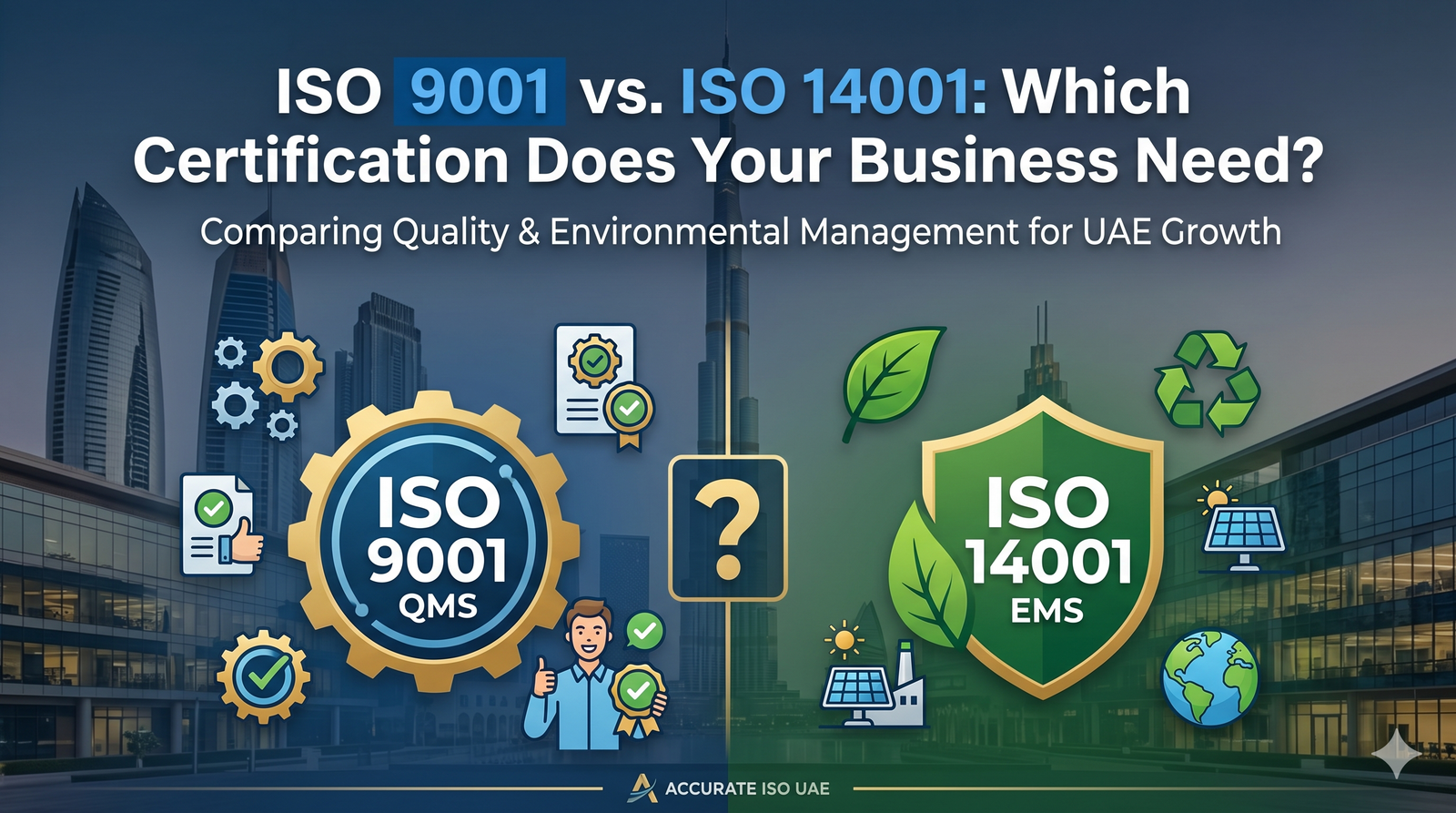
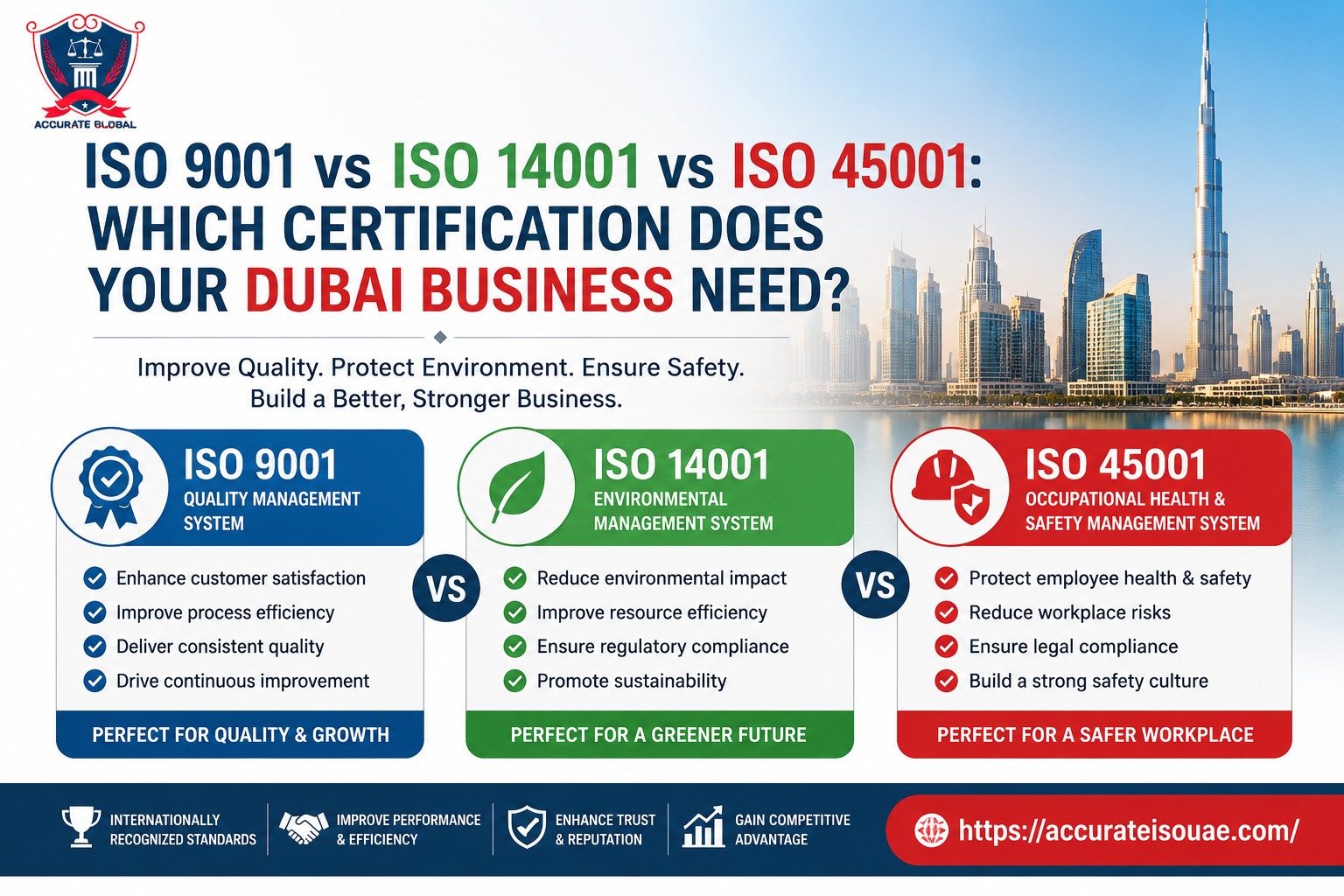
Can ISO 45001 be combined with ISO 9001 and ISO 14001?
Yes. Because they share a common structure, many companies run an integrated system and combine audits.
.png)
.png)
.png)
.png)
.png)
.png)
.png)